
Close Menu
    Facebook X (Twitter) Instagram
    SciTechDaily
    • Biology
    • Chemistry
    • Earth
    • Health
    • Physics
    • Science
    • Space
    • Technology
    Facebook X (Twitter) Pinterest YouTube RSS
    SciTechDaily
    Home»Space»Astronomers Measure the Size and Structure of a Nova’s Nuclear Blast
    Space

    Astronomers Measure the Size and Structure of a Nova’s Nuclear Blast

    By Jim Shelton, Yale UniversityOctober 28, 2014No Comments3 Mins Read
    Facebook Twitter Pinterest Telegram LinkedIn WhatsApp Email Reddit
    Share
    Facebook Twitter LinkedIn Pinterest Telegram Email Reddit
    Astronomers Measure the Size and Structure of a Novas Nuclear Blast
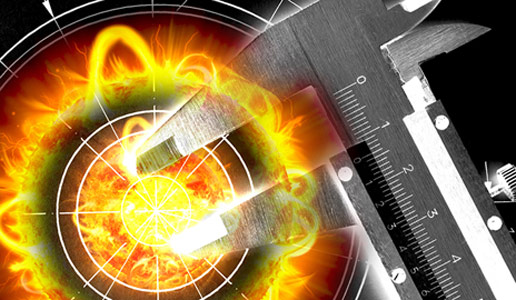
    Astronomers have, for the first time, measured the size and structure of a nova’s nuclear blast in real-time. Credit: Yale University

    For the first time, a team of astronomers has measured the size and structure of a nova’s nuclear blast as it happened.

    The discovery of Nova Delphini 2013, along with the data collected about it, could well sharpen or reshape our understanding of the nature of such blasts. The research appears online in the journal Nature.

    Novae are found in solar systems with two closely orbiting stellar objects. The gravity from one star, a white dwarf, pulls in hydrogen from the atmosphere of another star, a red giant. This buildup of extra matter on the white dwarf’s surface eventually causes a nuclear detonation.

    Tabetha Boyajian, a postdoctoral fellow in Yale’s Department of Astronomy and Astrophysics, had just arrived at California’s Mount Wilson Observatory when word came of a nova that exploded only hours earlier, on August 14, 2013. Boyajian and other researchers quickly put aside their own projects, in order to devote full attention to the phenomenon.

    “It’s an opportunity we’ve never had before to see how novae expand,” Boyajian said. “There are all sorts of theories and models of how this material detonates and the processes that follow. But being able to see it happening makes this super, super special.”

    What they found was startling in its magnitude. After one day, the size of the nova fireball was equal to the radius of Earth’s orbit. After 43 days, it was the size of our solar system.

    The blast expanded at a speed of 1.3 million miles per hour (580 km/s), the research team calculated. In addition, researchers measured the fireball’s brightness and shape.

    “A nova has never been studied this way, in this detail,” said Kaspar von Braun, of the Max Planck Institute for Astronomy in Germany, another member of the team. “It all had to be done in express mode.” Almost on a nightly basis, von Braun said, astronomers reconfigured the six telescopes of the observatory’s CHARA Array to gather the necessary data.

    The principal investigator for the study was Gail Schaefer, a research scientist at the CHARA Array of Georgia State University.

    Boyajian said the nova was impressive even without a telescope. “We went outside and we could see it with our eyes,” she said. “We were seeing a star that wasn’t there before. That was pretty awesome.”

    At Yale, Boyajian is part of professor Debra Fischer’s team of exoplanet hunters. The team detects and characterizes planets located outside of our solar system.

    Reference: “The expanding fireball of Nova Delphini 2013” by G. H. Schaefer, T. ten Brummelaar, D. R. Gies, C. D. Farrington, B. Kloppenborg, O. Chesneau, J. D. Monnier, S. T. Ridgway, N. Scott, I. Tallon-Bosc, H. A. McAlister, T. Boyajian, V. Maestro, D. Mourard, A. Meilland, N. Nardetto, P. Stee, J. Sturmann, N. Vargas, F. Baron, M. Ireland, E. K. Baines, X. Che, J. Jones, N. D. Richardson, R. M. Roettenbacher, L. Sturmann, N. H. Turner, P. Tuthill, G. van Belle, K. von Braun, R. T. Zavala, D. P. K. Banerjee, N. M. Ashok, V. Joshi, J. Becker and P. S. Muirhead, 26 October 2014, Nature.
    DOI: 10.1038/nature13834

    Never miss a breakthrough: Join the SciTechDaily newsletter.
    Follow us on Google and Google News.

    Astronomy Astrophysics Yale University
    Share. Facebook Twitter Pinterest LinkedIn Email Reddit

    Related Articles

    “Never Been Seen Before” – Astronomers Discover Bizarre “Infinity” Galaxy

    Unlocking the Universe’s Dark Ages: How a Quasar’s Wild Flicker Could Change Cosmic History

    Hunting for the Universe’s First Stars: Signs of Their Spectacular Endings

    From Sci-Fi to Reality: Yale Study Points to a More Livable Tatooine

    Astronomers Catch a Cosmic Boomerang in Action for the First Time

    Chemical Analysis Reveals that Nearby Galaxy Segue 1 is a “Fossil” from the Early Universe

    Discovery Provides Clues to How Galaxies and Black Holes Develop Together

    ALMA Gets a Close-Up View of Starbirth

    The Triangulum Stream, Remnant of a Star Cluster Being Ingested by the Milky Way

    Leave A Reply Cancel Reply

    • Facebook
    • Twitter
    • Pinterest
    • YouTube

    Don't Miss a Discovery

    Subscribe for the Latest in Science & Tech!

    Trending News

    Researchers Warn Widely Prescribed Blood Pressure Drugs Could Be Harming Diabetic Kidneys

    James Webb Spots Something Strange Between Day and Night on an Alien Planet

    How Ancient People Moved a 6-Ton Stone 700 Kilometers to Stonehenge

    The Unexpected Gut Health Risk of Cutting Out Sugar

    Popular Weight-Loss Drugs Like Ozempic Linked to Lower Breast Cancer Risk

    AI Learned the Rules of the Universe and That Became a Problem

    Scientists Found a Hidden Brain Signal That Predicts Social Behavior

    Even GPT-5 Failed This Human Attention Test

    Follow SciTechDaily
    • Facebook
    • Twitter
    • YouTube
    • Pinterest
    • Newsletter
    • RSS
    SciTech News
    • Biology News
    • Chemistry News
    • Earth News
    • Health News
    • Physics News
    • Science News
    • Space News
    • Technology News
    Recent Posts
    • Breakthrough Fentanyl Vaccine Could Neutralize Designer Drugs and Prevent Overdoses
    • Researchers Expected Ozempic Weight Loss to Boost Exercise. It Didn’t
    • Hidden Damage From Youth May Explode Into Disease Later in Life
    • Scientists Say a New Universe Could Form Inside a Dying Star
    • Climate Models May Be Wrong About How Trees Store Carbon
    Copyright © 1998 - 2026 SciTechDaily. All Rights Reserved.
    • Science News
    • About
    • Contact
    • Editorial Board
    • Privacy Policy
    • Terms of Use

    Type above and press Enter to search. Press Esc to cancel.