
Close Menu
    Facebook X (Twitter) Instagram
    SciTechDaily
    • Biology
    • Chemistry
    • Earth
    • Health
    • Physics
    • Science
    • Space
    • Technology
    Facebook X (Twitter) Pinterest YouTube RSS
    SciTechDaily
    Home»Space»Cosmic Fireworks: Hubble’s Stunning View of a Stellar Explosion in the Large Magellanic Cloud
    Space

    Cosmic Fireworks: Hubble’s Stunning View of a Stellar Explosion in the Large Magellanic Cloud

    By NASADecember 31, 20231 Comment2 Mins Read
    Facebook Twitter Pinterest Telegram LinkedIn WhatsApp Email Reddit
    Share
    Facebook Twitter LinkedIn Pinterest Telegram Email Reddit
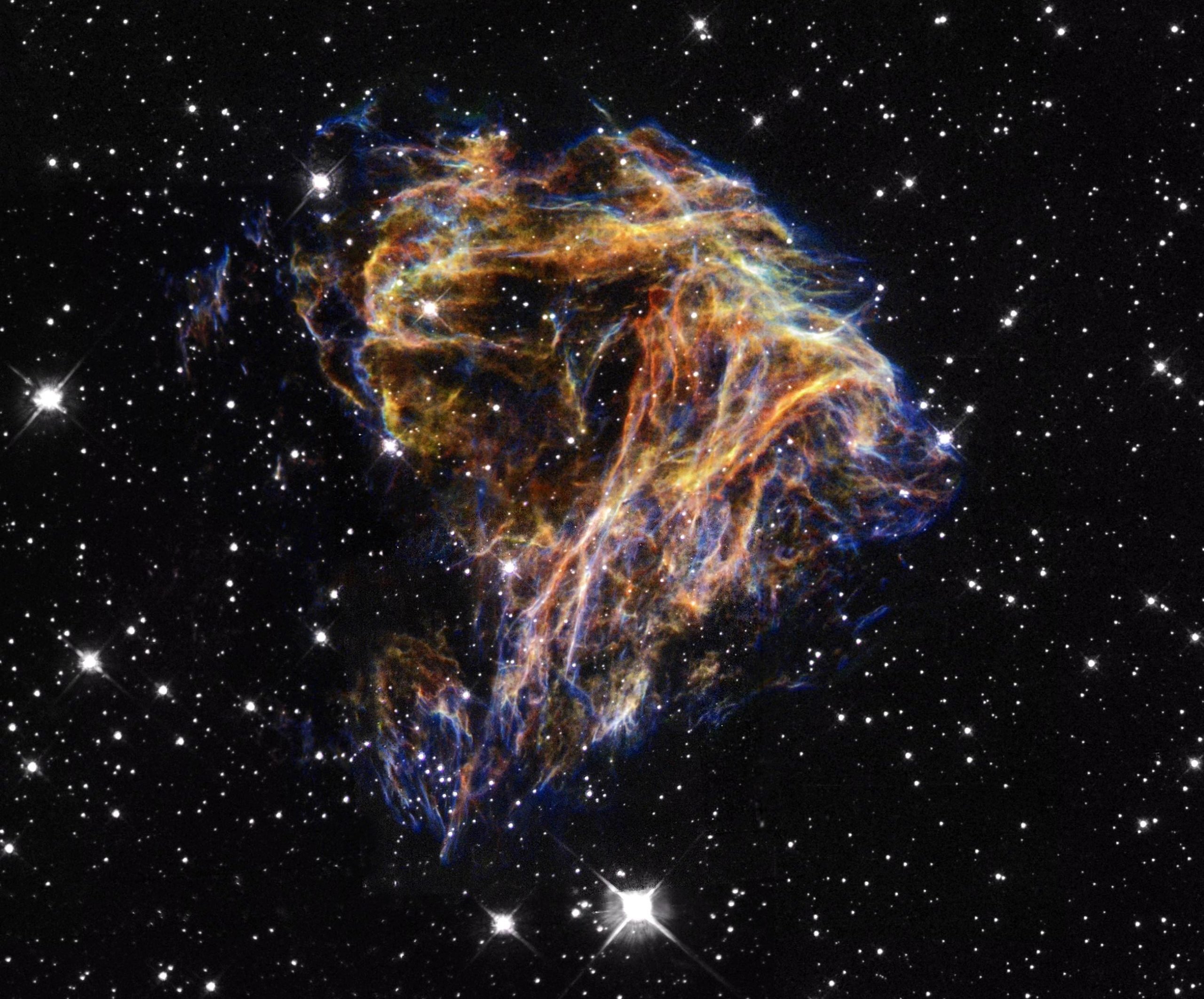
    Hubble Celestial Fireworks Large Magellanic Cloud
    Resembling sparks from a fireworks display, this image taken by a JPL camera onboard NASA’s Hubble Space Telescope shows delicate filaments that are sheets of debris from a stellar explosion in the nearby Large Magellanic Cloud galaxy. Credit: NASA/JPL/Hubble Heritage Team (STScI/AURA)

    The Hubble Space Telescope captured this spectacular image of a stellar explosion throwing out sheets of debris in the nearby Large Magellanic Cloud galaxy on July 7, 2003. Since its 1990 launch, Hubble has changed our fundamental understanding of the universe; with over 1.5 million observations and 20,000+ papers published on its discoveries, Hubble is the most productive science mission in the history of NASA.

    Large Magellanic Cloud

    The Large Magellanic Cloud (LMC) is a satellite galaxy of the Milky Way. Located about 163,000 light-years away, it’s one of the closest galaxies to our own. The LMC is a dwarf galaxy, notable for its irregular shape, and it’s visible from the southern hemisphere. It’s an important site for astronomical research, particularly in understanding galactic formation and evolution, as it hosts a variety of stellar types and interstellar clouds.
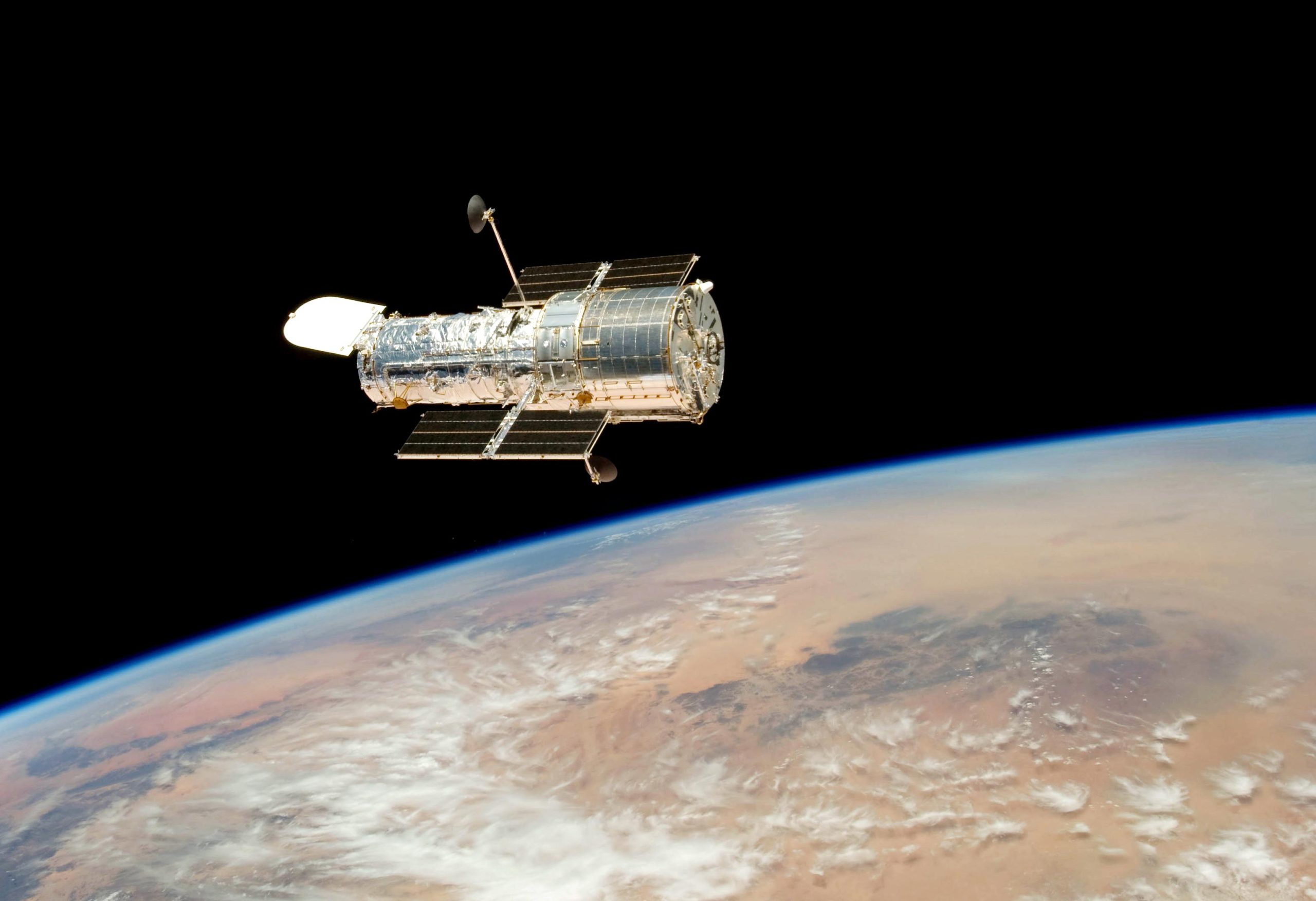
    Hubble's Final Release Over Earth
    Hubble drifts over Earth after its release on May 19, 2009, by the crew of the Space Shuttle Atlantis. The crew had performed all planned tasks over the course of five spacewalks, making the Servicing Mission 4 (SM4), the fifth astronaut visit to the Hubble Space Telescope, an unqualified success. Credit: NASA

    Hubble Space Telescope

    The Hubble Space Telescope is a significant observatory in space, launched by NASA in 1990. Orbiting Earth, it’s been providing unparalleled views of the universe, free from the distortion of Earth’s atmosphere. Hubble has contributed to major breakthroughs in astronomy, including the determination of the rate of expansion of the universe. It’s equipped with a range of instruments allowing it to observe in various spectrums of light, from ultraviolet to near-infrared, making it a versatile tool for exploring the cosmos.

    Never miss a breakthrough: Join the SciTechDaily newsletter.
    Follow us on Google and Google News.

    Astronomy Hubble Space Telescope NASA Popular
    Share. Facebook Twitter Pinterest LinkedIn Email Reddit

    Related Articles

    The Great Escape: NASA’s Hubble and MAVEN Help Solve Mystery of Mars’ Vanishing Water

    Webb and Hubble Unite: A Breathtaking 3D Journey Through the Pillars of Creation

    Stellar Sleuths: Citizen Scientists and AI Uncover Hidden Asteroids With Hubble

    Stellar Fireworks: Hubble Revisits a Strange Star’s 40-Year Nova Mystery

    Cosmic Geode: Hubble Captures the Birth of a Sun-like Star

    Hubble Celebrates 34th Anniversary With a Spectacular View of the Little Dumbbell Nebula

    Jupiter Unveiled: Hubble Captures the Giant’s Roaring Storms and Volcanic Moon Io

    Galaxies Collide, Stars Awaken: Hubble’s Stunning Revelation

    Hubble Spots Water Vapor in Small Exoplanet’s Atmosphere

    1 Comment

    1. Shaun on January 1, 2024 10:08 am

      Looks like an Ewok

      Reply
    Leave A Reply Cancel Reply

    • Facebook
    • Twitter
    • Pinterest
    • YouTube

    Don't Miss a Discovery

    Subscribe for the Latest in Science & Tech!

    Trending News

    The Strange “Spacetime Crystal” That Can Suddenly Turn Into a Black Hole

    The Surprising Way Asteroids May Have Helped Life Begin on Earth

    Vast Hidden Structure Discovered Under Miles of Ice in East Antarctica

    A Surprising Discovery Suggests Autism Is Not One Condition

    New Alzheimer’s Discovery Could Change How Scientists Fight the Disease

    Yale Discovery Overturns Long-Held “Evolutionary Dead End” Theory

    UCLA Scientists Uncover a “Hidden Weakness” in Some of the World’s Deadliest Cancers

    Humpback Whale Stuns Scientists With 15,000 Kilometer Journey Across Oceans

    Follow SciTechDaily
    • Facebook
    • Twitter
    • YouTube
    • Pinterest
    • Newsletter
    • RSS
    SciTech News
    • Biology News
    • Chemistry News
    • Earth News
    • Health News
    • Physics News
    • Science News
    • Space News
    • Technology News
    Recent Posts
    • Food Waste Becomes a Powerful Carbon Trap in Climate Breakthrough
    • Battery-Free Artificial Photosynthesis Turns Sunlight, Water, and CO2 Into Fuel
    • How Ancient People Moved a 6-Ton Stone 700 Kilometers to Stonehenge
    • Scientists Finally See How Antibodies Really Attack Viruses
    • The Unexpected Gut Health Risk of Cutting Out Sugar
    Copyright © 1998 - 2026 SciTechDaily. All Rights Reserved.
    • Science News
    • About
    • Contact
    • Editorial Board
    • Privacy Policy
    • Terms of Use

    Type above and press Enter to search. Press Esc to cancel.