
Close Menu
    Facebook X (Twitter) Instagram
    SciTechDaily
    • Biology
    • Chemistry
    • Earth
    • Health
    • Physics
    • Science
    • Space
    • Technology
    Facebook X (Twitter) Pinterest YouTube RSS
    SciTechDaily
    Home»Space»2024 Total Solar Eclipse: Supercomputer Prediction vs. Reality
    Space

    2024 Total Solar Eclipse: Supercomputer Prediction vs. Reality

    By Rachel Lense, NASA's Goddard Space Flight CenterMay 17, 20241 Comment2 Mins Read
    Facebook Twitter Pinterest Telegram LinkedIn WhatsApp Email Reddit
    Share
    Facebook Twitter LinkedIn Pinterest Telegram Email Reddit
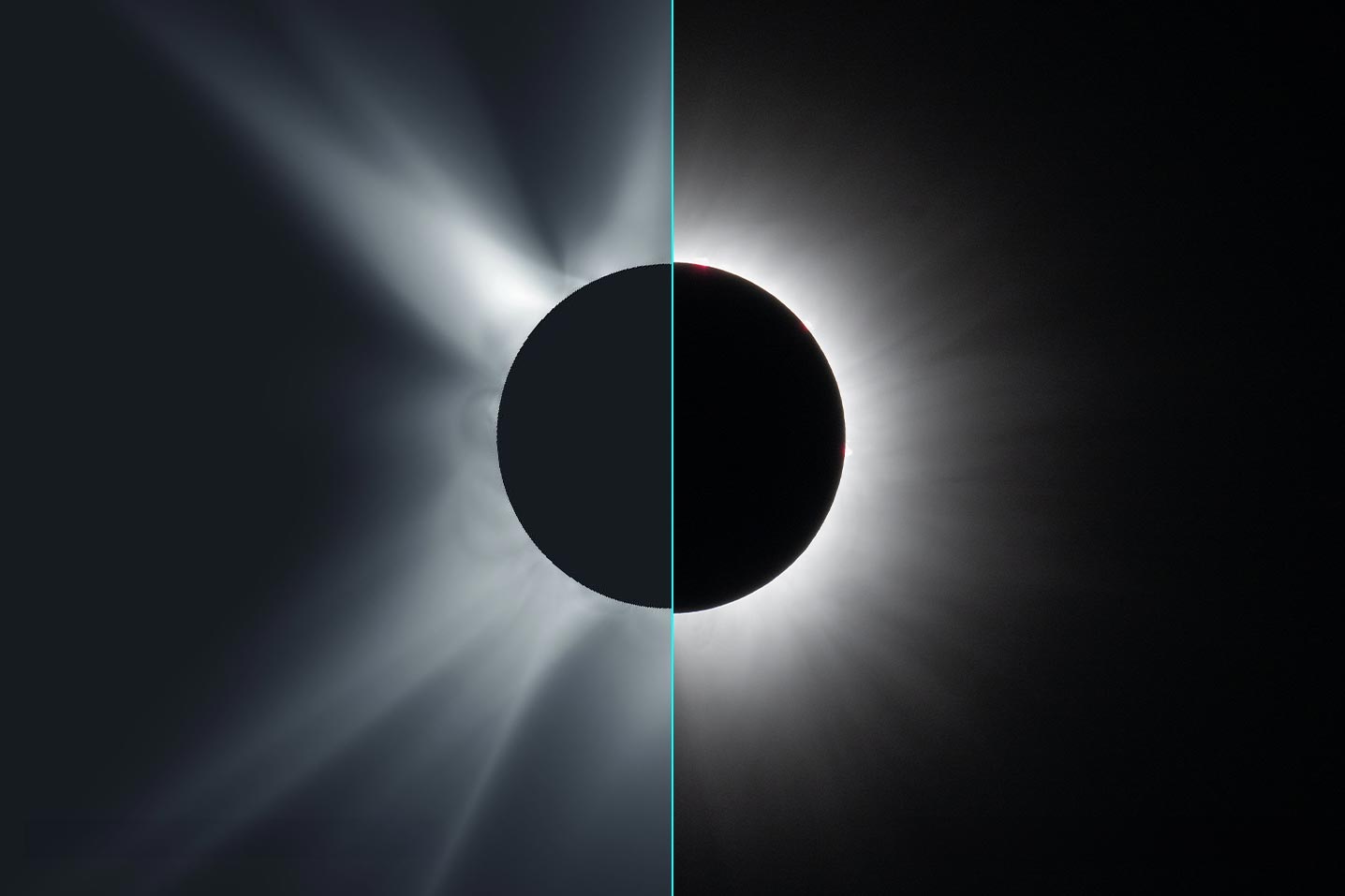
    2024 Total Solar Eclipse Prediction vs Reality
    Scientists at Predictive Science Inc. aimed to predict the appearance of the solar corona during the total solar eclipse on April 8, 2024, using data from supercomputers and space observatories. Credit: Predictive Science Inc., NASA/KeeganBarber

    Predictive Science Inc. utilized supercomputers and satellite data to model the solar corona during a 2024 eclipse, improving understanding of solar disruptions.

    Before a total solar eclipse crossed North America on April 8, 2024, scientists at Predictive Science Inc. of San Diego aimed to predict what the Sun’s outer atmosphere, the corona, would look like during totality.

    The predictions help researchers understand the accuracy of their models of the Sun’s corona, which extends along its magnetic field. A solar eclipse offers a rare opportunity to view the entire corona from Earth, guiding research into how its energy can cause solar flares and coronal mass ejections, which can disrupt technology on Earth and in space.
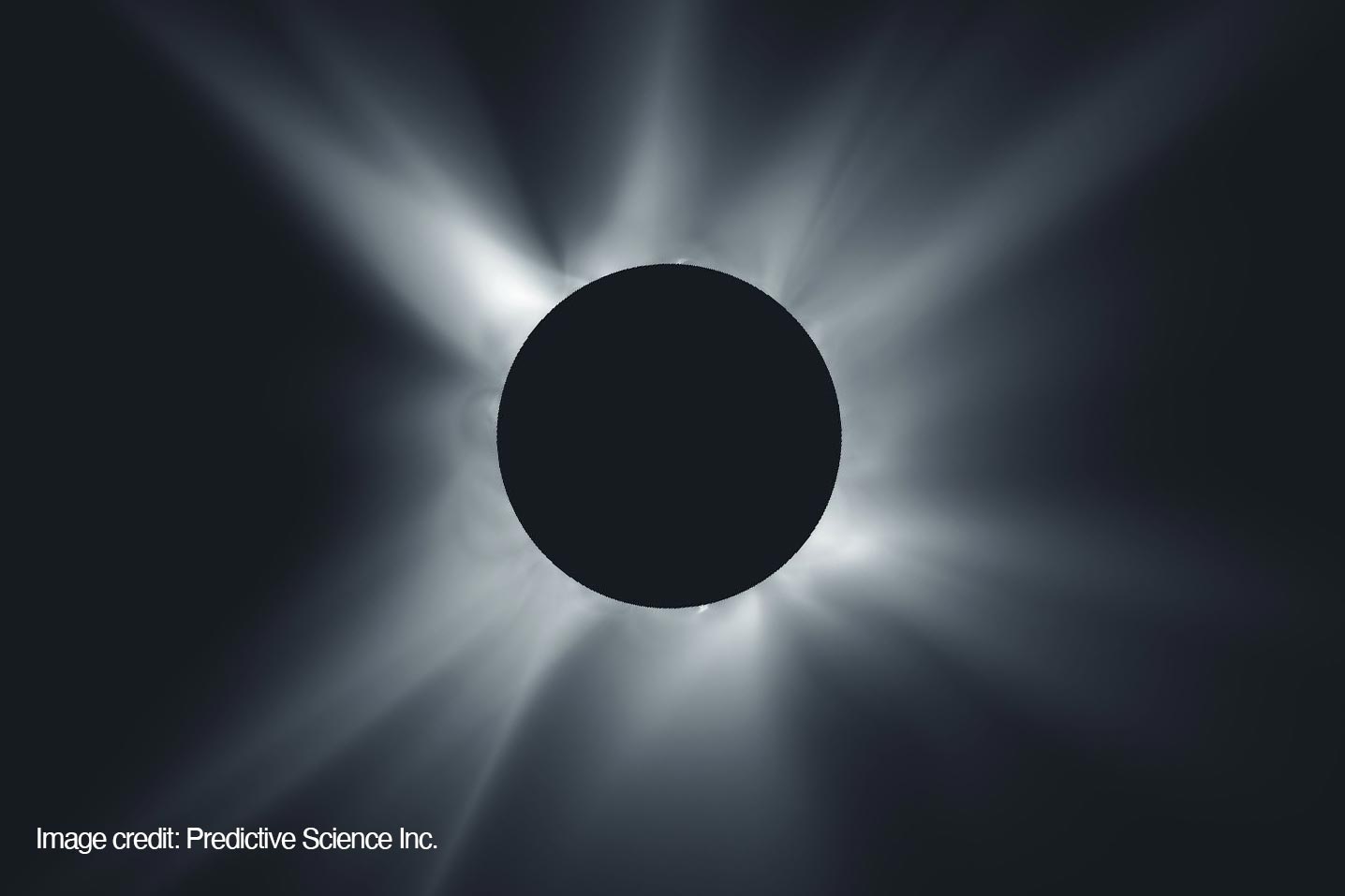
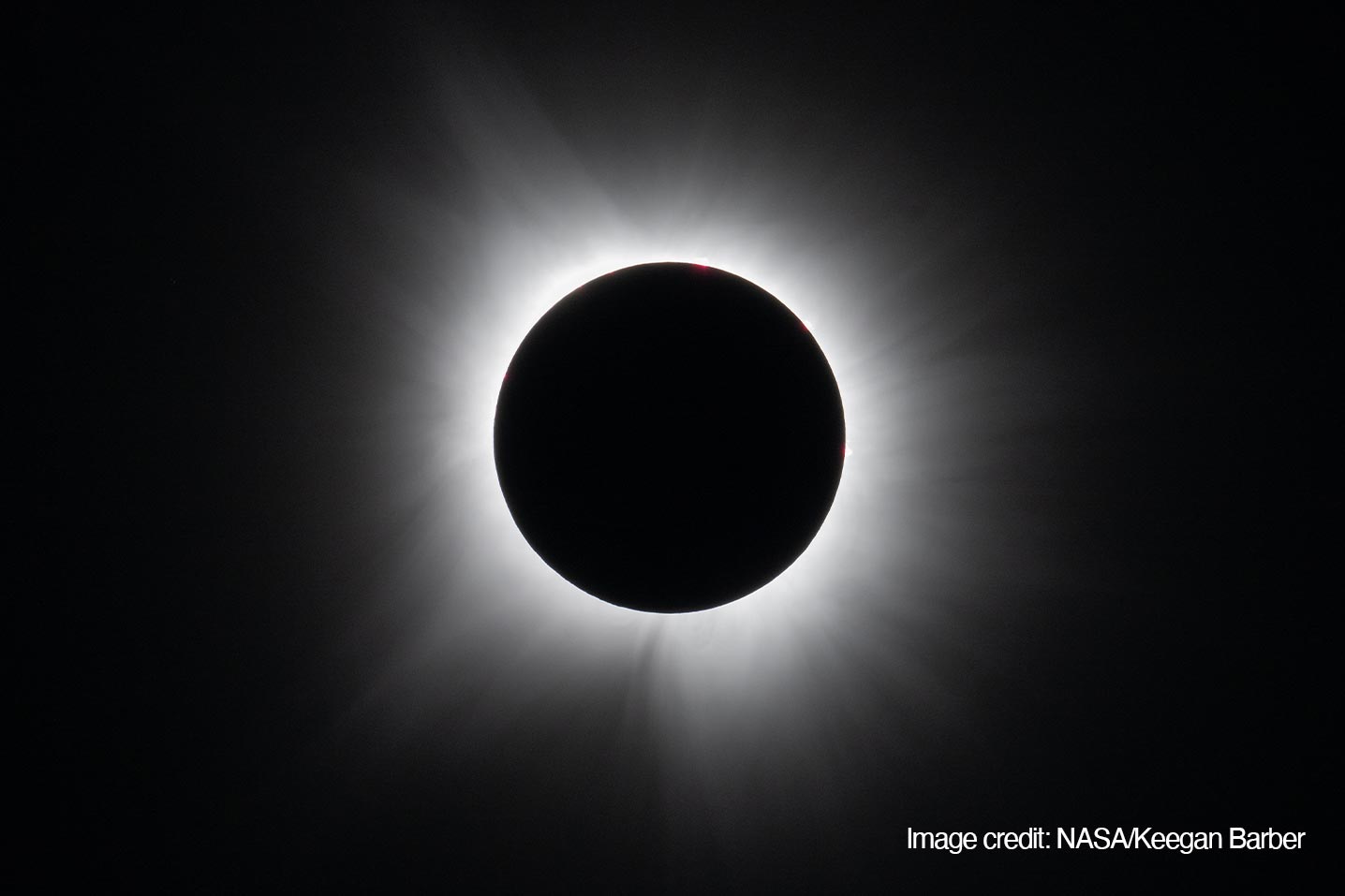
    2024 Total Solar Eclipse Prediction
    2024 Total Solar Eclipse Corona Prediction. Credit: Predictive Science Inc.
    2024 Total Solar Eclipse Reality
    2024 Total Solar Eclipse Actual Composite Image. Credit: NASA/KeeganBarber

    The researchers used the Aitken, Electra, and Pleiades supercomputers at the NASA Advanced Supercomputing facility, located at the agency’s Ames Research Center in California’s Silicon Valley. With near-real-time data from NASA’s Solar Dynamics Observatory and ESA’s (the European Space Agency) and NASA’s Solar Orbiter, they created a dynamic model of the corona.

    The team’s model accurately predicted several details, including long streamers in the upper and lower left side of the image, but the streamers’ locations are slightly misaligned when compared with real images. This is likely because some new activity on the far side of the Sun, which affected the appearance of the corona, wasn’t yet seen and couldn’t be incorporated in the model. Once it was, the model more closely matched observational photos of the corona.

    Recognizing that the corona is inherently complex and difficult to predict during solar maximum, Cooper Downs, a research scientist at Predictive Science, said, “We’re really thrilled with this simulation. It really has a lot of scientific consequences that I think we’ll be exploring for a long time.”

    Never miss a breakthrough: Join the SciTechDaily newsletter.
    Follow us on Google and Google News.

    Astronomy NASA NASA Goddard Space Flight Center Solar Eclipse Sun
    Share. Facebook Twitter Pinterest LinkedIn Email Reddit

    Related Articles

    NASA’s ACE Mission: Total Solar Eclipses Shine a Light on the Solar Wind

    A New View of Small Sun Structures Allows NASA to Explore the Solar Wind Like Never Before

    U.S. Postal Service to Issue Sun Science Forever Stamps With 10 Spectacular Images From NASA’s Solar Dynamics Observatory

    Secrets Behind Sunquakes May Lurk Beneath the Solar Surface

    NASA’s Solar Dynamics Observatory Spots First Lunar Transit of 2021

    Astronomers May Have Spotted a Nanoflare on the Sun – First Predicted 48 Years Ago to Solve a Major Mystery

    Recently Discovered Comet Seen Flying Past the Sun During Total Solar Eclipse

    ESA/NASA Solar and Heliospheric Observatory Celebrates a Quarter-Century in Space

    How NASA & Scientists Around the World Track the Solar Cycle

    1 Comment

    1. Boba on May 17, 2024 6:36 am

      Taxpayers’ money at work, everyone.

      Reply
    Leave A Reply Cancel Reply

    • Facebook
    • Twitter
    • Pinterest
    • YouTube

    Don't Miss a Discovery

    Subscribe for the Latest in Science & Tech!

    Trending News

    First-of-Its-Kind Discovery: Homer’s Iliad Found Embedded in a 1,600-Year-Old Egyptian Mummy

    Beyond Inflammation: Scientists Uncover New Cause of Persistent Rheumatoid Arthritis

    A Simple Molecule Could Unlock Safer, Easier Weight Loss

    Scientists Just Built a Quantum Battery That Charges Almost Instantly

    Researchers Unveil Groundbreaking Sustainable Solution to Vitamin B12 Deficiency

    Millions of People Have Osteopenia Without Realizing It – Here’s What You Need To Know

    Researchers Discover Boosting a Single Protein Helps the Brain Fight Alzheimer’s

    World-First Study Reveals Human Hearts Can Regenerate After a Heart Attack

    Follow SciTechDaily
    • Facebook
    • Twitter
    • YouTube
    • Pinterest
    • Newsletter
    • RSS
    SciTech News
    • Biology News
    • Chemistry News
    • Earth News
    • Health News
    • Physics News
    • Science News
    • Space News
    • Technology News
    Recent Posts
    • Mezcal “Worm” in a Bottle Mystery: DNA Testing Reveals a Surprise
    • Scientists Turn Red Lettuce Green, Unlocking Hidden Nutrients
    • Researchers Discover Natural Compound That Disarms Deadly Superbug
    • New Research Reveals That Your Morning Coffee Activates an Ancient Longevity Switch
    • Researchers Identify the Most Common Recessive Neurodevelopmental Disorder Ever Discovered
    Copyright © 1998 - 2026 SciTechDaily. All Rights Reserved.
    • Science News
    • About
    • Contact
    • Editorial Board
    • Privacy Policy
    • Terms of Use

    Type above and press Enter to search. Press Esc to cancel.