
Close Menu
    Facebook X (Twitter) Instagram
    SciTechDaily
    • Biology
    • Chemistry
    • Earth
    • Health
    • Physics
    • Science
    • Space
    • Technology
    Facebook X (Twitter) Pinterest YouTube RSS
    SciTechDaily
    Home»Health»Bat-Killing Fungus Implicated in Over 1,000 Infant Deaths Nationwide
    Health

    Bat-Killing Fungus Implicated in Over 1,000 Infant Deaths Nationwide

    By University of ChicagoSeptember 17, 2024No Comments4 Mins Read
    Facebook Twitter Pinterest Telegram LinkedIn WhatsApp Email Reddit
    Share
    Facebook Twitter LinkedIn Pinterest Telegram Email Reddit
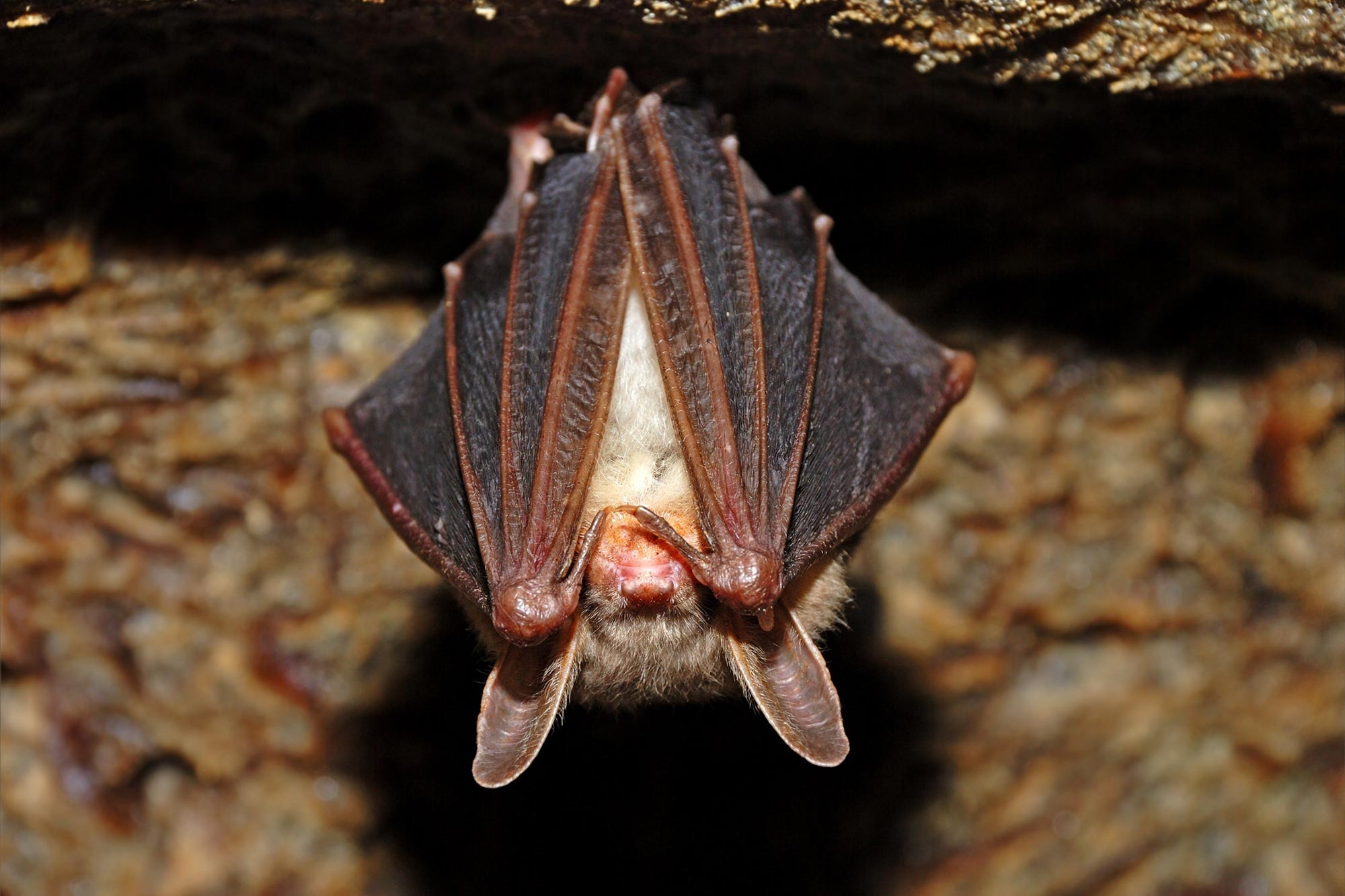
    Bat Hanging in Cave
    The collapse of bat populations due to an invasive fungus has forced farmers to use more pesticides, resulting in over 1,000 infant deaths and $39.6 billion in economic losses, demonstrating the critical role bats play in sustainable agriculture and public health.

    When insect-eating bats died, farmers increased pesticide use—leading to more than 1,000 infant deaths.

    Since 2006, the decline in bat populations in North America has led farmers to increase pesticide use by 31%, resulting in higher infant mortality rates and poorer crop quality. This shift has cost society approximately $39.6 billion, underscoring the significant environmental and health consequences of losing natural pest control.

    The Role of Bats in Agriculture

    Bats are considered a natural pesticide, widely relied on by farmers as an alternative to chemical pesticides to protect their crops from insects. But since 2006, many bat populations have collapsed in counties in North America due to an invasive fungus found in the caves that bats use.

    A new study in the journal Science uses their sudden collapse to explore whether farmers turned to chemical pesticides, and whether doing so impacts human health. It finds that farmers did increase their pesticide use, leading to more than 1,000 infant deaths.

    Health Consequences of Increased Pesticide Use

    “Bats have gained a bad reputation as being something to fear, especially after reports of a possible linkage with the origins of COVID-19,” said study author Eyal Frank, an assistant professor at the Harris School of Public Policy. “But bats do add value to society in their role as natural pesticides, and this study shows that their decline can be harmful to humans.”

    Frank compared the effect of bat die-offs due to a fungus known as White-Nose Syndrome on pesticide use in counties that experienced bat population declines to counties that were likely unaffected by the wildlife disease. He found that when the bat populations declined, farmers increased their use of pesticides by about 31 percent.

    Bat Die-Offs Increase Pesticide Use, Increasing Infant Mortality
    The study compared the effect of bat die-offs from White-Nose Syndrome on pesticide use in counties that experienced bat population declines to counties that were likely unaffected. It found that when the bat populations declined, farmers increased their use of pesticides by about 31 percent. When farmers increased their use of pesticides, the infant mortality rate—a common marker to study the health impacts of environmental pollution—rose by almost 8 percent. This corresponds to an additional more than 1,000 infant deaths. Credit: Energy Policy Institute at the University of Chicago, epic.uchicago.edu

    Because pesticides have been linked to negative health impacts, Frank next tested to see if the increased use of pesticides corresponded with an increase in infant mortality—a common marker to study the health impacts of environmental pollution. When farmers increased their use of pesticides, the infant mortality rate rose by almost 8 percent. This corresponds to an additional 1,334 infant deaths. Or, for every 1 percent increase in pesticides, there was a 0.25 percent increase in the infant mortality rate.

    Economic and Environmental Costs

    The study also found that pesticides aren’t as good at preventing pests as bats. The quality of the crops likely declined, as farmers’ revenue from crop sales decreased by nearly 29 percent. Combining this revenue loss with the expense of the pesticides, farmers in communities that experienced the bat die-offs lost $26.9 billion between 2006 and 2017. Adding onto those losses the $12.4 billion in damages from infant mortality, the total societal cost from the bat die-offs in these communities amounted to $39.6 billion.

    “When bats are no longer there to do their job in controlling insects, the costs to society are very large, but the cost of conserving bat populations is likely smaller,” Frank said. “More broadly, this study shows that wildlife adds value to society, and we need to better understand that value in order to inform policies to protect them.”

    Reference: “The economic impacts of ecosystem disruptions: Costs from substituting biological pest control” by Eyal G. Frank, 6 September 2024, Science.
    DOI: 10.1126/science.adg0344

    Never miss a breakthrough: Join the SciTechDaily newsletter.
    Follow us on Google and Google News.

    Agriculture Bats Mortality Pesticides Popular University of Chicago
    Share. Facebook Twitter Pinterest LinkedIn Email Reddit

    Related Articles

    Surprising Melanoma Hotspot Found in Pennsylvania Farm Country

    Study Reveals Pesticides’ Cancer Risk Rivals That of Smoking

    Parkinson’s Warning: UCLA & Harvard Researchers Identify 10 Neurotoxic Pesticides

    Breakthrough for Healthcare, Agriculture, Energy: Artificial Intelligence Reveals Recipe for Building Artificial Proteins

    New Vaccine Platform – With No Needles – Has Potential to Be More Effective With Fewer Side Effects

    Handheld COVID-19 Test Could Deliver Results in 5 Minutes – For Just $10

    Close Genetic Relative of SARS-CoV-2 Found in Bats Offers More Evidence It Evolved Naturally

    Why Are Bat Viruses So Deadly? Answers to the Question Raised by Coronavirus Outbreak

    Researchers Identify Gut Bacteria That Protect Against Food Allergies

    Leave A Reply Cancel Reply

    • Facebook
    • Twitter
    • Pinterest
    • YouTube

    Don't Miss a Discovery

    Subscribe for the Latest in Science & Tech!

    Trending News

    First-of-Its-Kind Discovery: Homer’s Iliad Found Embedded in a 1,600-Year-Old Egyptian Mummy

    Beyond Inflammation: Scientists Uncover New Cause of Persistent Rheumatoid Arthritis

    A Simple Molecule Could Unlock Safer, Easier Weight Loss

    Scientists Just Built a Quantum Battery That Charges Almost Instantly

    Researchers Unveil Groundbreaking Sustainable Solution to Vitamin B12 Deficiency

    Millions of People Have Osteopenia Without Realizing It – Here’s What You Need To Know

    Researchers Discover Boosting a Single Protein Helps the Brain Fight Alzheimer’s

    World-First Study Reveals Human Hearts Can Regenerate After a Heart Attack

    Follow SciTechDaily
    • Facebook
    • Twitter
    • YouTube
    • Pinterest
    • Newsletter
    • RSS
    SciTech News
    • Biology News
    • Chemistry News
    • Earth News
    • Health News
    • Physics News
    • Science News
    • Space News
    • Technology News
    Recent Posts
    • This Simple Exercise Trick Builds Muscle With Less Effort, Study Finds
    • Middle Age Is Becoming a Breaking Point in America, Study Reveals
    • Scientists Discover How Coffee Impacts Memory, Mood, and Gut Health
    • How Cells Copy DNA Might Matter More Than We Ever Realized
    • Scientists Just Solved the Mystery of the Twelve Apostles
    Copyright © 1998 - 2026 SciTechDaily. All Rights Reserved.
    • Science News
    • About
    • Contact
    • Editorial Board
    • Privacy Policy
    • Terms of Use

    Type above and press Enter to search. Press Esc to cancel.