
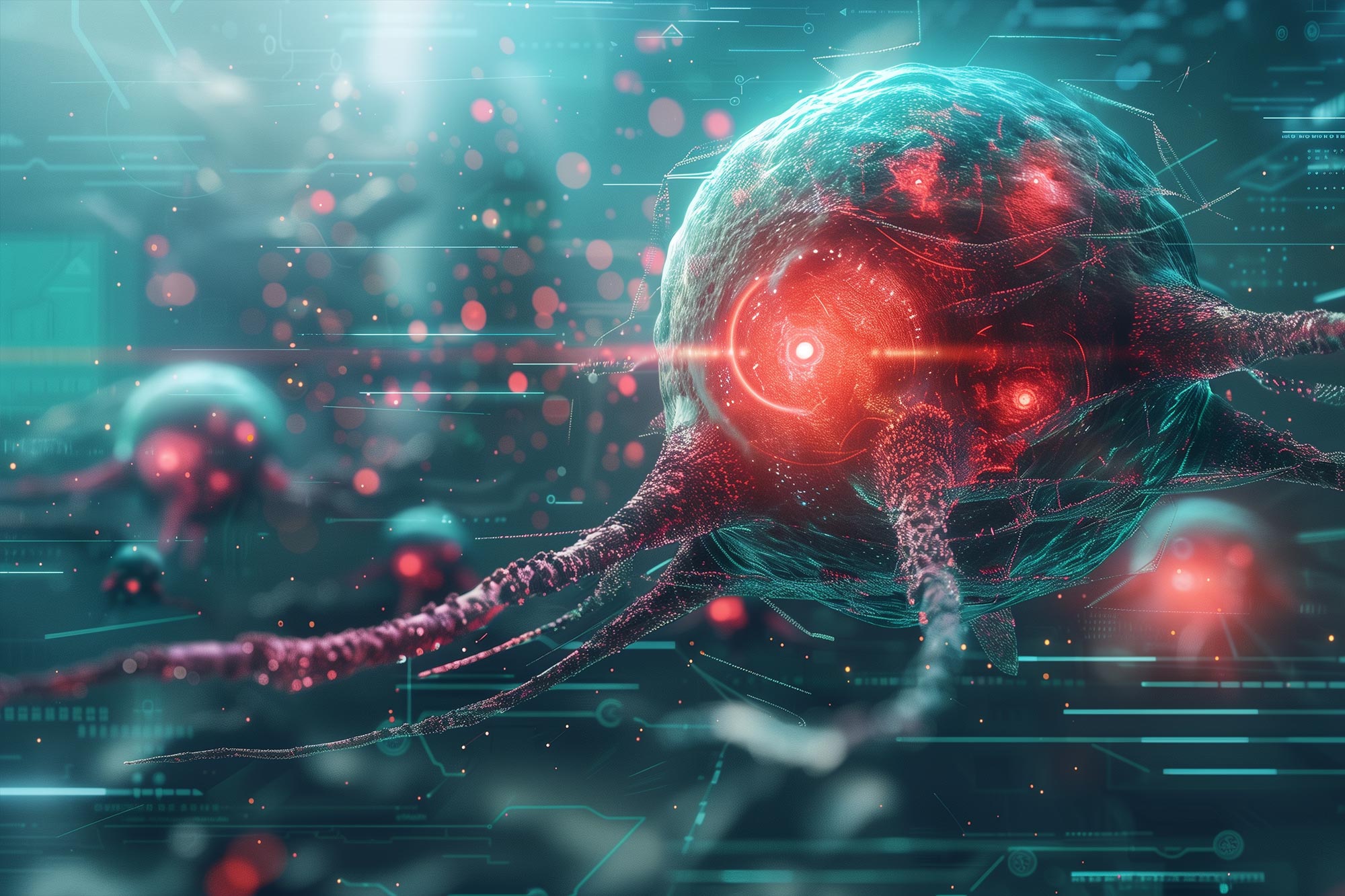
Researchers have pioneered a method to modify protein identities within the body, potentially revolutionizing targeted drug delivery.
By altering protein markers, they can direct cancer therapies directly to tumors, ensuring precise treatment and minimal side effects. This approach, validated in mice, also suggests the possibility of designing drugs that can perform diverse functions across different organs.
Groundbreaking Protein Alteration Technology
Scientists at the RIKEN Cluster for Pioneering Research (CPR) have unveiled a breakthrough technology that can alter, within the body, the recognized identity of proteins. The study, published today (October 2) in the scientific journal Nature Communications, demonstrates how researchers can target mouse tumors with a protein and then transport that protein out of the body.
This means that cancer-killing drugs could be sent directly to tumors and then excreted from the body after dropping off their payload. The technology also has the potential to allow multi-purpose drugs that can travel from organ to organ, performing separate actions at each location.
Targeting Disease With Modified Proteins
Proteins in the blood travel all over the body, making them ideal carriers for targeted treatments against diseases like cancer. To avoid harming untargeted tissue, the drugs need to do their damage by attaching to the correct cells, and this requires a complicated molecular ID card.
The new study led by Katsunori Tanaka at RIKEN CPR focuses on changing the identification markers on the surface of the albumin, the most abundant protein in the blood, thus changing which tissues it can attach to in the mouse body.
The Key to Changing Protein Identity
In a previous study, Tanaka’s team examined the cancer-targeting capabilities of different identification-marking molecules — called glycans — that they attached to albumin. They found that identification pattern ‘A’ could bind to human colon cancer, as well as be transported to the bladder for excretion in urine, while identification pattern ‘B’ caused albumin to be picked up by the liver, sent to the intestines, and excreted from there.
Demonstrating In-Body Identity Switch
The key innovation of the new study was figuring out how to change albumin’s molecular ID card after it reaches its destination inside the body. To achieve this, the researchers used the chemical click-to-release method. First, they created albumin-1 by attaching the identification pattern ‘A’ to albumin. Then, they devised a switching carrier and its partner. The switcher carried identification pattern ‘B’ and the partner was attached to albumin-1.
When the partner on albumin-1 met the switcher in a dish, the click-to-release reaction took place—‘B’ identifiers were clicked on and many of the ‘A’ identifiers were released. The new albumin was called albumin-2 and was a mix of identification patterns ‘A’ and ‘B’.
Proof of Concept and Future Applications
In the first proof-of-concept experiment in the mouse body, they labeled albumin-1 with a fluorescent protein and then injected it into the mouse’s bloodstream with or without the switcher. As predicted, when injecting albumin-1 with the switcher, researchers observed fluorescence in the intestines, similar to what they observed after injecting albumin-2. Without the switcher, fluorescence was only seen in the blood, bladder, and urine.
Implications for Multi-Disease Treatment
Having shown that they could indeed alter the surface identity of albumin inside the body, the team next tested whether they could send albumin-1 into a tumor, and then remove it via the intestines, mimicking drug delivery and removal. They injected albumin-1 into mouse colon tumors, with or without the switcher after a short 10-minute delay.
In both cases, they observed albumin attaching to tumor cells. After injecting the switcher, albumin changed identity and much of it had moved from the tumor to the intestines within 5 hours. Without the switcher, albumin-1 never made it to the intestines.
The Potential of Biocompatible Drug Delivery
The biocompatible reactions used by the new technology make it particularly attractive, and the new technique could revolutionize treatment for multiple conditions.
“Our strategy could be used as a drug delivery system to promote excretion of a drug or medical radionuclide from a tumor after treatment,” explains Tanaka, “thereby preventing prolonged exposure that could lead to adverse effects. Alternatively, a single “patrolling” molecule could be used for simultaneous treatment of multiple diseases — as in the technology depicted in the movie Fantastic Voyage.”
Reference: “Chemistry-driven translocation of glycosylated proteins in mice” by Kenshiro Yamada, Akari Mukaimine, Akiko Nakamura, Yuriko Kusakari, Ambara R. Pradipta, Tsung-Che Chang and Katsunori Tanaka, 2 October 2024, Nature Communications.
DOI: 10.1038/s41467-024-51342-5
Never miss a breakthrough: Join the SciTechDaily newsletter.
Follow us on Google and Google News.