

Massive impacts had a silver lining for life.
Billions of years ago, long before life as we know it emerged, meteorites regularly bombarded the planet. Around 3.26 billion years ago, one of these space rocks struck Earth, and even today, it’s revealing secrets about Earth’s past.
Nadja Drabon, an early-Earth geologist and assistant professor in the Department of Earth and Planetary Sciences at Harvard, is insatiably curious about what our planet was like during ancient eons rife with meteoritic bombardment, when only single-celled bacteria and archaea reigned – and when it all started to change. When did the first oceans appear? What about continents? Plate tectonics? How did all those violent impacts affect the evolution of life?
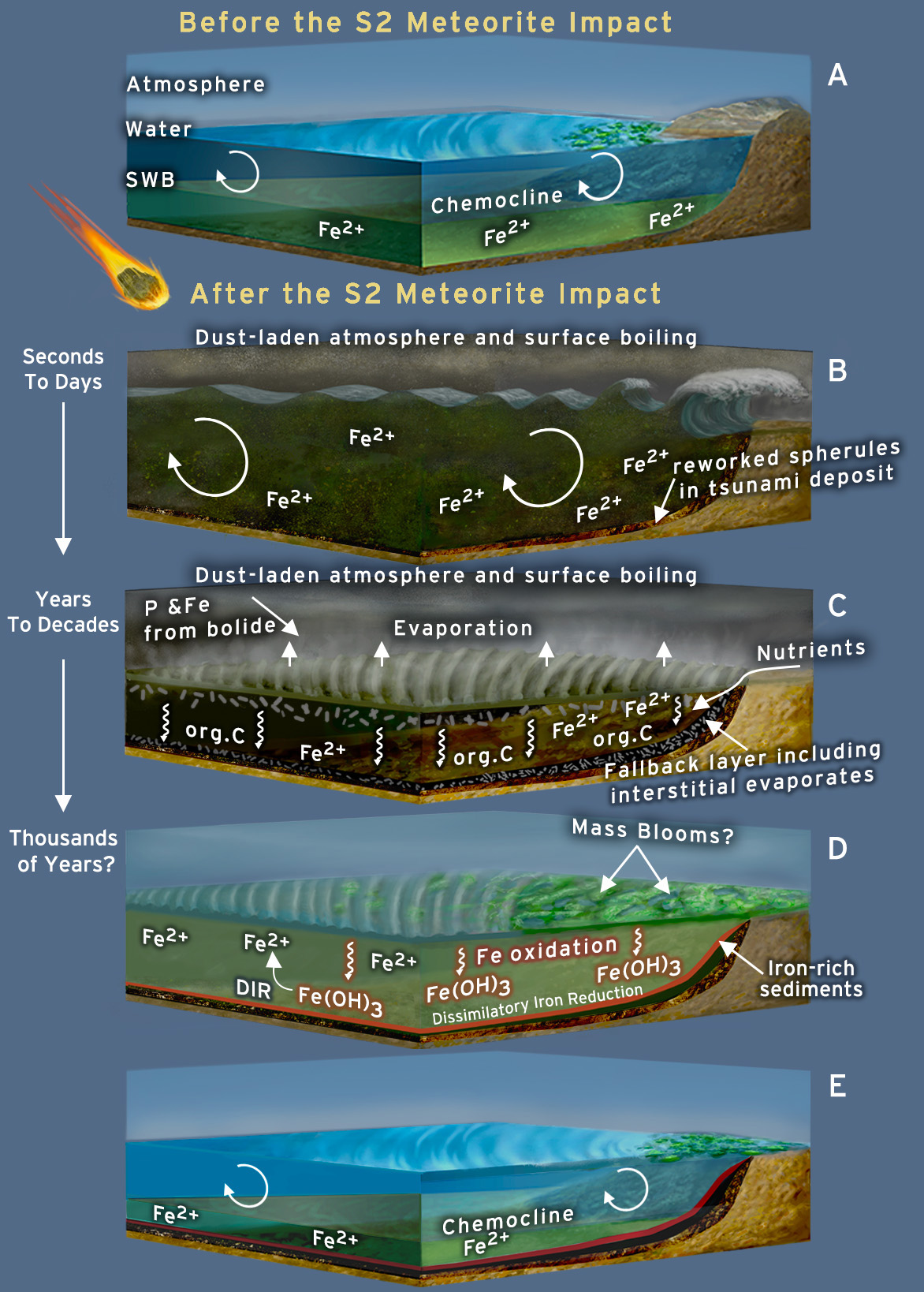
Insights from a Major Meteoritic Impact

A new study in Proceedings of the National Academy of Sciences sheds light on some of these questions, in relation to the inauspiciously named “S2” meteoritic impact of over 3 billion years ago, and for which geological evidence is found in the Barberton Greenstone belt of South Africa today. Through the painstaking work of collecting and examining rock samples centimeters apart and analyzing the sedimentology, geochemistry, and carbon isotope compositions they leave behind, Drabon’s team paints the most compelling picture to date of what happened the day a meteorite the size of four Mount Everests paid Earth a visit.
“Picture yourself standing off the coast of Cape Cod, in a shelf of shallow water. It’s a low-energy environment, without strong currents. Then all of a sudden, you have a giant tsunami, sweeping by and ripping up the sea floor,” said Drabon.
The S2 meteorite, estimated to have been up to 200 times larger than the one that killed the dinosaurs, triggered a tsunami that mixed up the ocean and flushed debris from the land into coastal areas. Heat from the impact caused the topmost layer of the ocean to boil off, while also heating the atmosphere. A thick cloud of dust blanketed everything, shutting down any photosynthetic activity taking place.
Life’s Resilience in the Aftermath
But bacteria are hardy, and following impact, according to the team’s analysis, bacterial life bounced back quickly. With this came sharp spikes in populations of unicellular organisms that feed off the elements phosphorus and iron. Iron was likely stirred up from the deep ocean into shallow waters by the aforementioned tsunami, and phosphorus was delivered to Earth by the meteorite itself and from an increase of weathering and erosion on land.
Drabon’s analysis shows that iron-metabolizing bacteria would thus have flourished in the immediate aftermath of the impact. This shift toward iron-favoring bacteria, however short-lived, is a key puzzle piece depicting early life on Earth. According to Drabon’s study, meteorite impact events – while reputed to kill everything in their wake (including, 66 million years ago, the dinosaurs) – carried a silver lining for life.
“We think of impact events as being disastrous for life,” Drabon said. “But what this study is highlighting is that these impacts would have had benefits to life, especially early on … these impacts might have actually allowed life to flourish.”
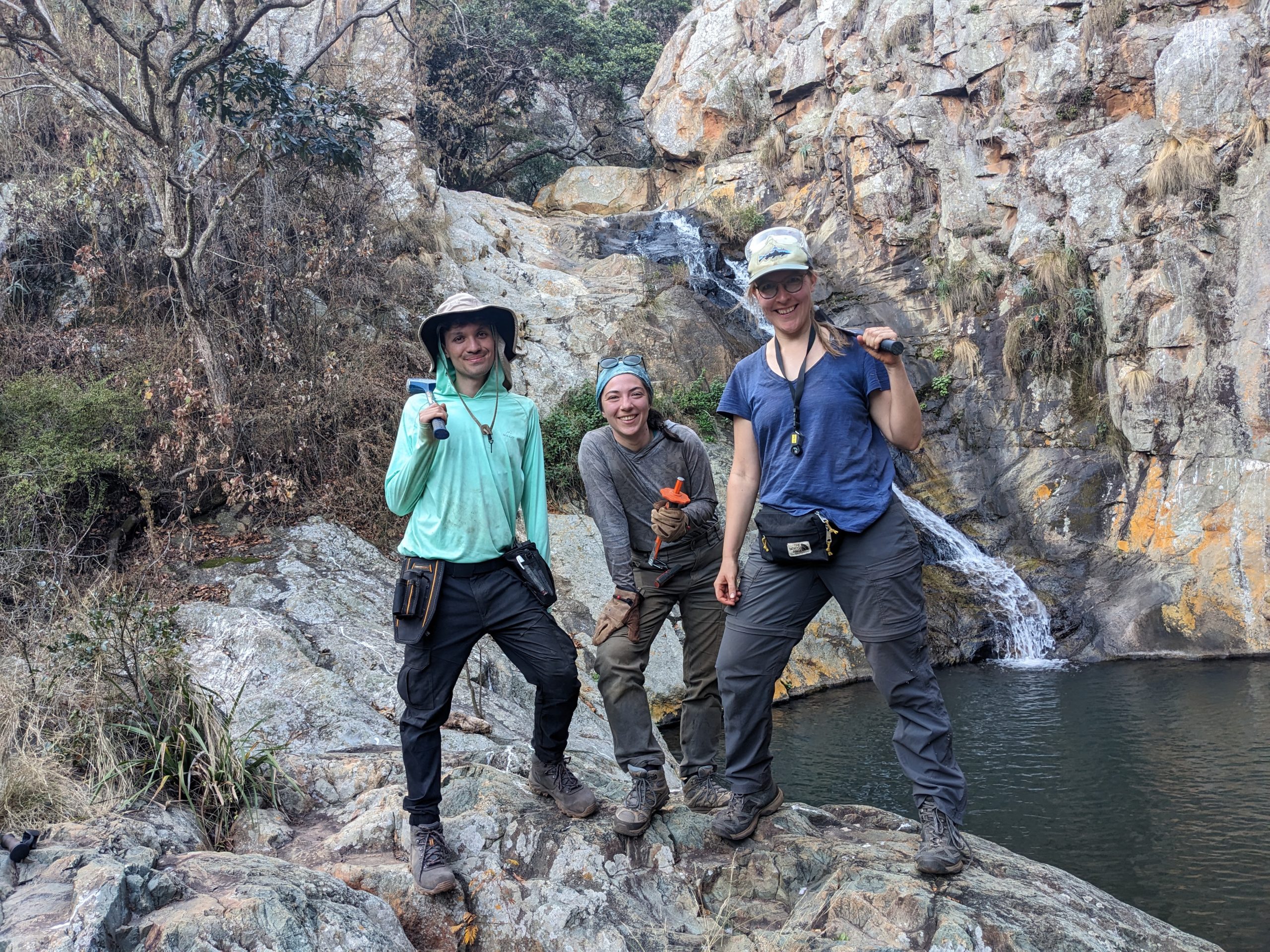
These results are drawn from the backbreaking work of geologists like Drabon and her students, hiking into mountain passes that contain the sedimentary evidence of early sprays of rock that embedded themselves into the ground and became preserved over time in the Earth’s crust. Chemical signatures hidden in thin layers rock help Drabon and her students piece together evidence of tsunamis and other cataclysmic events.
The Barberton Greenstone Belt in South Africa, where Drabon concentrates most of her current work, contains evidence of at least eight impact events including the S2. She and her team plan to study the area further to probe even deeper into Earth and its meteorite-enabled history.
Reference: “Effect of a giant meteorite impact on Paleoarchean surface environments and life” by Nadja Drabon, Andrew H. Knoll, Donald R. Lowe, Stefano M. Bernasconi, Alec R. Brenner and David A. Mucciarone, 21 October 2024, Proceedings of the National Academy of Sciences.
DOI: 10.1073/pnas.2408721121
Never miss a breakthrough: Join the SciTechDaily newsletter.
Follow us on Google and Google News.
14 Comments
Wow, amazing, thank you !
“triggered a tsunami that mixed up the ocean and flushed debris from the land into coastal areas. Heat from the impact caused the topmost layer of the ocean to boil off, while also heating the atmosphere.” The asteroid theory is only a few decades old, and it changed the existing narrative to one with a catastrophic view of earth’s past, which now effectively tells the story of an event that has exactly the same effects as those that creation scientists hold for the biblical story of the flood. the biblical flood being understood as having been caused by huge amounts of volcanic activity (“all the fountains of the great deep burst open” Gen 7:11) on the ocean floor when the tectonic plates split, both raising water levels and superheating the oceans. Coincidence? The biblical view, which was right from the start will never need modifying, because it’s the truth.
LOL! “The biblical view…” is not a “view.” It’s simply a retelling of numerous flood stories that existed long before the buybull was written. It is a modification of older stories.
True, the Bible wasn’t delivered down to Mankind like scrambled eggs, on the day Jesus left Earth (however he may have left). The Old Testament of the Christian Bible is certainly the oldest, the most widely circulated, and the most frequently translated book of all time. But it may also be one of the most poorly understood books of all time as well. Most of those who study ancient history would agree that the oldest parts of the Christian Bible probably sprang from “oral traditions” that may have dated back to even long before the time of the Jewish patriarch Abraham.
But, getting into an argument about what part of the earliest Bible came from where is kind of like arguing about whether the egg or the chicken came first. An exercise in futility.
That is the difference between religion and science. Religious can make anyone up since it’s a belief that, according to the religion can’t be questioned. Science hypothesis needs repeatability experiments which is per reviewed by many people before it is given as a theory. There are as many creation theories as there are religions and that quite a few.
Nope. Hinduism and it’s texts are 1000 years older than Judaism.
The little detail here is that this flood happened when there were not any multicellular animals around, much less humans. Now, where is evidence of a worldwide flood in the period indicated by the Bible? Ancient Egypt, Mesopotamia, Indus Valley, Ancient China, and Babylonia were thriving then and were not erased by a flood as the Bible reports.
What the bejebus
Not really. The biblical version goes to 4000 BCE. The Earth’s history is a few billion years. Truth is relative. Other cultures have creation stories too that are similar. Theirs are equally true
23:10:24. Good job and good luck to your research. I hope you are Enjoying your Homes Work, Assignment and your Expeditions. Be well and stay safe. Thanks. To be continued. M. Luke.
Stories.
I have no idea what the “Size of Four Mount Everests” would be.
Imagine two Mount Everests, and then double it.
Everest; The tallest mountain in the world. A mountain I have never seen, and I’ve seen a few big ones. I’d say perhaps at least a bit bigger than a bread-box?