

A new study unveils the potential reason children participated in creating prehistoric cave art.
In prehistoric societies, children participated in cave paintings because they were seen as mediators between the physical and spiritual worlds.
A team of prehistoric archaeology researchers from Tel Aviv University has proposed a new hypothesis to explain a long-standing mystery: Why did ancient humans bring very young children deep into underground cave painting sites, through dark and dangerous passages?
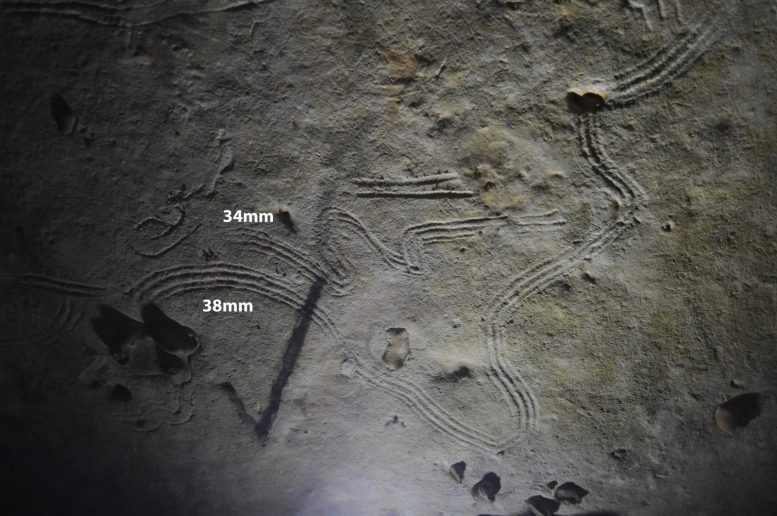
The researchers explain, “Next to many cave paintings, there is clear evidence of the presence of children as young as two years old. So far, most hypotheses have focused on the educational aspect — learning the community’s traditions and customs. However, we believe that children also played a unique cultural role in these caves: Young children were credited with special qualities in the spiritual world, enabling them to communicate with entities from the beyond – which were believed to be accessible from the depths of the cave.”
The study was carried out by Dr. Ella Assaf, Dr. Yafit Kedar, and Prof. Ran Barkai of the Jacob M. Alkow Department of Archaeology and Ancient Near Eastern Cultures at Tel Aviv University. Their paper was published in the journal Arts.

Artwork and artifacts from young hands
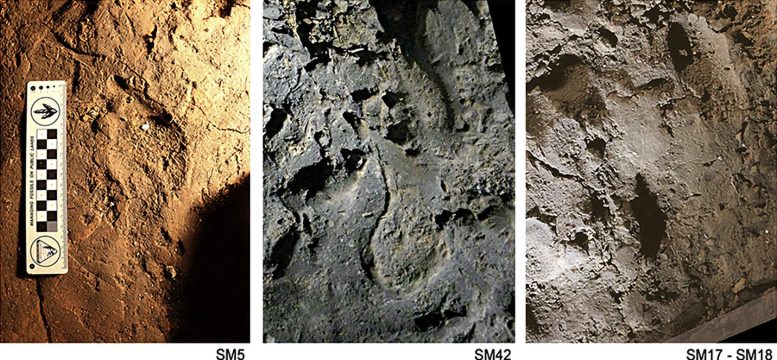
Dr. Assaf explains: “Cave art created by early humans is a fascinating phenomenon that intrigues many researchers. To date, around 400 caves containing cave art have been discovered, mainly in France and Spain, with the artwork dated between 40,000 and 12,000 years ago. There is solid evidence of children’s participation in the artwork — handprints and finger paintings made by children aged two to twelve. In addition, footprints and handprints of children have been found in some caves, alongside those of adults. This naturally raises the question: Why were the children there? Why were very young children taken on exhausting and hazardous journeys deep into the dark, meandering caves with low oxygen levels — crawling through crevices, descending shafts, and climbing rocks to reach their destination?
Dr. Kedar elaborates: “Despite extensive research on cave art, few studies have focused on the presence of children. The prevailing hypothesis is that their participation served an educational purpose — passing down knowledge, traditions, and customs to the next generation. In our study, we argue that children’s involvement had an additional meaning: In fact, they played an important, unique role of their own — direct communication with entities residing in the depths of the earth and otherworldly realms. This study follows our previous works, in which we presented cave artworks as expressions of cosmological approaches, with emphasis on relationships between humans and various entities.”
Cultural agency and childhood
Dr. Assaf adds: “Based on extensive studies about children in indigenous societies, along with new insights into rituals performed in caves with cave paintings, a new understanding is emerging regarding the role of children in the creation of cave art. By integrating data from these research fields, we were able, for the first time, to propose a novel and original explanation for the inclusion of children in creating cave paintings: The world of childhood differs from that of adults, and children possess a range of unique mental and cognitive traits. For this reason, indigenous cultures worldwide, throughout history and prehistory, have viewed children as ‘active agents’ — mediators between this world and the entities inhabiting the natural world, the underworld, and the cosmos as a whole. In this way, children made a vital contribution to their communities – hunter-gatherers who lived in nature and sought to maintain continuous, respectful relationships with various entities: animals and plants that served as food sources, stones used for toolmaking, ancestral spirits, and more.”

Prof. Barkai: “Many of these societies regarded caves as gateways to the underworld – where, through shamanic rituals, they could communicate with cosmic entities and inhabitants of the underworld, to resolve existential problems. In this context, young children were perceived as liminal beings — belonging to both the realm they had left just recently (before birth) and the world they currently inhabit. Thus, small children were considered particularly suited to bridging the gap between the worlds and delivering messages to non-human entities. In this paper, we connect these insights and propose that children joined adults on journeys into the depths of caves and participated in painting and rituals as part of their role in the community—as ideal mediators with entities from the beyond.”
Reference: “Child in Time: Children as Liminal Agents in Upper Paleolithic Decorated Caves” by Ella Assaf, Yafit Kedar and Ran Barkai, 3 March 2025, Arts.
DOI: 10.3390/arts14020027
Never miss a breakthrough: Join the SciTechDaily newsletter.
Follow us on Google and Google News.
4 Comments
why do you take your kids to temple? that’s the answer.
This is about as much of a stretch as the stretchiest stretchers can stretch.
I came here to say much the same (but couldn’t have said it half as well as you have). Perhaps these researchers can tell me my motivation, core beliefs, age and mindset from my reply to you? 🤔🤨😏
Yeah, I’m not sure what they are using to conclude that. Maybe researchers have evidence of all that ‘ but it sure isn’t mentioned here.