
Close Menu
    Facebook X (Twitter) Instagram
    SciTechDaily
    • Biology
    • Chemistry
    • Earth
    • Health
    • Physics
    • Science
    • Space
    • Technology
    Facebook X (Twitter) Pinterest YouTube RSS
    SciTechDaily
    Home»Biology»Geneticists Show Temperature Change Makes Gene-Editing More Efficient
    Biology

    Geneticists Show Temperature Change Makes Gene-Editing More Efficient

    By Bill Hathaway, Yale UniversityDecember 8, 2017No Comments1 Min Read
    Facebook Twitter Pinterest Telegram LinkedIn WhatsApp Email Reddit
    Share
    Facebook Twitter LinkedIn Pinterest Telegram Email Reddit

    Temperature Change Makes Gene-Editing More Efficient

    By modifying a single variable, temperature, Yale geneticists have expanded the potential uses of a groundbreaking gene-editing technology.

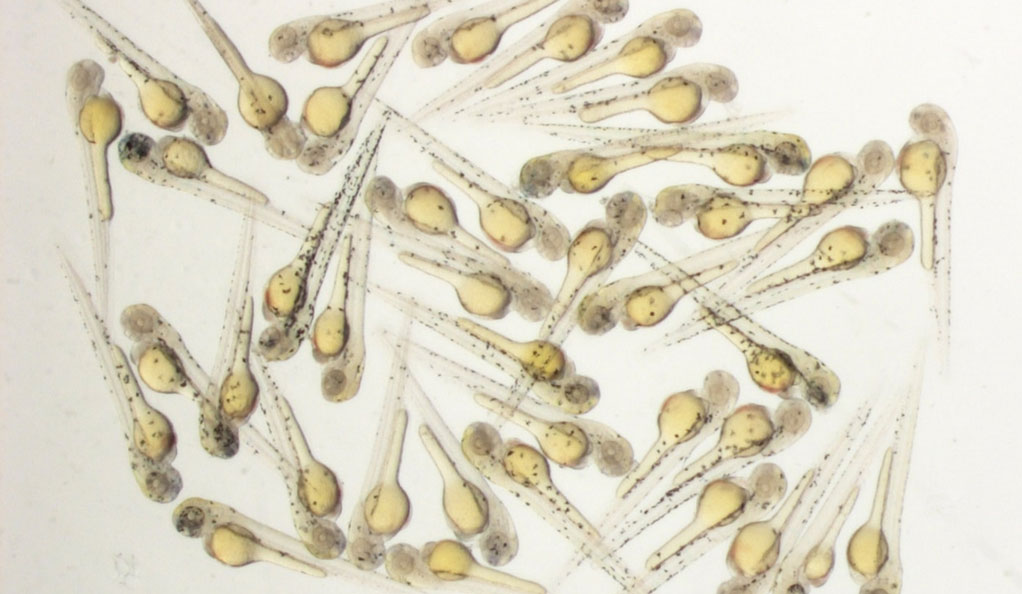
    The CRISPR-Cpf1 gene-editing technology has proved to be highly efficient in mice but not in other model organisms. The Yale team showed that temperature is a key factor controlling Cpf1 activity and have optimized this technology allowing researchers to make targeted genetic changes in a host of model organisms such as zebrafish and the fruit fly Drosophila.

    “With these optimizations, we can modify genomes of every other organism,” said lead author Miguel A. Moreno-Mateos.

    “Now, we have a robust system able to efficiently edit regions in the genome not targetable by other CRISPR systems and this activity can be easily controlled just by changing the temperature.”

    Reference: “CRISPR-Cpf1 mediates efficient homology-directed repair and temperature-controlled genome editing” by Miguel A. Moreno-Mateos, Juan P. Fernandez, Romain Rouet, Charles E. Vejnar, Maura A. Lane, Emily Mis, Mustafa K. Khokha, Jennifer A. Doudna and Antonio J. Giralde, 8 December 2017, Nature Communications.
    DOI: 10.1038/s41467-017-01836-2

    Never miss a breakthrough: Join the SciTechDaily newsletter.
    Follow us on Google and Google News.

    CRISPR Genetics Yale University
    Share. Facebook Twitter Pinterest LinkedIn Email Reddit

    Related Articles

    Scientists Discover Several Protein-Coding Genes That Were Misidentified

    Study Reveals Non-Inherited Mutations Account for Many Heart Defects

    piRNAs Key Role in Coordinating Biological Activity

    Study Shows that Genetics Play an Important Role in Anti-Tobacco Policies

    The Most Comprehensive Catalog of Human Genome Variations

    Atomic Level Splicing Further Establishes RNA’s Chemical and Structural Complexity

    Stem Cells Regenerate Tissue in an Uninjured Mammal

    Evolutionary Changes Surrounding the NOS1 Gene

    Researchers Study Regulatory Gene’s Role in Sperm Quality Control

    Leave A Reply Cancel Reply

    • Facebook
    • Twitter
    • Pinterest
    • YouTube

    Don't Miss a Discovery

    Subscribe for the Latest in Science & Tech!

    Trending News

    JWST Finds a “Star” 100 Billion Times Brighter Than Any Star Should Be

    Scientists Find a Hidden Biological Link Across Different Forms of Autism

    Astronomers Discover a Ghostly River of Stars That Could Reveal Dark Matter

    Why Is Colorectal Cancer Rising in People Under 50? New Clues Point to the Environment

    Quantum Fluctuations Break a Crystal’s Symmetry Rules

    Why Does an Irregular Heartbeat Strike 40 Years Early in Some People?

    Scientists Reveal How ADHD Could Fuel Creative Thinking

    Scientists Find Just 3 Minutes of Sprinting Can Transform Blood Chemistry

    Follow SciTechDaily
    • Facebook
    • Twitter
    • YouTube
    • Pinterest
    • Newsletter
    • RSS
    SciTech News
    • Biology News
    • Chemistry News
    • Earth News
    • Health News
    • Physics News
    • Science News
    • Space News
    • Technology News
    Recent Posts
    • NASA’s Artemis II Crew Flew Farther Than Any Humans Ever. Now They’re Being Honored
    • The Sun’s Corona Usually Looks White. In Spain, It Turned Gold
    • A SpaceX Falcon 9 Rocket Hit the Moon and Blasted Open a 60-Foot Crater
    • Does Vitamin C Really Prevent Colds? The Answer May Surprise You
    • Study Reveals Your Organs May Be Aging at Very Different Speeds
    Copyright © 1998 - 2026 SciTechDaily. All Rights Reserved.
    • Science News
    • About
    • Contact
    • Editorial Board
    • Privacy Policy
    • Terms of Use

    Type above and press Enter to search. Press Esc to cancel.