
Researchers at Mainz University identified volcanic tremors caused by the movement of magma.
What really happens inside a volcano? How does it function beneath the surface, and what creates the subtle vibrations, known as tremor, that occur when magma or gases rise through its internal pathways?
At the Oldoinyo Lengai volcano in Tanzania, Professor Dr. Miriam Christina Reiss, a volcano seismologist at Johannes Gutenberg University Mainz (JGU), and her research team have successfully identified these tremor signals.
“We were not only able to detect tremor, but also to determine its exact position in three dimensions – its location and depth below the surface,” said Reiss. “What was particularly striking was the diversity of different tremor signals we detected.”
The team’s work provides new insight into the movement of magma and gases within the Earth, deepening scientific understanding of volcanic behavior. Their findings could also play a key role in improving long-term eruption forecasting, a goal with significant benefits for public safety. The study was recently published in Communications Earth & Environment.
Tremor provides insights into volcanic activity
When magma rises from the depths of the Earth toward or into a volcano, this can cause shaking. If the magma exerts high pressure, the surrounding rock can fracture – resulting in earthquakes. Other processes can cause milder vibrations, known as tremors, for example, when magma ascends through pre-existing channels, when gases escape from magma, or when pressure fluctuations occur in the transport pathways.
“For volcano seismology, it is extremely interesting to study these signals and wave types that arise when magma moves below the surface,” said Reiss. Two key questions drive her research: Where exactly does tremor originate? And what process leads to its generation? The answers to these questions can reveal crucial information about the state and activity of a volcano.
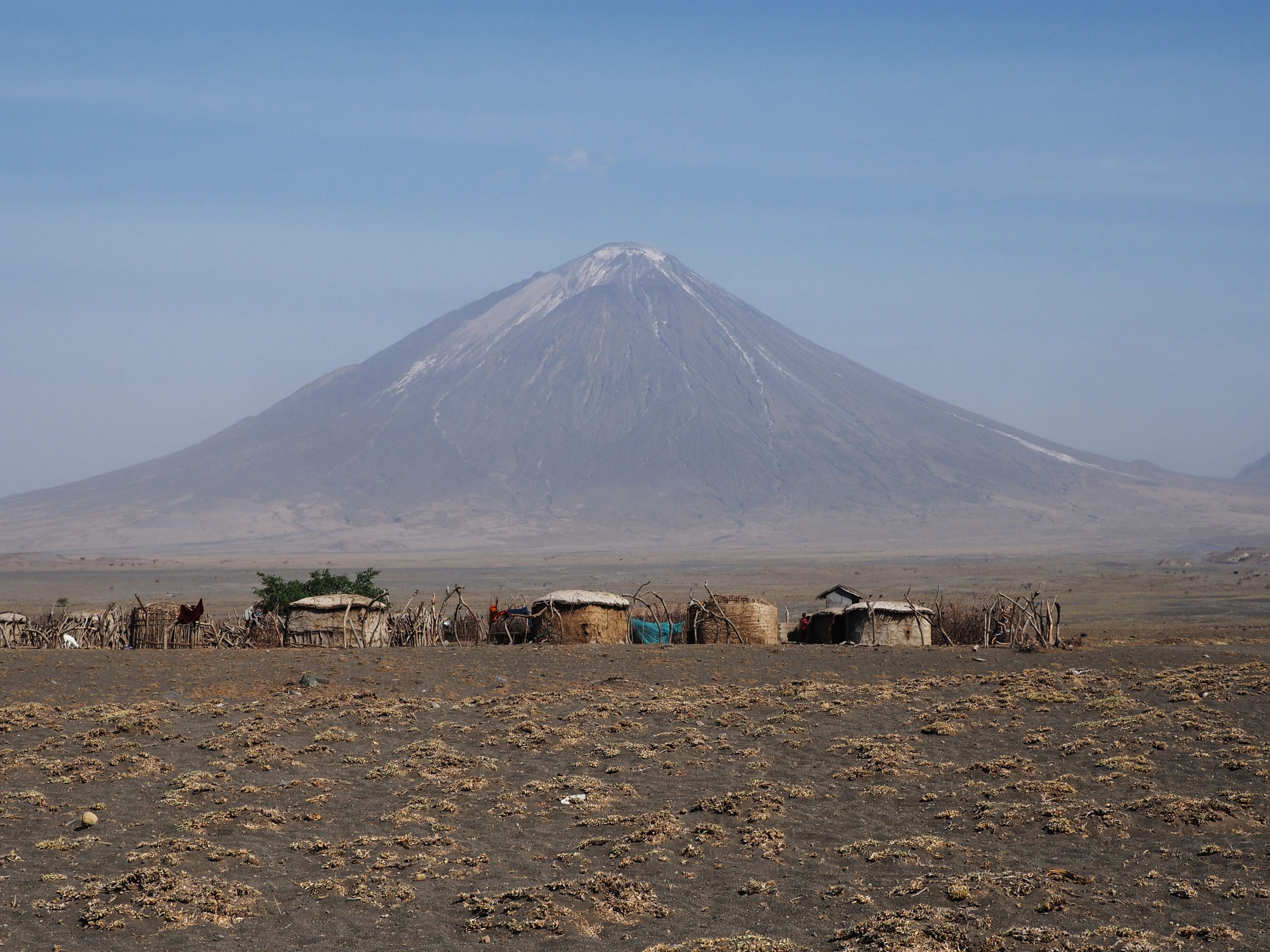
Together with her team, Reiss recorded seismic data at the Oldoinyo Lengai volcano in Tanzania over 18 months. They installed numerous seismometers around the volcano to detect ground vibrations. Back in Mainz, the researchers analyzed the data, focusing on a nine-week time window for this study.
“For the first time, we were able to determine the precise location where the tremor occurs,” stated Reiss. “We discovered that two types of tremor seem to be linked: one originated at around five kilometers depth and the other near the base of the volcano – with a time delay between them. It is clear that these signals are connected, thus we see a directly linked system here.”
The diversity of tremor signals detected by the team was also surprisingly large. This likely reflects that the tremor originates from different regions of the volcano, each with distinct properties and driven by different processes. Oldoinyo Lengai itself is unique in that it is the only active carbonatite volcano on Earth. Its magma has an unusual composition as it is far more fluid and relatively cool, only about 550 degrees Celsius, compared to the 650 to 1,200 degrees Celsius typical for most magmas.
“The results were particularly surprising because the magma is so fluid. We had expected few or no tremors as the interaction with the surrounding rock would likely be weaker,” explained Reiss.
A step forward for volcano seismology
The new findings by Reiss and her colleagues advance volcano seismology by offering valuable insights into the dynamics of magma movement.
“Tremor occurs whenever magma is moving – including before eruptions,” said Reiss. “But which tremor signals are true precursors of an eruption, and which are just background ‘gurgling’? Our results lay the foundation for improving eruption forecasting in the future.”
Reference: “Tremor signals reveal the structure and dynamics of the Oldoinyo Lengai magmatic plumbing system” by M. C. Reiss, Corentin Caudron, Philip Hering and Diana Roman, 1 October 2025, Communications Earth & Environment.
DOI: 10.1038/s43247-025-02804-1
Never miss a breakthrough: Join the SciTechDaily newsletter.
Follow us on Google and Google News.