
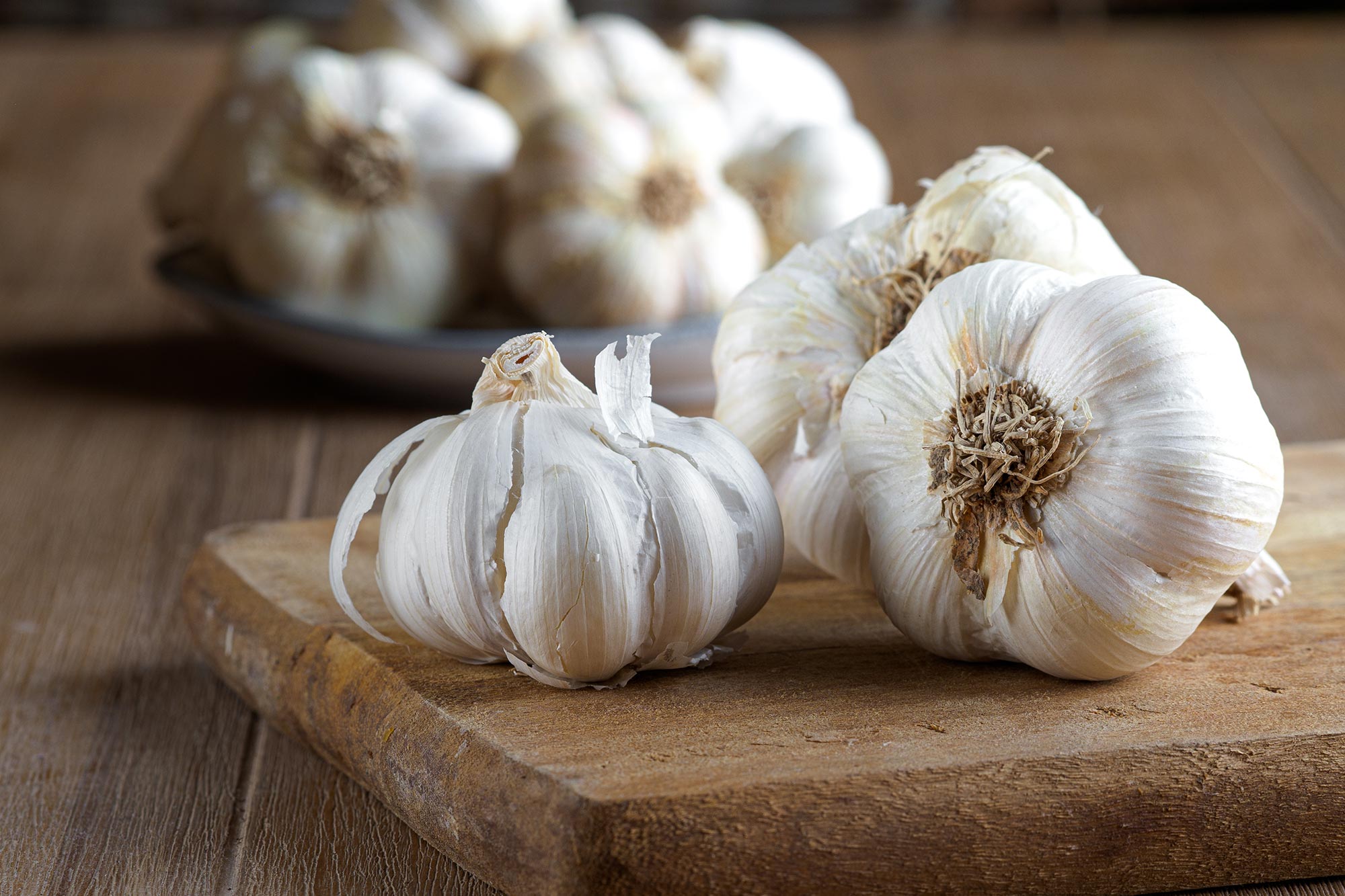
A new review finds that garlic extract may match the antimicrobial power of chlorhexidine, suggesting it could become a natural alternative in oral care.
Garlic extract may work as effectively as well-known antiseptics and disinfectants such as chlorhexidine, according to researchers from the University of Sharjah.
In a study published in the Journal of Herbal Medicine, the team reports that garlic-based mouthwash can cause more discomfort than chlorhexidine but appears to remain active for a longer period after use.
“Chlorhexidine is widely used as a gold standard mouthwash but is associated with side effects and concerns over antimicrobial resistance,” the authors note. “Garlic (Allium sativum), known for natural antimicrobial properties, has emerged as a potential alternative.”
Their conclusions come from a systematic review that examined how garlic extract performs compared with chlorhexidine in real-world clinical settings and evaluated whether it could serve as a herbal replacement.
To ensure a rigorous approach, the researchers followed the Preferred Reporting Items for Systematic Reviews and Meta-analyses 2020 guidelines, which aim to improve the reliability and transparency of systematic reviews and meta-analyses. They also applied the PICO framework, a method used to structure clinical research questions and guide evidence-based evaluations.
“A total of 389 articles were identified from six electronic databases in January 2024, and an additional 13 articles were included through manual citation searching. After removing duplicates and applying inclusion and exclusion criteria, only five articles were included,” the authors report.
Comparable Efficacy With Important Variability
The research included a mix of randomized controlled trials and clinical studies, each using different methods and showing low to moderate levels of bias. Overall, the evidence suggests that mouthwashes containing higher concentrations of garlic extract can perform on par with chlorhexidine in reducing microbial activity.
“The effectiveness varied based on mouthwash concentration and duration of application, contributing to differences in outcomes,” the review revealed. “Some studies favored chlorhexidine for maintaining higher plaque/salivary pH, while others reported garlic extract to be more effective at certain concentrations. However, garlic mouthwash may cause greater discomfort.”
Although garlic extract is not without side effects, they are generally less severe than those associated with chemical compounds. Reported adverse reactions include burning sensation and unpleasant odor, which may affect patients’ willingness to replace chlorhexidine with garlic-based alternatives.
Despite these limitations, the review provides substantial evidence of garlic extract’s clinical antimicrobial effectiveness, “with significant reductions in bacterial counts from baseline … suggesting the possible use of garlic extract mouthwash as a viable alternative to chlorhexidine in certain contexts.”
The authors emphasize the need for further clinical research involving larger sample sizes and extended follow-up to confirm the “effectiveness and improve clinical applicability” of using garlic as an alternative mouthwash to the currently widely used chlorhexidine, which remains the gold standard antimicrobial mouthwash.
Research has established garlic as one of nature’s most potent antibacterial and antifungal crops. For decades, scientists have sought to harness one of its compounds, called allicin, which exhibits strong antimicrobial properties. Although botanically classified as a vegetable, garlic is widely used both as a herb and a spice.
Global consumption of garlic reached approximately 30 million metric tons in 2024, with China dominating both consumption and production, accounting for nearly 80% of the global supply. In the same year, the worldwide garlic extract market was valued at over $15 billion.
Garlic’s Broader Scientific and Global Context
Garlic extracts have found applications in various health products and are available over-the-counter. In contrast, synthetic agents such as chlorhexidine typically require a prescription from a dentist or physician.
“Antimicrobial mouthwashes constitute an essential adjunct element in oral and dental care, acting against oral diseases caused by bacteria, fungi, or viruses attacking oral hard or soft tissues,” according to the review. “Different antimicrobial mouthwashes, whether available over-the-counter or on prescription, can be used in the management of gingivitis, dental caries, periodontal diseases, halitosis, etc.”
The review cites a host of studies demonstrating the antimicrobial activity of garlic extracts against numerous bacteria, fungi, and viruses. Additionally, it shows that garlic extracts have been investigated in different contexts, such as denture stomatitis, dentinal tubule disinfection, and as an intracanal medicament.
“These studies have contributed to understanding the antimicrobial role of garlic extract in comparison to synthetic agents like chlorhexidine,” the authors note. “However, most studies are in vitro, vary in methods, and lack clinical standardization, highlighting the need for further research to confirm garlic’s efficacy in dental practice. This uncertainty presents a significant gap in the literature on evidence-based antimicrobial therapies.”
Reference: “The Clinical Antimicrobial Efficacy of Garlic Extract (Allium sativum) Compared to Chlorhexidine Mouthwash: A Systematic Review” by Youmna Ahmed Abdelaal, Heba Talal Saeed, Malak Ahmad Elayyan, Sara Mahmoud Bkairat and Saif Youssef Dib, 3 September 2025, Journal of Herbal Medicine.
DOI: 10.1016/j.hermed.2025.101053
Never miss a breakthrough: Join the SciTechDaily newsletter.
Follow us on Google and Google News.
4 Comments
I was one of 12 people in a local E. coli outbreak from contaminated food. Two people died, four were hospitalized. I was sick for five months before testing revealed the cause. The CDC got my test results and contacted me directly before my doctor. After trying everything else, one day I just started eating raw garlic. After two days I was dramatically better and recovered. Garlic is amazing.
I understand the science, but for the move of God do we want people walking around using GARLIC MOUTHWASH? Not a single mention of the JFC this dude smells like dog$h!t side effect?!?
Might be some cause for concern..
If it works, why not? If people 👤 dislike what they are doing in your personal space?