
Modern humans and Neanderthals may have shared more than land and genes. They may have also shared culture.
Modern humans and Neanderthals may have shared more than territory, tools, and genes. New evidence from a cave in southern Türkiye suggests the two groups may also have exchanged ideas and developed similar symbolic traditions over thousands of years.
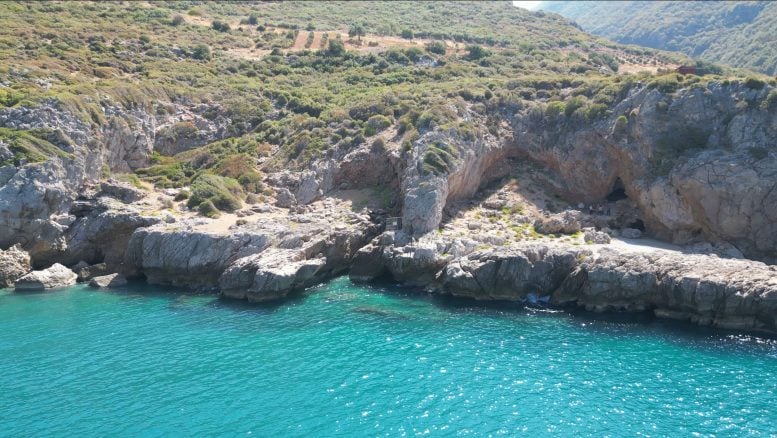
The discovery comes from Üçağızlı II Cave, a site near one of the most important migration routes in human history. The Levant connected Africa with Eurasia, making it a natural passage for Homo sapiens leaving Africa and a likely meeting ground with Neanderthals already living farther north.
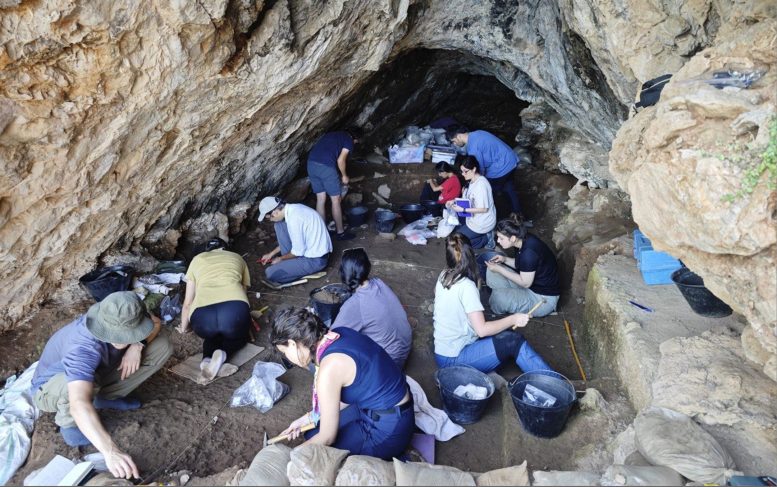
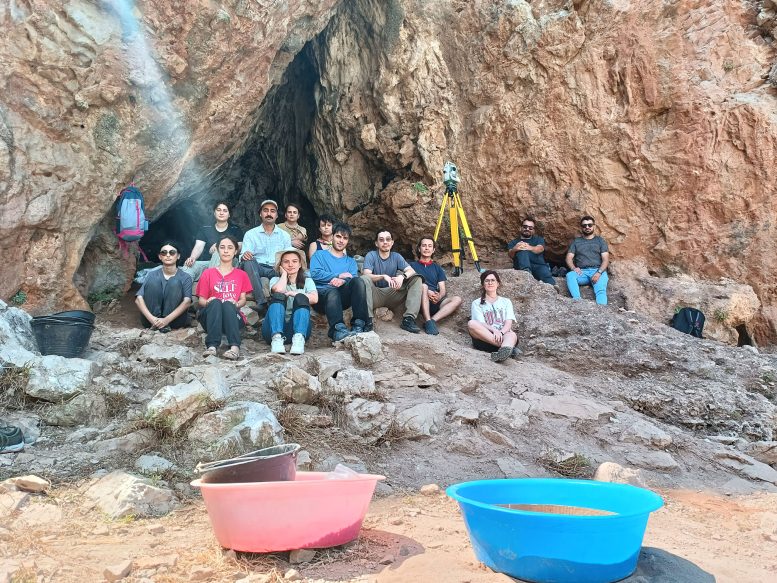
Despite the region’s importance, human remains from this period are extremely rare. An international team involving researchers from Türkiye, France, Japan, and Kyoto University spent five years excavating the cave with exceptional precision.
Their work revealed that Neanderthals and modern humans used the site across a period of more than 20,000 years. Both groups made similar stone tools and appear to have relied on comparable methods to survive in the same environment.
Ancient Shells Hint at Shared Symbolic Culture
The most revealing finds, however, were not tools or food remains.
Both groups deliberately collected the same type of marine shell, even though it offered virtually no nutritional value. Such objects may have been worn, displayed, exchanged, or valued for their appearance, although their exact purpose remains unknown.
That detail is important because symbolic behavior has often been treated as a defining feature of modern humans. Evidence that Neanderthals selected the same unusual shells raises the possibility that cultural preferences passed between the two populations, or that they participated in a shared regional tradition.
“Our findings indicate a deep level of cultural interaction,” says corresponding author Naoki Morimoto of KyotoU. “These two distinct but closely related human groups were not just adapting to the same environment: they were probably sharing symbolic preferences.”
What the Fossils Reveal About Early Migration
The cave also contained modern human fossils dating to approximately 50,000 to 60,000 years ago, placing them near a crucial stage in the spread of Homo sapiens beyond Africa.
These individuals may have been closely related to the founding population that eventually gave rise to today’s non-African populations. Another possibility is that they belonged to an earlier migration whose descendants remained in the Levant longer than scientists previously recognized.
Drone footage of the Üçağızlı II Cave in southern Türkiye. Credit: KyotoU / Naoki Morimoto
The findings add to a growing picture of Neanderthals and modern humans as populations whose lives repeatedly overlapped. Their encounters may have involved competition and interbreeding, but the shells suggest something more subtle: the movement of tastes, traditions, or meaning across species boundaries.
Üçağızlı II Cave therefore offers more than a record of two human groups occupying the same place. It provides a rare glimpse of a world in which different kinds of humans may have watched, learned from, and influenced one another.
Reference: “Long-term cultural continuity across the Neanderthal–modern human sequence at Üçağızlı II Cave, northern Levant” by İsmail Baykara, Didem Turan, Ece Eren Kural, Derya Silibolatlaz, Mustafa Kenan Agras, Eren Şahiner, Salih Kavak, Clément Zanolli, Yoshiro Ishihara, Wataru Morita and Naoki Morimoto, 6 July 2026, Proceedings of the National Academy of Sciences.
DOI: 10.1073/pnas.2609061123
Never miss a breakthrough: Join the SciTechDaily newsletter.
Follow us on Google and Google News.
9 Comments
Old ideas much? They intermarried or at least propagation is clear. We carry some of their genes and DNA
My DNA analysis shows my ancestors passed through that area. I’m not all that big, but heavy boned and sink like a rock in the water. I jokingly refer to myself as part Neanderthal. Is it possible?
The majority of people on Earth, indeed, do. Basically, anyone whose ancestors migrated out of sub-Saharan Africa almost certainly have some Neanderthal DNA… likely 1-2% of it. (In other words, Neanderthals didn’t live in that region, so your ancestors would have had to leave that area to mate with them, and most people on Earth have ancestors who did.) That DNA would no longer dictate your physical appearance though, since 40,000 years (about 1,600 generations) have passed since Neanderthals went extinct.
По всем признакам, нынешний вид человека сложился, как результат смешения видов. Для сравнения помеси собак и волков, нестабильны по психике и более агрессивны. Но это хищники, и это их образ жизни. Все животные, кроме человека, только удовлетворяют свои потребности. Человеку этого мало. Он любознателен, но более агрессивен. Именно смешение многих генов, дало повышение выживаемости, и остальные виды были выдавлены из бытия.
Maybe those cave paintings were them, maybe songs were theirs, maybe religion and spirituality was theirs, maybe we were just pillagers –
The arts and smarts occupy about 4% of what people do – and we have about 4% of their DNA.
This might suggest that the shells were used in an early form of trade, the shell having a shared symbolic meaning between the groups interchanging culturally symbolic items. The shared perception of the beauty and significance of the shell reminds one of children’s attraction to and collections of shells on the beaches; and their exchanges and sharing of them with each other.
Know who to this day shares culture wigh neanderthals?
Islamists.
I share culture with ICE.
You are both the same. You act the same, just in different locations.
Like that isn’t happening today?