

A familiar drug may influence an unexpected cellular pathway that controls how cholesterol moves inside cancer cells.
A medication now closely associated with erectile dysfunction began as a treatment for high blood pressure and chest pain caused by limited blood flow to the heart. Three decades later, sildenafil, the active ingredient in Viagra, may have another possible use.
Research from the laboratory of Prof. Ayelet Erez at the Weizmann Institute of Science suggests that the drug could interfere with cancer metastasis through a newly identified biological pathway. The findings were published in Cancer Research.
Viagra disrupts cancer cells’ cholesterol supply
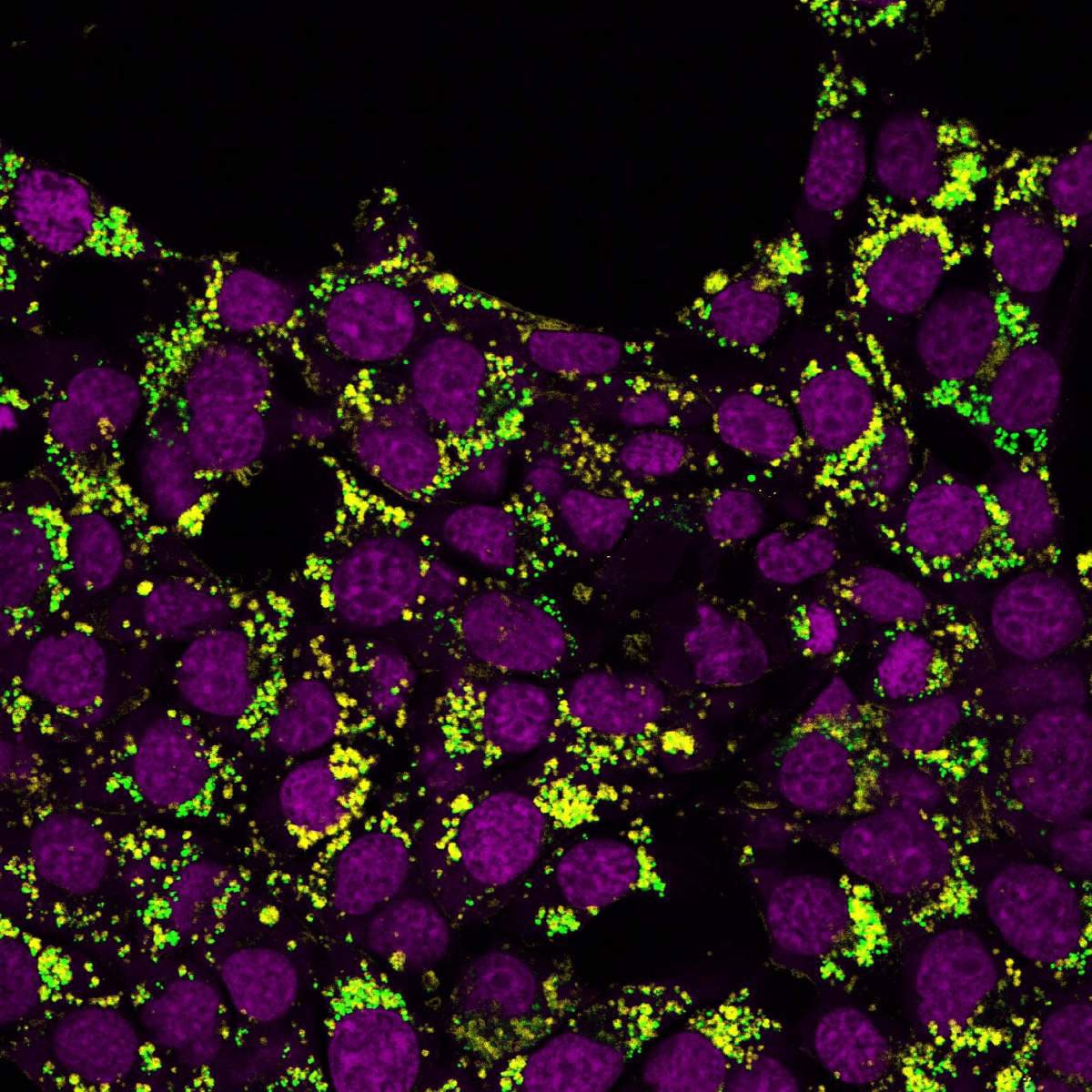
Led by Dr. Yarden Ariav in Erez’s laboratory, the researchers found that sildenafil reduces the ability of cancer cells to use cholesterol, a crucial building block of cell membranes. Cholesterol becomes especially important when cancer cells detach from a primary tumor, travel through the body, and invade distant organs. Limiting their access to it makes the formation of metastases more difficult.
Sildenafil produces this effect by blocking phosphodiesterase type 5, an enzyme also known as PDE5. Blocking the enzyme raises levels of cGMP, a signaling molecule that widens blood vessels and increases blood flow to the penis, explaining Viagra’s effectiveness against erectile dysfunction. Erez and her colleagues found that cGMP also attaches to a protein that transports cholesterol inside cells. This leaves less cholesterol available, creating a shortage to which cancer cells appear particularly sensitive.
Statins may strengthen the blockade
The researchers found that pairing Viagra related drugs with statins could place cancer cells under even greater pressure. Statins are widely prescribed medicines that reduce cholesterol production in the body. Used together, the drugs could restrict access to cholesterol already present while also limiting the creation of new cholesterol, potentially strengthening the effect against metastasis.
Evidence spans cells, mice, and patients
The investigation brought together scientists from the laboratory of Prof. Eytan Ruppin at the U.S. National Cancer Institute, researchers from the Innovation Division of Clalit Health Services led by Prof. Shay Ben-Shachar and physicians and scientists from Rabin Medical Center (Beilinson and Hasharon hospitals).
The evidence came from mouse cancer models, cancer cells cultured from human patients, and two decades of medical data involving about 5 million Clalit members. In line with the laboratory findings, analysis of the Clalit records associated sildenafil use with significantly better survival among cancer patients, particularly when the drug was taken with statins.

Existing medicines may influence cancer outcomes
“We have uncovered a new biological pathway that links a well-known signaling molecule to cholesterol regulation within cells, and shown how this pathway can be harnessed to interfere with the ability of cancer cells to form metastases,” says Erez, who is also a practicing physician in addition to serving as a senior researcher and dean of Weizmann’s Miriam and Aaron Gutwirth Medical School. “Beyond their therapeutic promise, our findings highlight that cancer biology is shaped not only by mutations in tumor cells but also by the patient’s metabolic state and by medications they are already taking for other conditions.”
Erez adds: “Our study underscores the importance of treating the whole patient – not just the cancer – when tailoring the most effective therapy.”
Reference: “PDE5a Inhibition Restricts Cancer Metastasis by Disrupting NPC1-Mediated Cholesterol Trafficking Through a Non-canonical cGMP-Dependent Pathway” by Yarden Ariav, Samah Hayek, Thomas Cantore, Neel Sanghvi, Lital N. Adler, Naama Darzi, Lipika R. Pal, David Robert. Crawford, Tomer Malleron, Josh Silverbeck, Eliane Yardeni, Emma Hajaj, Efrat Ben-Zeev, Sanju Sinha, Shahar Ziman, Amir Shlomai, Sergey Malitsky, Maxim Itkin, Smadar Levin-Zaidman, Inna Goliand, Omer Goldman, Hila Tishler, Alexander Brandis, Tevie Mehlman, Yuri Kuznetsov, Noga Kozer, Karen Shamash, Ella Itzhaki, Neta Ben-Chaim Moskovits, Dean Ranmar, Salomon M. Stemmer, Shay Ben-Shachar, Eytan Ruppin and Ayelet Erez, 14 July 2026, Cancer Research.
DOI: 10.1158/0008-5472.CAN-26-1818
Never miss a breakthrough: Join the SciTechDaily newsletter.
Follow us on Google and Google News.
2 Comments
Keep me updated
Most helpful information. Yes, please include me in your research results. Many thanks