
Accelerated brain aging was associated with dementia, addiction, and psychiatric disorders such as schizophrenia.
A brain scan can make a person’s brain appear older or younger than their actual age. Across tens of thousands of scans, researchers found that dementia, mild cognitive impairment, alcohol addiction, and psychiatric conditions such as schizophrenia were associated with older-appearing brains, although each condition showed a different anatomical pattern.
The findings were reported in the open-access journal PLOS Medicine by Shile Qi of the Nanjing University of Aeronautics and Astronautics in China and colleagues.
Researchers estimate brain age using predictive age difference (PAD), which compares a person’s chronological age with the age predicted from brain imaging. A positive PAD means the brain appears older than expected.
To examine how different neurological, psychiatric, developmental, and addiction-related conditions might affect this measure, the researchers analyzed structural magnetic resonance imaging (MRI) data from 45,900 control participants across several brain imaging databases.
They compared those scans with data from 2,698 people with attention-deficit/hyperactivity disorder (ADHD), autism spectrum disorder (ASD), alcohol or tobacco addiction, Alzheimer’s disease (AD), mild cognitive impairment (MCI), schizophrenia, bipolar disorder, or major depressive disorder.
Dementia shows the widest brain age gap
Alzheimer’s disease and mild cognitive impairment had the strongest associations with elevated PAD, indicating the largest gaps between predicted brain age and chronological age. Addiction and psychiatric disorders were also linked to older-appearing brains.
The researchers found no PAD differences between control participants and people with ADHD or ASD.
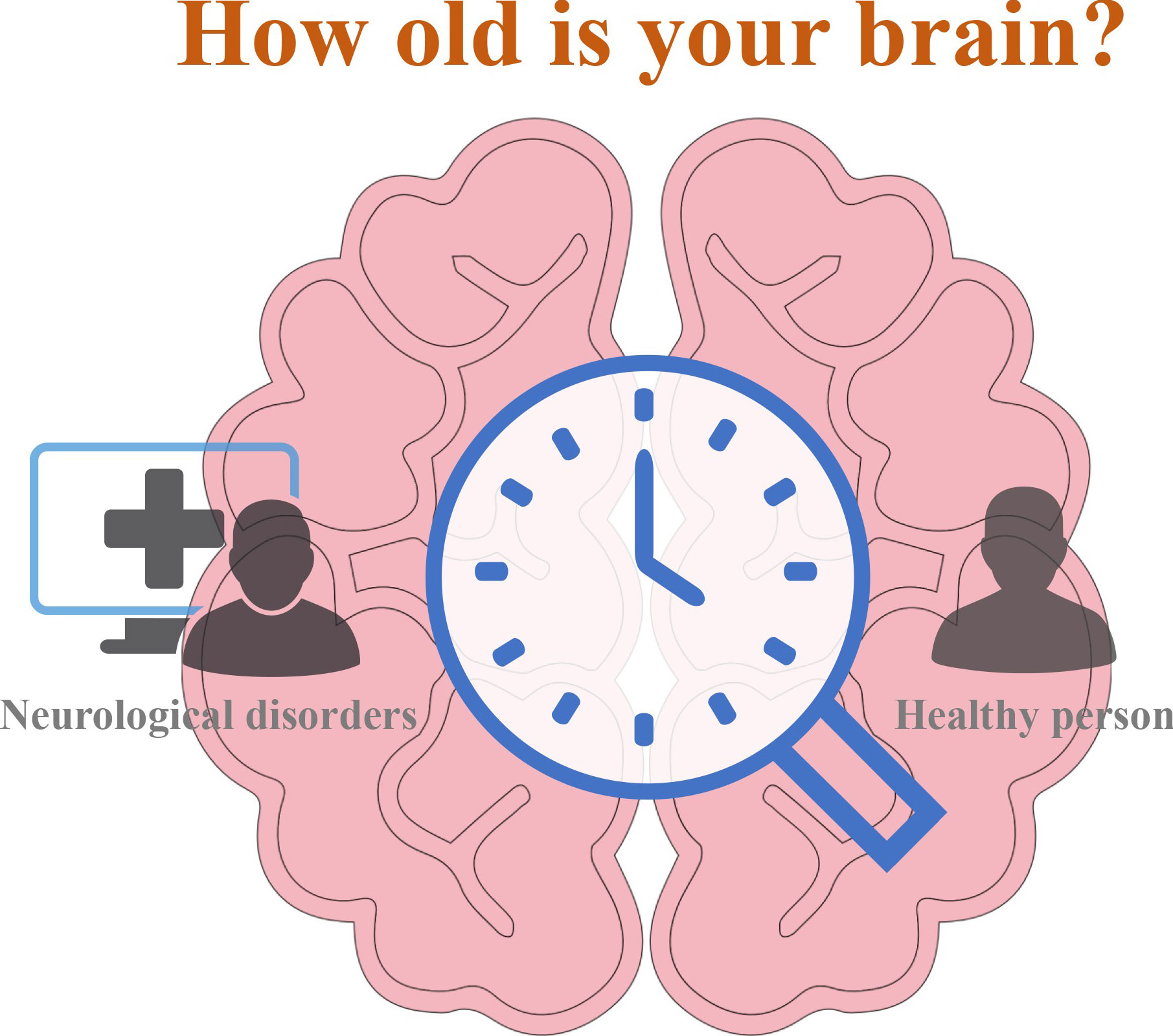
Each condition leaves a regional signature
The analysis also examined brain age differences within specific regions and identified genes whose activity varied among people with different conditions.
Elevated PAD appeared in the prefrontal cortex across multiple brain disorders. Psychiatric conditions were associated with older-appearing tissue in the frontal and temporal lobes, while dementia was linked to higher PAD in the frontal and occipital cortices.
Addiction showed a different pattern, with elevated PAD in the default mode and salience networks, as well as the putamen and thalamus. The researchers also identified condition-specific differences in gene transcription.
The findings show associations rather than cause and effect. Interpretation is also complicated by the frequent co-occurrence of some conditions, particularly psychiatric disorders and addiction. Even with those limitations, the researchers suggest that further study of PAD could support the development of biomarkers for common brain disorders.
The authors add, “Different neurological disorders appear to leave different signatures on the brain aging clock, which may help researchers better understand the neural and biological pathways involved in these conditions.”
Reference: “Brain aging patterns among nine neurological disorders: A case-control study” by Chuang Liang, Godfrey Pearlson, Juan Bustillo, Peter Kochunov, Jiayu Chen, Xiangrong Zhang, Rongtao Jiang, Kent E. Hutchison, Jing Sui, Zening Fu, Xiao Yang, Yuhui Du, Daoqiang Zhang, Shile Qi and Vince D. Calhoun, 21 July 2026, PLOS Medicine.
DOI: 10.1371/journal.pmed.1004860
Never miss a breakthrough: Join the SciTechDaily newsletter.
Follow us on Google and Google News.