
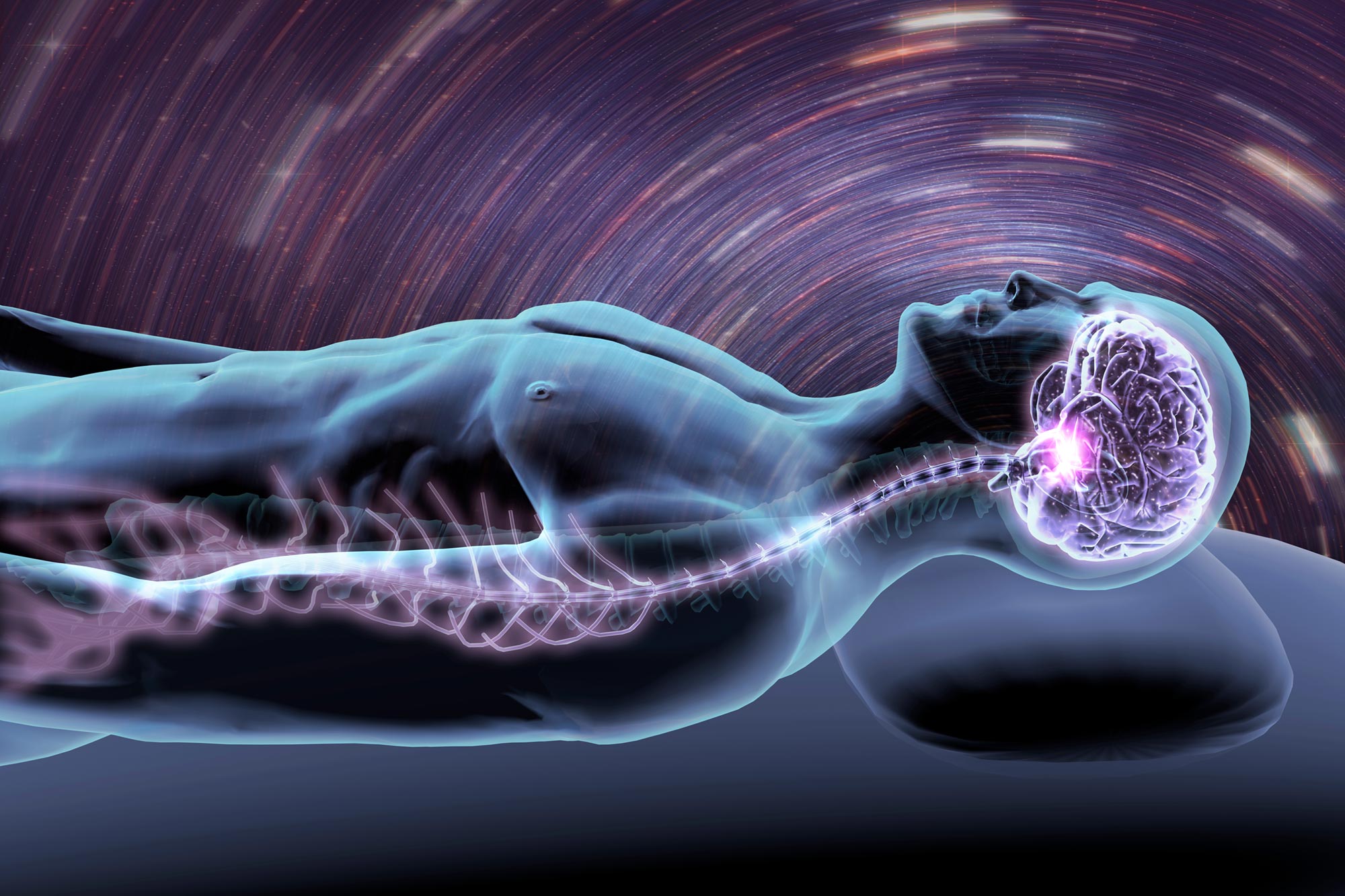
The dreaming brain surges with energy, yet its neurons may consume it faster than they can replenish it.
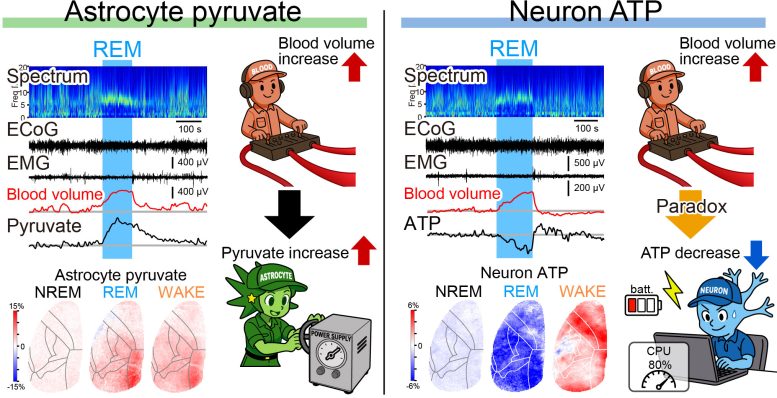
A new mouse study from Tohoku University has uncovered a surprising energy imbalance during rapid eye movement (REM) sleep. As the brain entered this dream-rich stage, blood volume increased across the cortex, and astrocytes accumulated more metabolic fuel, yet ATP, the molecule neurons use as an immediate source of energy, declined.
The discovery challenges the simple assumption that delivering more fuel to the brain should immediately increase its usable energy. Instead, REM sleep may place such intense or unusual demands on neural circuits that energy consumption briefly outpaces production, even as the brain prepares additional resources.
The findings were published in Communications Biology.
“Ever felt exhausted after a vivid dream?” asks Professor Ko Matsui of Tohoku University. “Sleep may appear peaceful, but the brain is highly active, especially when dreaming. We were intrigued by this paradox and wanted to look into the scientific basis behind why dreaming is somehow tiring.”
Why Dreaming Demands So Much
REM sleep is sometimes called “paradoxical sleep.” Brain activity can resemble wakefulness, the eyes move rapidly beneath closed lids, and vivid dreams are common, yet most skeletal muscles become deeply relaxed. REM sleep has also been linked to memory processing, emotional regulation, and communication between distant brain regions, although its precise functions remain under debate.
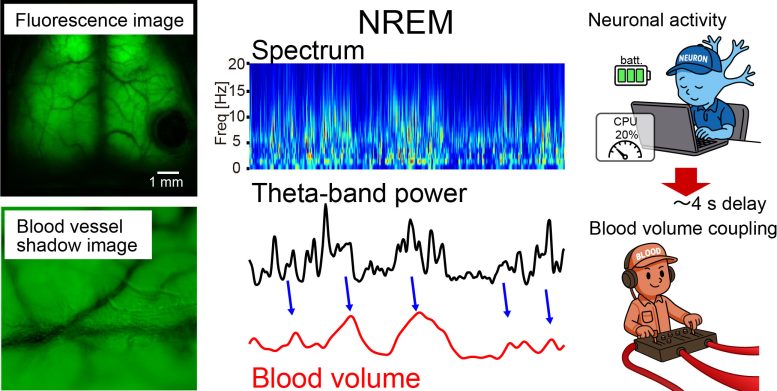
To watch metabolism shift during natural sleep, the researchers coated the skulls of mice with a transparent UV-curable resin. This allowed them to observe much of the cortex without removing part of the skull, a procedure that can disturb blood vessels and supporting brain cells.
Using wide-field fluorescence imaging, the team tracked three parts of the brain’s energy system. Blood volume provided an indication of incoming fuel, pyruvate in astrocytes reflected the processing of glucose, and ATP revealed how much immediately usable energy was available inside neurons.
Astrocytes are positioned between blood vessels and neurons, making them important metabolic intermediaries. They absorb glucose from the bloodstream and convert it into substances that can be used to produce ATP. Their location also allows them to help match blood flow and energy delivery to the changing demands of neural activity.
Blood Flow Prepares for REM
During non-REM sleep, the researchers detected a close relationship between brain activity and circulation. Small fluctuations in theta frequency activity predicted changes in cortical blood volume about four to five seconds later. The result suggests that even during deeper sleep, blood vessels continue adjusting their behavior to match changing neural and metabolic needs.
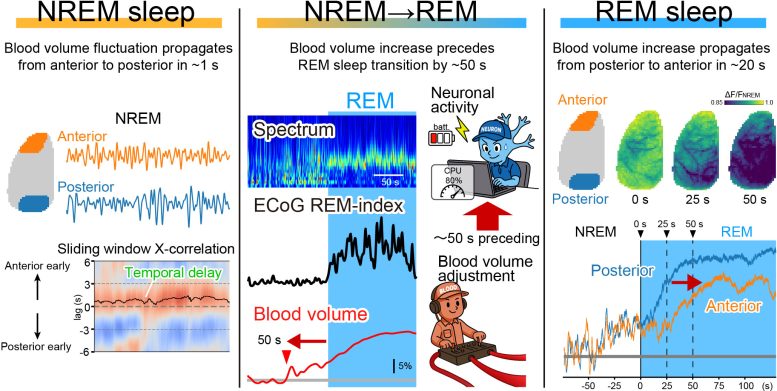
The approach to REM sleep was dramatically different. Blood volume began rising roughly 50 seconds before REM sleep officially started. The increase appeared first in the rear of the cortex and then moved forward, indicating that the brain may begin preparing for the energy demands of REM well before conventional measurements identify the transition.
Once REM sleep began, pyruvate increased inside astrocytes. That pattern suggested that more metabolic material was becoming available or that astrocytes were breaking down more glucose. Yet ATP inside neurons moved in the opposite direction and fell.
Why Neuronal Energy Falls
The researchers do not yet know why. Neurons may burn through ATP as circuits reorganize, memories are processed, and communication increases between regions such as the hippocampus and cortex. Another possibility is that the transfer of metabolic fuel from astrocytes to neurons changes during REM sleep. The neurons’ mitochondria, which produce most cellular ATP, may also temporarily shift how they operate.
The decline does not necessarily mean that neurons are being deprived of energy. ATP levels reflect the balance between production and consumption. A falling concentration could therefore signal that neurons are using ATP faster than they can replace it during this unusually active sleep state.
The results also show why blood flow alone cannot reveal how much usable energy neurons possess. More blood reached the brain, and astrocytes accumulated more pyruvate, but neither change translated into higher neuronal ATP. Energy delivery, processing, transfer, production, and consumption appear to be regulated separately rather than moving together.
This flexible system may help explain how the brain performs extraordinary amounts of computation while consuming relatively little power. The adult human brain is estimated to operate on roughly 20 watts, comparable to a dim light bulb, despite continuously controlling perception, memory, movement, emotion, and internal body functions.
How REM Sleep Supports Brain Efficiency
Rather than distributing energy evenly, the brain may redirect resources according to its current needs. During REM sleep, it could prioritize selected networks involved in internal processing while temporarily changing how fuel moves among blood vessels, astrocytes, and neurons.
“Understanding how the brain balances energy supply and consumption may help explain what makes biological intelligence so efficient,” explains lead investigator Yusuke Takahashi. “REM sleep gives us a natural example of how the brain reorganizes its energy economy to support complex internal processing.”
By revealing a hidden metabolic shift during REM sleep, the findings offer a new way to investigate how sleep supports memory and how the brain remains remarkably efficient.
Reference: “Energy paradox in REM sleep: balancing supply and consumption in brain metabolism” by Yusuke Takahashi, Yoko Ikoma and Ko Matsui, 27 July 2026, Communications Biology.
DOI: 10.1038/s42003-026-10646-6
This study was supported by the Grant-in-Aid for Early-Career Scientists, Biology of Behavior Change, pH-Responsive Biology, Grant-in-Aid for Scientific Research on Innovative Areas “Brain Information Dynamics,” Grant-in-Aid for Scientific Research (B), Research Foundation for Opto-Science and Technology, Takeda Science Foundation, the Uehara Memorial Foundation, and Daiichi Sankyo Foundation of Life Science, Grant-in-Aid for Transformative Research Areas (A) “Glial Decoding,” Grant-in-Aid for Scientific Research (C).
Never miss a breakthrough: Join the SciTechDaily newsletter.
Follow us on Google and Google News.