
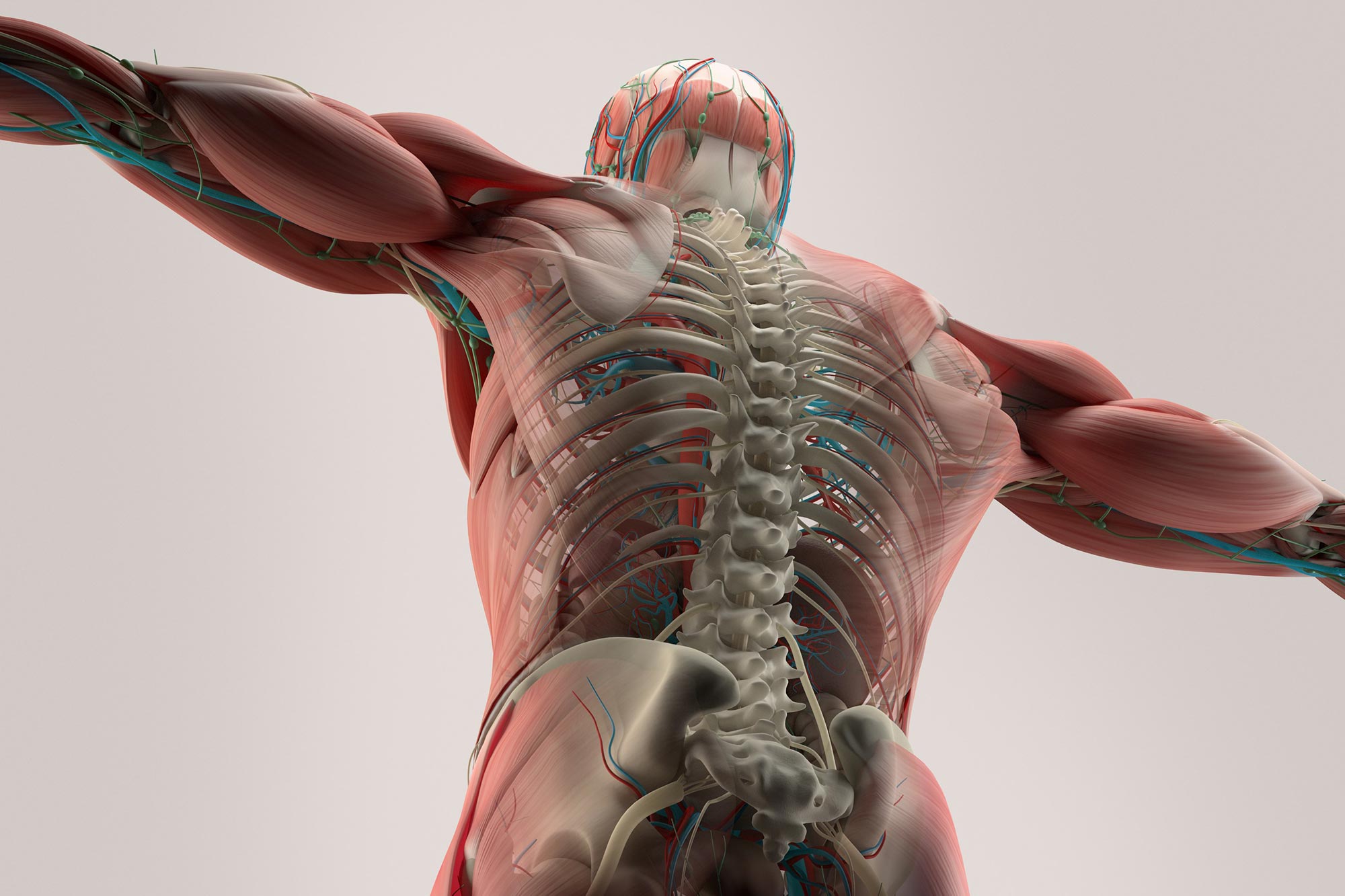
A newly identified breakdown in nerve-muscle communication may help explain age-related weakness.
Muscles do not weaken with age simply because they get smaller. New research suggests that part of the problem may lie in the electrical signals that tell them when to contract.
Scientists at the University of Missouri found that communication between nerves and muscle fibers becomes less reliable with age. The failure appears to occur at the neuromuscular junction, where nerves transmit signals that activate muscles.
The finding could help explain part of sarcopenia, the age-related loss of muscle mass, strength, and physical function that affects nearly half of adults over age 80.
Looking Beyond Muscle Loss
“While the human lifespan has increased in recent decades, our ultimate goal at Mizzou is to ensure a person’s health span remains as high as possible for as long as possible,” W. David Arnold, executive director of the NextGen Precision Health initiative and a professor in the School of Medicine, said.
Scientists have long focused on muscle loss and the decline of motor neurons as major causes of age-related weakness. Arnold and his colleagues instead examined what happens where nerve signals reach muscle.
Arnold has studied the neuromuscular junction for more than a decade. His team’s findings suggest that this connection becomes less reliable with age.
“A long-held assumption in the field was that the neuromuscular junction remains reliable during aging, and some even suggested it may get better with aging,” Arnold said. “The significance of this new study is we are showing, in both humans and in animal models, that the neuromuscular junction is failing with aging.”
The Protein Behind the Signal
The researchers linked part of the decline to lower levels of NaV1.4, a sodium channel that helps skeletal muscle generate the electrical activity needed for contraction.
Lower levels of NaV1.4 may make muscle fibers less responsive to signals arriving from nerves, giving researchers a possible explanation for why aging muscles do not activate as effectively.
Making Aging Muscle More Responsive
The team also investigated ClC-1, a chloride channel involved in regulating electrical activity in skeletal muscle.
Working with Danish biotechnology company NMD Pharma, the researchers found that partially inhibiting ClC-1 made aging muscles more responsive to nerve signals and improved strength in an animal model.
“We identified an important point of failure at the final step in communication between nerves and muscles,” Arnold said. “And what is perhaps even more exciting is that we showed this failure is potentially reversible. In collaboration with NMD Pharma, a biotechnology company in Denmark, we applied an approach they developed that targets a protein called ClC-1. By partially inhibiting ClC-1, we were able to make aging muscles more responsive to nerve signals and improve muscle strength in an animal model. That gives us a potential path toward eventually testing this approach in older adults.”
A Drug Already Being Studied
NMD Pharma has developed ignaseclant, an experimental drug that partially inhibits ClC-1. The drug has already been studied in people with neuromuscular disease, although not specifically for sarcopenia.
Arnold was an investigator in a multicenter clinical trial involving people with Charcot-Marie-Tooth disease, the most common inherited neuromuscular disorder. The study reported improvements across several measures of muscle strength and function. Arnold presented the topline findings at the 2026 Muscular Dystrophy Association Clinical & Scientific Conference.
Arnold believes understanding the biology behind sarcopenia is an important step toward developing treatments for it.
“I realized that in order to make a drug widely available to treat sarcopenia, the first step is better understanding what is causing sarcopenia in the first place,” Arnold said. “That curiosity sparked my interest in becoming a researcher.”
Reference: “Neuromuscular junction failure in sarcopenia is linked to NaV1.4 loss and reversed by ClC-1 inhibition” by W. David Arnold, Jeanette Jeppesen Morgen, Pernille Bogetofte Thomasen, Martin Broch-Lips, Leatha A. Clark, Thomas Groennebaek, Martin Skov, Jeppe Blichfeldt Winther, Abdullah Ramadan, Philippa A. Rust, Jessica H. Myers, Fereshteh B. Darvishi, Anna R. Dashtmian, Lauren A. Fish, Deepti Chugh, Jane Bold, Jorge Quiroz, John Hutchison, Hiroshi Nishimune, Ross A. Jones, Xueyong Wang, Justin R. Fallon, Thomas H. Gillingwater, Mark M. Rich, Thomas Holm Pedersen and Brian C. Clark, 1 September 2026, The Journal of Clinical Investigation.
DOI: 10.1172/JCI190646
Never miss a breakthrough: Join the SciTechDaily newsletter.
Follow us on Google and Google News.