
Close Menu
    Facebook X (Twitter) Instagram
    SciTechDaily
    • Biology
    • Chemistry
    • Earth
    • Health
    • Physics
    • Science
    • Space
    • Technology
    Facebook X (Twitter) Pinterest YouTube RSS
    SciTechDaily
    Home»Earth»Anak Krakatau Just Blasted Ash 50,000 Feet Into the Sky
    Earth

    Anak Krakatau Just Blasted Ash 50,000 Feet Into the Sky

    By Lindsey Doermann, NASA Earth ObservatorySeptember 24, 2026No Comments3 Mins Read
    Facebook Twitter Pinterest Telegram LinkedIn WhatsApp Email Reddit
    Share
    Facebook Twitter LinkedIn Pinterest Telegram Email Reddit
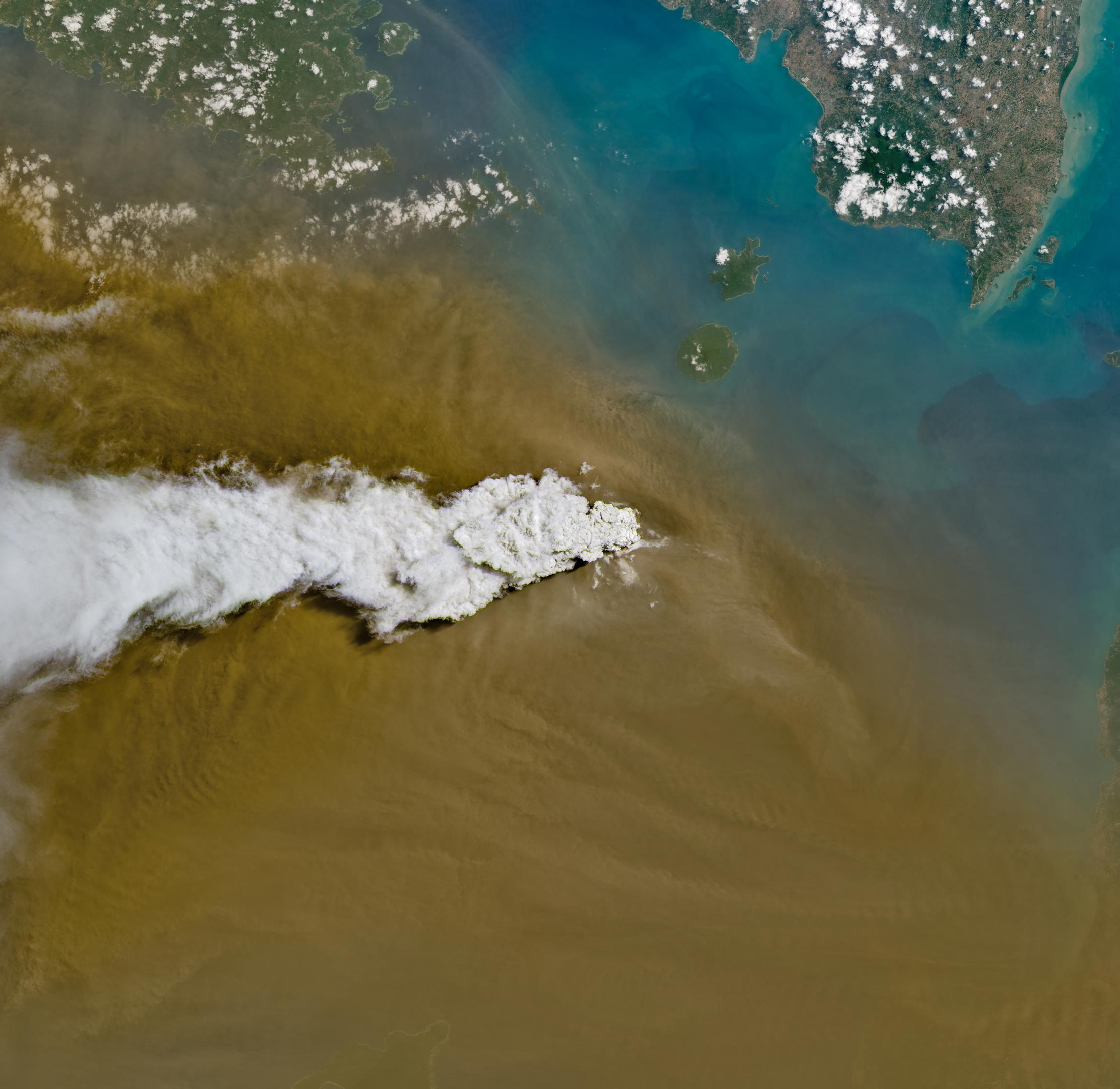
    Anak Krakatau September 2026 Annotated
    Anak Krakatau erupts ash and volcanic gases in this image acquired with the OLI (Operational Land Imager) on Landsat 8 on September 5, 2026. Credit: NASA Earth Observatory/Michala Garrison

    Anak Krakatau blasted ash nearly 10 miles high, disrupting thousands of flights and sending a vast plume across Indonesia.

    A powerful eruption from Indonesia’s Anak Krakatau volcano sent ash high into the atmosphere, disrupting thousands of flights and worsening air quality.

    Anak Krakatau, a small but highly active volcano located between the Indonesian islands of Java and Sumatra, erupts frequently. Most of its activity is relatively modest, but stronger episodes can create significant hazards. In early September 2026, the volcano produced a powerful eruption that continued for more than 24 hours, sending large amounts of gas and ash into the atmosphere. The event disrupted thousands of flights and reduced air quality in several parts of Indonesia, including Jakarta.

    Satellites Capture Anak Krakatau’s Eruption

    Satellites passing over the region on September 5 documented the eruption from above. The image shown above was captured by the OLI (Operational Land Imager) aboard the NASA-USGS Landsat 8 satellite. It shows a white plume of volcanic gas rising above a brown cloud of ash.

    A broader view from the VIIRS (Visible Infrared Imaging Radiometer Suite) aboard the Suomi NPP satellite (below) reveals how widely the volcanic material spread across the surrounding region.
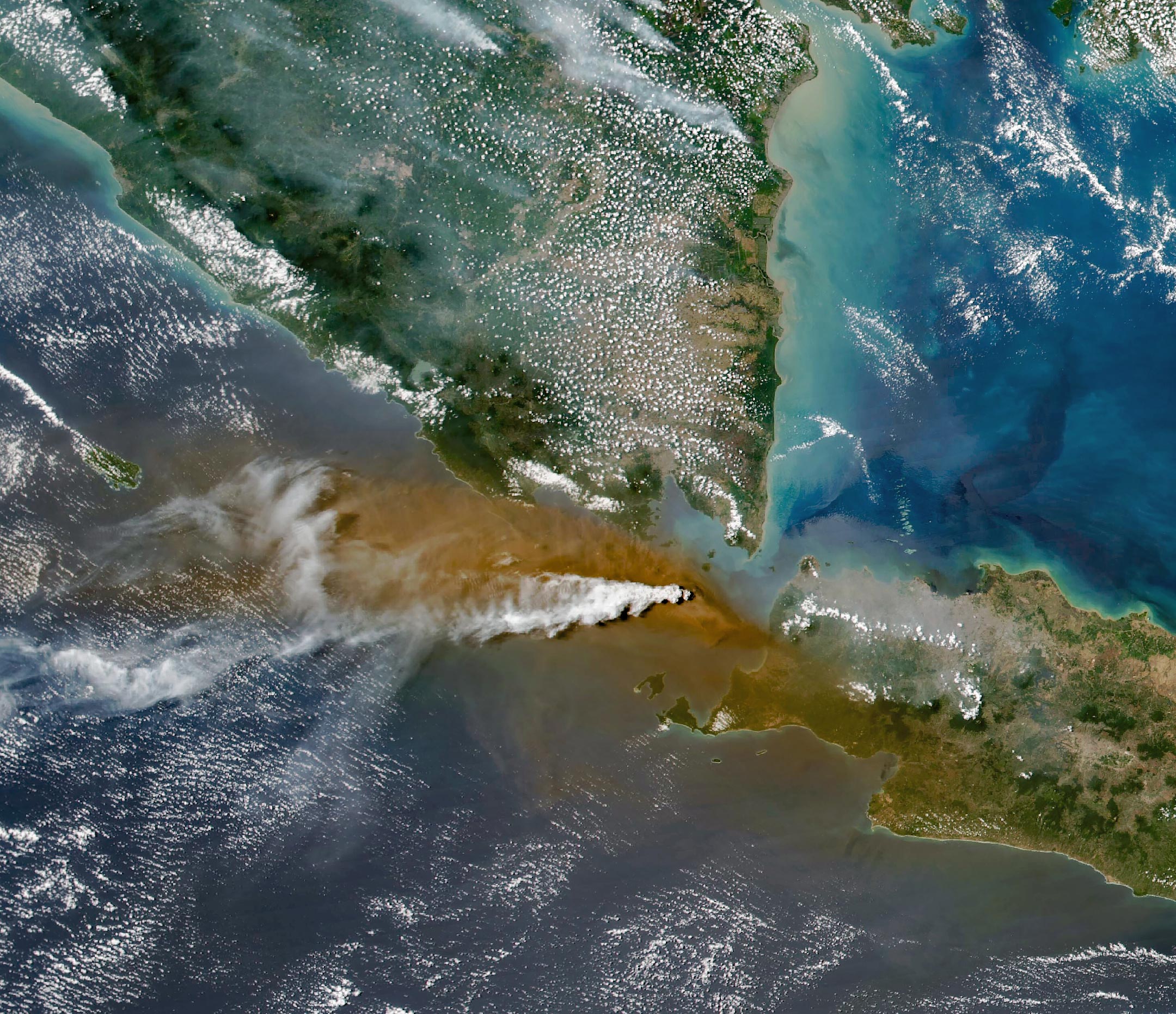
    Anak Krakatau Eruption 2026 Annotated
    Plumes of ash and volcanic gases from Anak Krakatau drift over Indonesia and the Indian Ocean in this image captured by the VIIRS (Visible Infrared Imaging Radiometer Suite) on the Suomi NPP satellite on September 5, 2026. Credit: NASA Earth Observatory/Michala Garrison

    Ash Reaches 50,000 Feet

    By September 6, Indonesia’s meteorological agency reported that volcanic ash had climbed as high as 6,000 meters (20,000 feet) east of Anak Krakatau and 15,000 meters (50,000 feet) west of the volcano.

    The ash posed a serious hazard to aviation, leading authorities to temporarily close eight airports on Java and Sumatra. According to news reports, nearly 3,000 flights traveling into and out of the region were disrupted.

    Volcanic Ash Affects Jakarta and West Java

    Ashfall also reached populated areas, particularly east of Anak Krakatau in Jakarta and other parts of West Java, according to the Indonesian Humanitarian Coordination Platform (IHCP).

    Volcanic ash can pose health risks because fine particles may irritate the respiratory tract, eyes, and skin. The IHCP noted, however, that the hazards associated with volcanic ash differ from those caused by smoke produced by peatland fires elsewhere in Indonesia. The two hazards differ in their particle properties, how they spread through the atmosphere, and the protective measures recommended for people exposed to them.

    Anak Krakatau Continues to Rumble

    The continuous explosive phase of the eruption eased on September 6, although Anak Krakatau remained active. The volcano shifted back toward its more typical pattern of Strombolian eruptions, which produce intermittent bursts of ash and other volcanic material.

    Airports had resumed operation by September 8. Even so, Anak Krakatau remained at the second-highest alert level on Indonesia’s warning scale, where it has remained since early July.

    Never miss a breakthrough: Join the SciTechDaily newsletter.
    Follow us on Google and Google News.

    Geography NASA Earth Observatory Volcano
    Share. Facebook Twitter Pinterest LinkedIn Email Reddit

    Related Articles

    Island Obliterated: Dramatic Changes at Hunga Tonga-Hunga Ha’apai

    Hunga Tonga Island Obliterated – NASA Satellites Capture Massive Blast

    A Wolf Awakens in the Galápagos Islands at Night

    A Deadly Day on Mount Semeru: Destructive Rivers of Debris on Indonesian Volcano

    Wall of Lava Burns a Path Through La Palma

    Cumbre Vieja Lights Up the Night – Astronaut Photo Captures Volcanic Eruption From Space

    Socked in Stratovolcano: Astronaut on ISS Captures Incredible View of Uninhabited Atlasov Island

    Kilauea’s Lava Lake Returns – Hawaii’s Most Active Volcano Is Erupting Again

    Newberry Volcano Photographed by Astronaut Onboard the International Space Station

    Leave A Reply Cancel Reply

    • Facebook
    • Twitter
    • Pinterest
    • YouTube

    Don't Miss a Discovery

    Subscribe for the Latest in Science & Tech!

    Trending News

    A Long-Held Idea About Alzheimer’s Tau May Be Wrong

    Your Favorite Scented Cleaner Could Be Filling the Air With Invisible Pollution

    New Study Reveals a Major Shift Behind Rising ADHD and Autism Diagnoses

    New Treatment Cuts “Bad” Cholesterol in Half for a Full Year

    Astronomers Expected More Tiny Worlds Beyond Neptune – Webb Found Something Else

    Scientists Discover New Compound That Burns Fat Without Killing Your Appetite

    Mount Vesuvius Buried These Scrolls for 2,000 Years – Now Scientists May Read Them

    The Asteroid That Killed the Dinosaurs Was Stranger Than We Thought

    Follow SciTechDaily
    • Facebook
    • Twitter
    • YouTube
    • Pinterest
    • Newsletter
    • RSS
    SciTech News
    • Biology News
    • Chemistry News
    • Earth News
    • Health News
    • Physics News
    • Science News
    • Space News
    • Technology News
    Recent Posts
    • Anak Krakatau Just Blasted Ash 50,000 Feet Into the Sky
    • Surprising Diabetes Study Finds Tighter Blood Sugar Control May Come With a Hidden Cost
    • Just 5% of Pancreatic Cancer Cells Can Shield an Entire Tumor From Immune Attack
    • Alzheimer’s Brain Damage May Begin Outside the Brain
    • Physicists Tackle a Classic Quantum Problem With a Powerful New Computational Method
    Copyright © 1998 - 2026 SciTechDaily. All Rights Reserved.
    • Science News
    • About
    • Contact
    • Editorial Board
    • Privacy Policy
    • Terms of Use

    Type above and press Enter to search. Press Esc to cancel.