
For much of the satellite record, the Arctic sea ice melt season kept getting longer. Then, around 2010, that long-running trend unexpectedly flattened.
Over several decades, Arctic sea ice generally began melting earlier in the spring and refreezing later in the fall. That extended the time each year when ice was melting and contributed to major reductions in sea ice across the Arctic. A new NASA-led study now shows that while the melt season has lengthened dramatically since satellite monitoring began, its average duration has changed relatively little since about 2010.
Arctic Melt Season Is Now About 40 Days Longer
The researchers found that the Arctic sea ice melt season is now approximately 40 days longer than it was in 1979.
Most of that increase occurred before 2010. Since then, the average length of the melt season has remained fairly steady, even though conditions can still differ substantially from one year to the next.
To track the change, researchers analyzed satellite observations spanning 1979 through 2023. They identified when sea ice began to melt each spring and when freezing resumed in the fall.
Their analysis showed that the longer melt season was caused primarily by later fall freeze-up, rather than by a major shift toward much earlier spring melting.
“Previously, there was more of this multiyear ice that didn’t melt away each summer,” said Linette Boisvert, a co-author on the study and ice scientist at NASA’s Goddard Space Flight Center. “Now that the ice is thinner and there’s less of it, there’s a lot more variability.”
On average, however, the rapid decline in Arctic sea ice thickness and extent that characterized the 2000s appears to have paused for the time being.
Why the Arctic Melt Trend Slowed
To understand what may have caused the change, the researchers examined the Arctic’s energy balance. This describes the difference between the heat entering the region from the Sun, atmosphere, and ocean and the infrared energy escaping back into space.
During the 2000s, rapid losses of sea ice exposed larger areas of dark ocean water. Bright ice reflects much of the Sun’s energy, while darker seawater absorbs more of it.
That additional stored heat helped keep the ocean warmer later into the year, delaying fall freeze-up and extending the melt season.
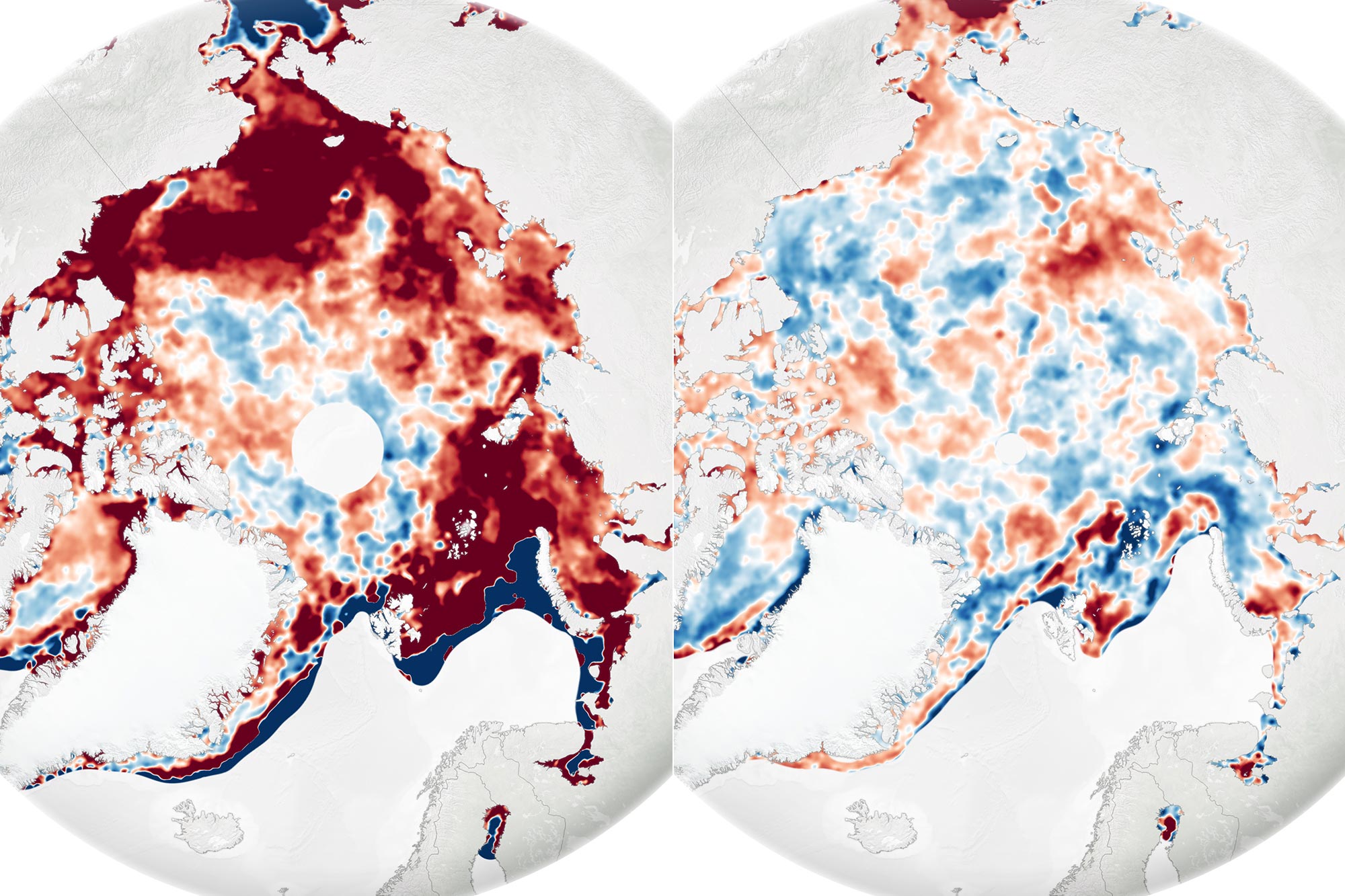
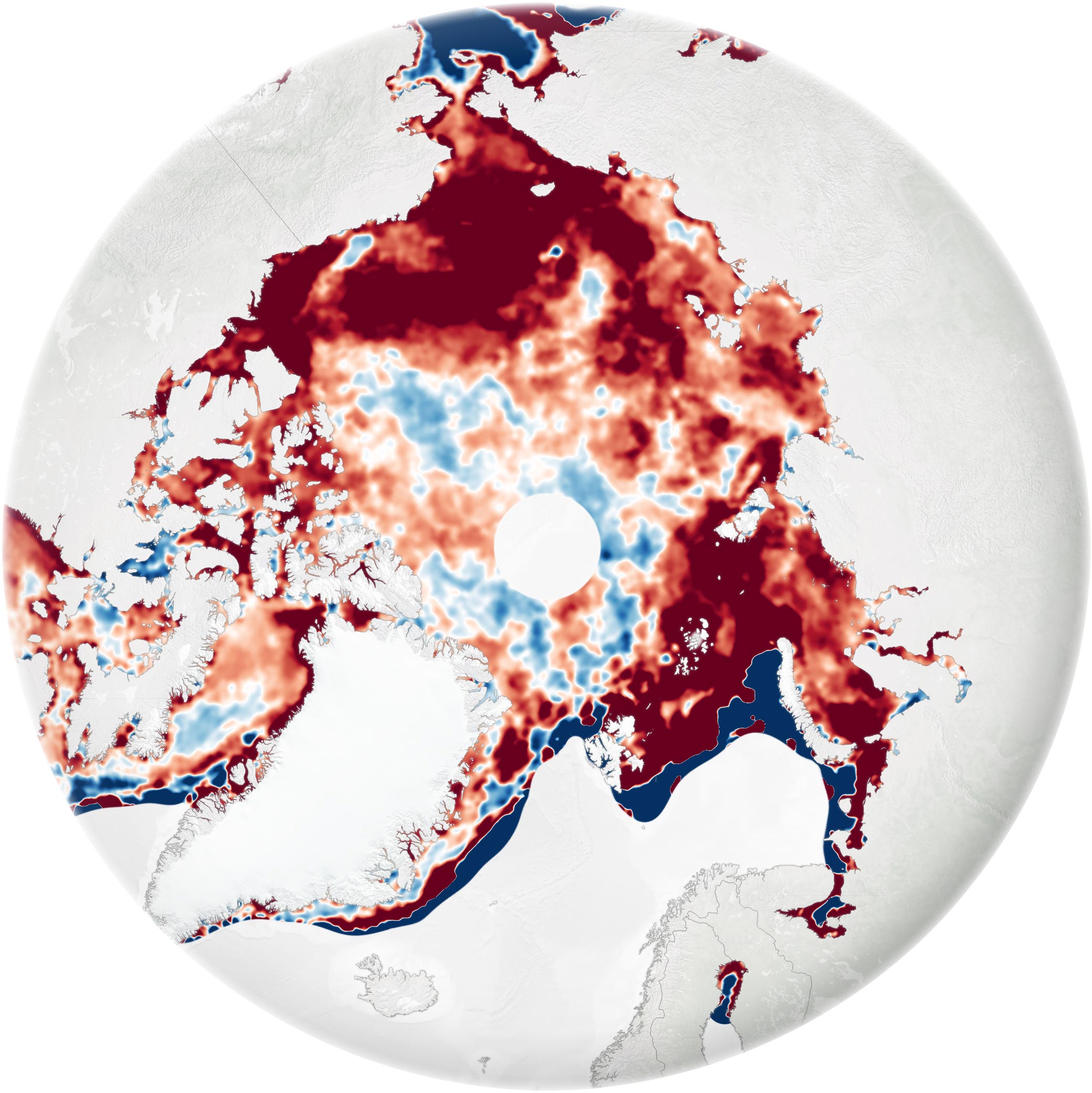
In the left map above, the darkest red areas identify places where the melt season increased most rapidly during that decade. In some locations, it lengthened by as much as 5 days per year.
At the same time, the Arctic ice cover itself was undergoing a major transformation. Much of the sea ice that remains today is younger and thinner than the multiyear ice that once covered a much larger share of the Arctic Ocean. Thinner ice reacts more strongly to short-term changes in clouds, storms, and winds.
Changing Clouds Are Influencing Arctic Sea Ice
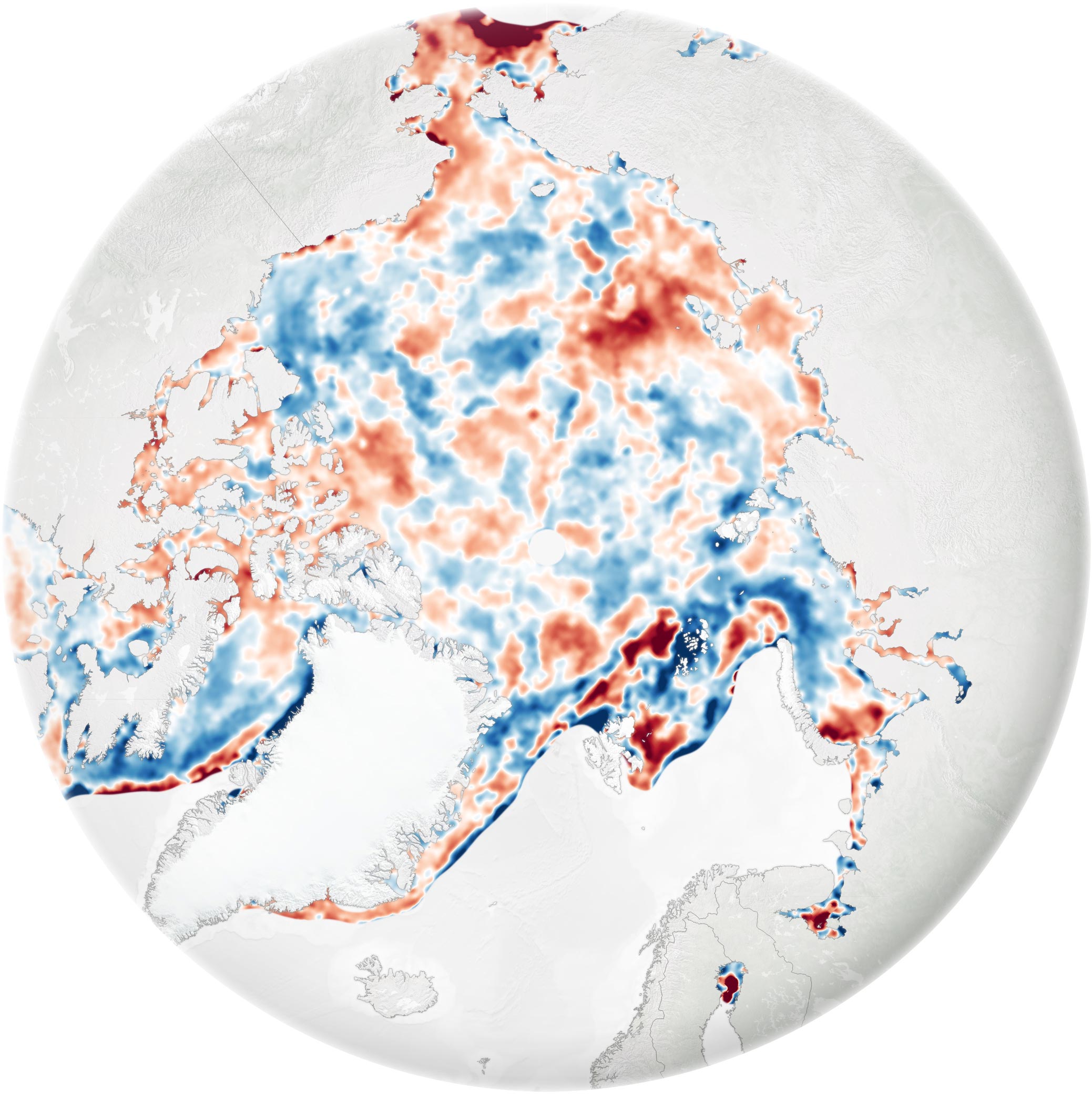
Since 2010, shifts in cloud patterns have reduced the amount of sunlight reaching certain parts of the Arctic Ocean.
Researchers say that change has contributed to a melt season that still fluctuates considerably from year to year but has shown relatively little long-term change over the past decade or more.
The right map above illustrates that shift. Lighter reds and blues represent much smaller rates of change during that period.
The findings do not suggest that climate change has stopped reshaping the Arctic.
The region continues to warm nearly four times faster than the global average, and the remaining sea ice is far thinner than it was several decades ago.
Instead, the study suggests that the Arctic may have entered a different stage, with year-to-year weather conditions now playing a larger role in determining the duration of the melt season.
“Melt season length is much more dependent on atmospheric effects,” Boisvert said. “They seem to be playing a bigger role because the ice is generally thinner and more vulnerable to begin with.”
The Current Pause Could Be Temporary
Researchers caution that the recent leveling off may not continue indefinitely.
Thick Arctic sea ice still survives year-round in areas north of Greenland and around the Canadian Arctic Archipelago.
If that remaining thick ice continues to thin, the Arctic could move into another period of rapid sea ice loss. Such a shift could cause the melt season to begin lengthening again.
For now, the findings highlight the importance of continued satellite monitoring of Arctic sea ice, as well as the energy balance that controls how the ice forms, melts, and refreezes.
Scientists still do not know whether the recent stabilization represents a lasting shift in the Arctic melt season or only a temporary pause before another period of rapid change.
Reference: “A recent stabilization in the lengthening of the Arctic sea ice melt season into a highly variable regime” by Linette Boisvert, Chelsea Parker, Elina Valkonen and Rachel Tilling, 23 April 2026, Communications Earth & Environment.
DOI: 10.1038/s43247-026-03534-8
Never miss a breakthrough: Join the SciTechDaily newsletter.
Follow us on Google and Google News.
1 Comment
Let’s not forget increased ice and permafrost melt on land is increasing freshwater input to the top layer of the Arctic Ocean. The decreased salt content increases the freezing temperature, making it easier to freeze.