
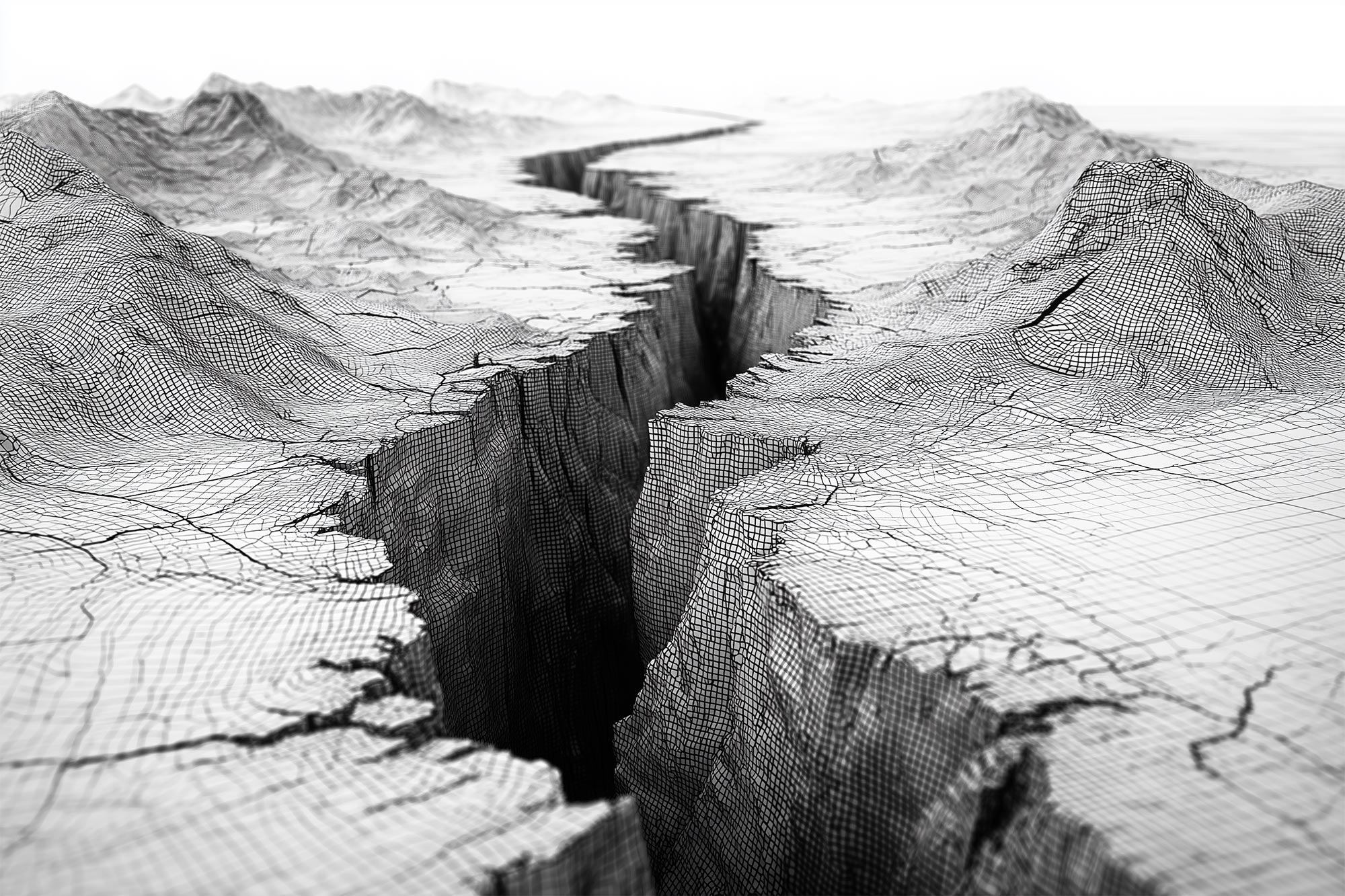
Scientists have uncovered evidence of an unexpected process that may allow earthquake faults to slip enormous distances.
Rocks along Japan’s Boso Peninsula have preserved evidence of an extraordinary process that may occur during powerful earthquakes. Researchers discovered ancient fault structures suggesting that clay trapped between moving rock surfaces became nearly as fluid as water, potentially allowing the fault to slip enormous distances with little resistance.
The findings, from a research team led by Professor Tetsuro Hirono of Osaka Metropolitan University, could help explain how some earthquakes produce the massive seafloor movements capable of triggering devastating tsunamis.
Ancient Rocks Reveal Evidence of Fluid-Like Movement
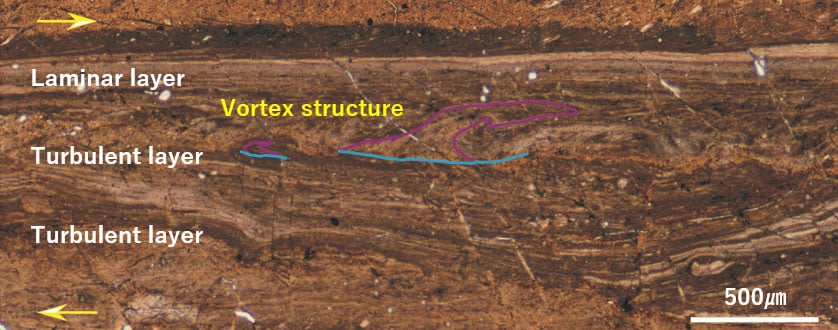
The researchers examined exposed rocks that formed in an ancient seafloor environment approximately 15 million years ago. Within an old earthquake fault, they identified unusual wavy and curved layers, along with swirling structures resembling vortices formed by moving fluids.
The team described these formations as “turbulent-flow-like.” Using fluid dynamics to analyze their shapes, the scientists found evidence that a process called thermal pressurization had caused clay within the fault to become fluidized.
Thermal pressurization occurs when rapid movement along a fault generates intense frictional heat. As water trapped in microscopic spaces within the rock heats up, pressure increases, reducing the frictional resistance that normally keeps the fault surfaces locked together. This weakening can allow much greater movement during an earthquake.
How a Weakening Fault Could Trigger a Tsunami
“Our analysis suggests that the viscosity approached that of water,” Professor Hirono explained. “This would have been a dramatic reduction. The fluidized state would have acted as a form of dynamic lubrication, causing the fault to weaken dramatically. The resulting large-scale slip would have produced a large displacement on the fault near the seafloor, potentially causing a tsunami.”
The mechanism could help explain the extreme seafloor displacement associated with some major earthquakes. In 2011, a magnitude 9.1 earthquake struck eastern Japan, with shaking and fault rupture lasting nearly six minutes. The earthquake shifted the ocean floor enough to generate a devastating tsunami. Although the ancient rocks do not establish whether the same weakening process occurred in 2011, they provide physical evidence of how faults may undergo dramatic changes during seismic events.
Ancient Faults Could Improve Tsunami Risk Assessments
The researchers hope to apply their analytical methods to modern faults, using changes in the viscosity of fault materials to better estimate how far those faults might slip during an earthquake. More accurate assessments of fault movement could improve estimates of potential seafloor displacement and associated tsunami hazards.
“Understanding the change in viscosity in fault-slips may allow us to more accurately recognize the magnitude of fault slips, which would support tsunami mitigation efforts,” Professor Hirono concluded.
Reference: “Coseismic turbulence-like flow of fault material along the shallow portion of a plate-subduction-related fault” by Tatsuru Fukuta and Tetsuro Hirono, 27 June 2026, Scientific Reports.
DOI: 10.1038/s41598-026-57630-y
Never miss a breakthrough: Join the SciTechDaily newsletter.
Follow us on Google and Google News.