
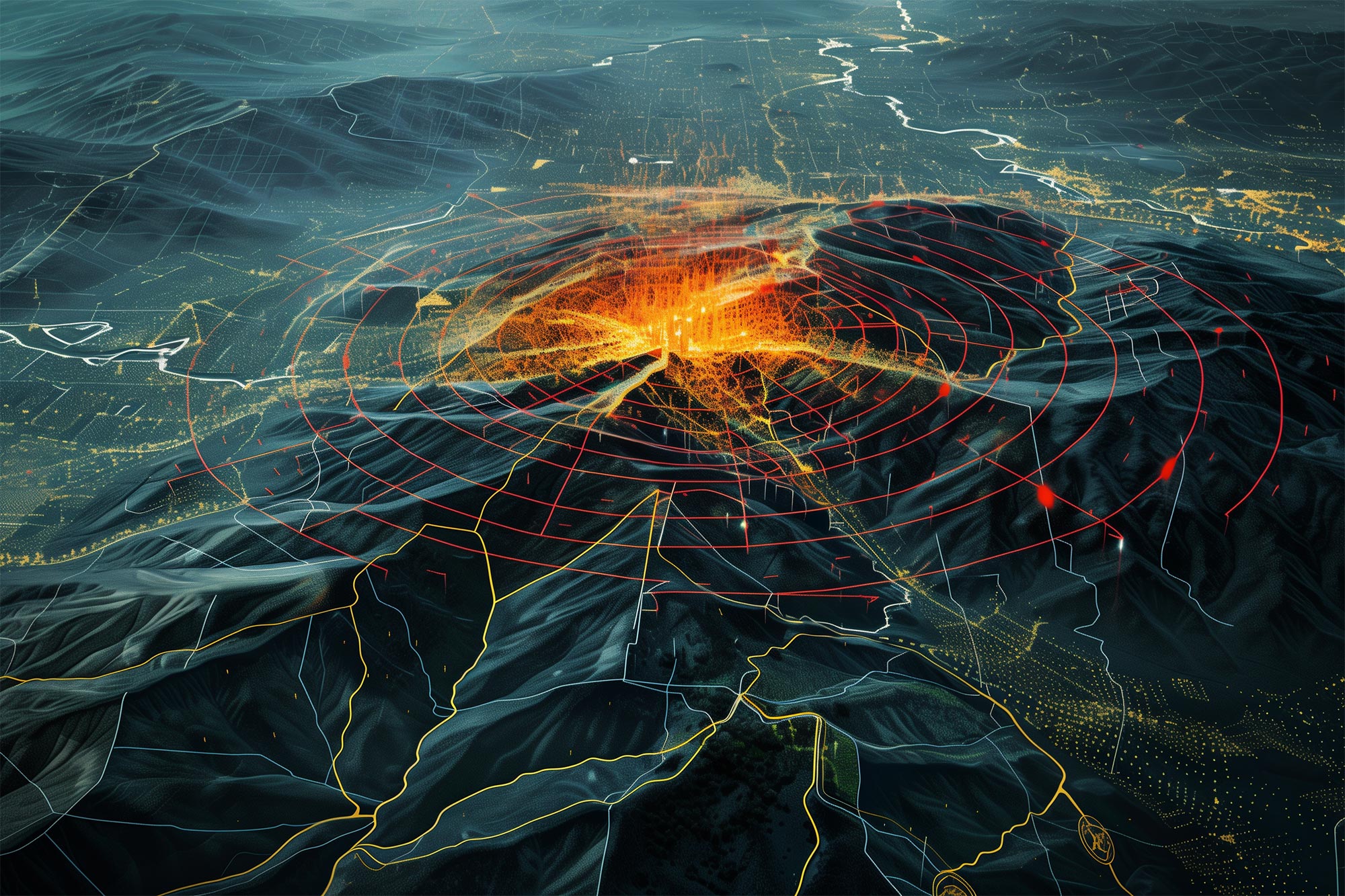
Lake sediment cores in Guatemala reveal directional ground shaking from the 1976 earthquake, offering rare insight into seismic directivity and helping reconstruct a 4,000-year paleoseismic history.
Sediment cores collected from four lakes in Guatemala have captured evidence of the direction in which seismic waves traveled during the powerful magnitude 7.5 earthquake that struck the country in 1976. This discovery was presented by researchers at the Seismological Society of America’s Annual Meeting.
The earthquake, which occurred along the Motagua Fault, marking the boundary between the North American and Caribbean tectonic plates, resulted in over 23,000 fatalities and left approximately 1.5 million people homeless.
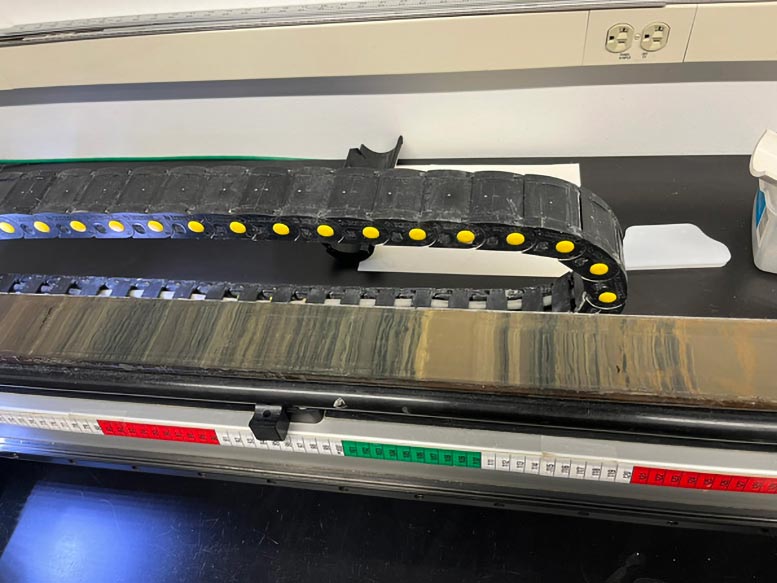
Intense ground shaking triggered landslides and sediment-laden turbidity currents that left distinct layers in the lakebed sediments. These deposits serve as geological records of the earthquake’s force and direction. Typically, researchers expect thinner sediment deposits in lakes farther from the epicenter, as seismic energy generally weakens with distance.
But in the Guatemalan lakes, the cores with the thickest sediment traces of the earthquake occur at the end of the fault rupture, said Jonathan Obrist-Farner, a geologist at Missouri University of Science and Technology. “What we see is lakes that are actually the closest to the epicenter but just away from the rupture path have very thin deposits.”
A Sediment Record of Seismic Directivity
Jeremy Maurer, a geophysicist also at Missouri University, suggested that the unusual pattern had in this case recorded the directivity of the 1976 shaking.
It’s not unusual for scientists to find evidence of past earthquakes in lake sediment cores, Maurer added, noting examples from New Zealand to Turkey that offer a glimpse at how far away a particular earthquake could have an impact.
“What hasn’t been done as much is looking at where these lakes are located in relationship to the fault,” said Maurer. “Are they off-axis or on-axis? Does the direction of the rupture have an effect on sediment deposits?”
When the U.S. Geological Survey collected field data after the 1976 earthquake, “they found, for example, adobe houses that were 10 kilometers south of the main rupture path that were still standing, yet those that were actually on the fault trace and towards the propagation direction all collapsed,” said Maurer. “I think there’s a lot of evidence that points to the directivity of the rupture, and now we’re just looking at it sedimentologically from the lakes.”
Toward a Paleoseismic History of Guatemala
The researchers began recovering and analyzing cores from the lakes in 2022. “We thought it would be a very interesting opportunity to not just look at the 1976 earthquake, but actually learn a little bit more about the paleoseismic history of the plate boundary, which we know very little about,” said Obrist-Farner, who is originally from Guatemala.
Although there was a brief rush of seismologists to the region after the 1976 earthquake, the impacts of a 36-year civil war and sparse instrumentation have left the plate boundary poorly monitored. Paleoseismic data like the lake records are important for building a more complete picture of the country’s seismic risk.
Last year Obrist-Farner’s team retrieved their largest cores yet from the lakes, with lengths of sediment that may represent up to four thousand years of lake history. Their initial analysis shows evidence of the 1816 earthquake of at least magnitude 7.5 that is known mostly from historical documents.
Meeting: 2025 Seismological Society of America
Never miss a breakthrough: Join the SciTechDaily newsletter.
Follow us on Google and Google News.