
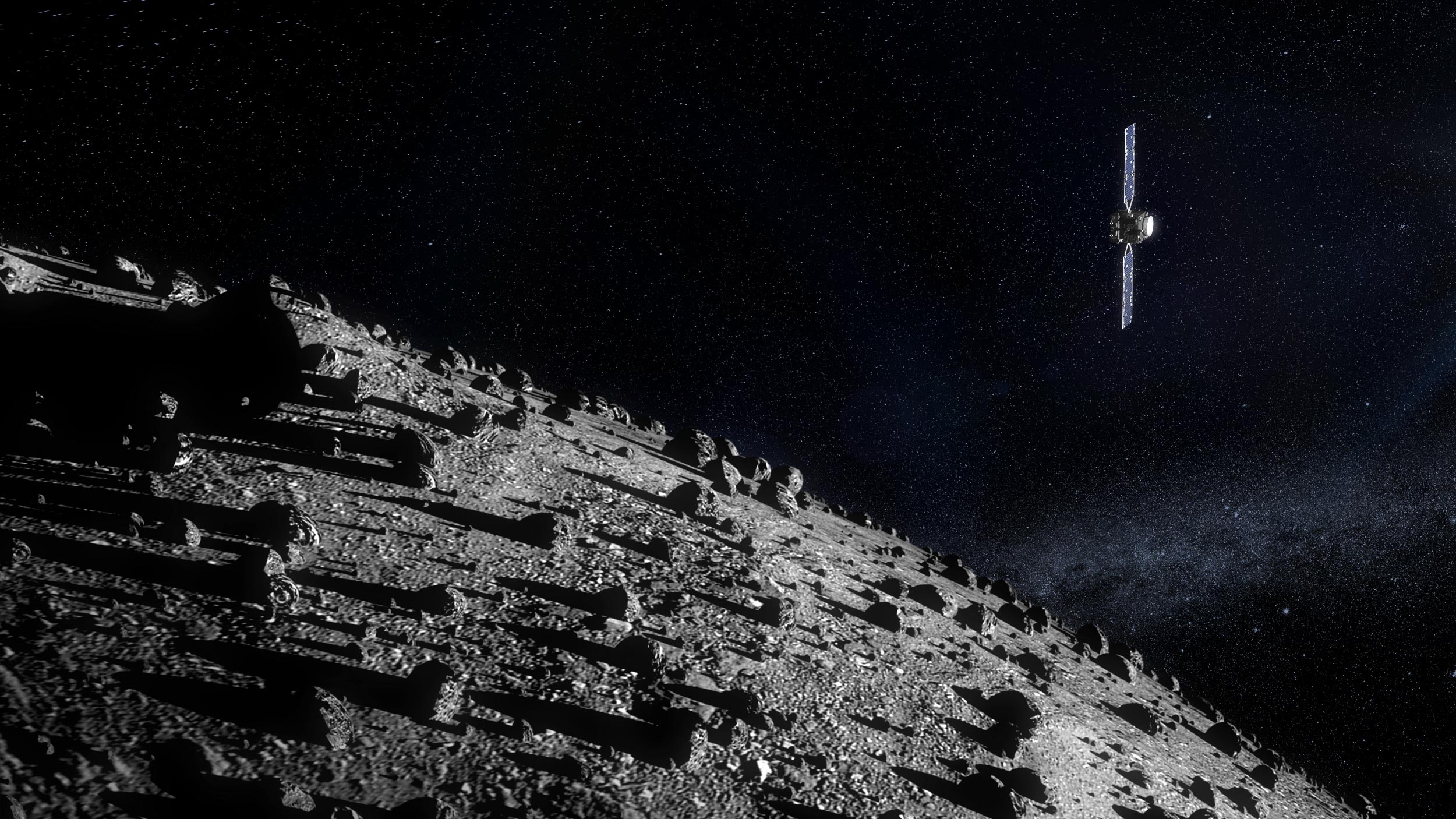
The European Space Agency’s Hera spacecraft has captured its first close-up image of the Didymos asteroid system, revealing a surprisingly different side of the asteroid near NASA’s historic 2022 collision site.
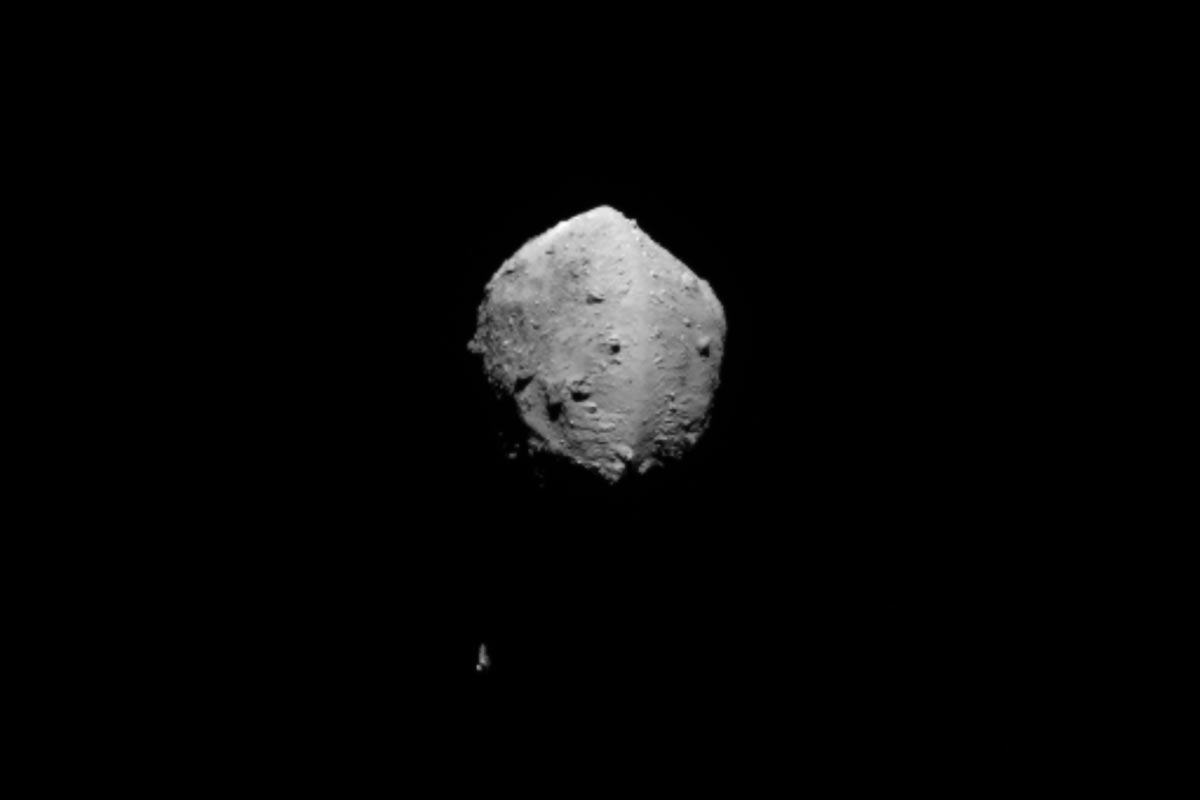
The European Space Agency’s (ESA) Hera spacecraft has captured its first close-up image of the Didymos asteroid system, revealing a surprisingly different side of the larger asteroid that scientists have never seen in such detail.
The discovery comes as Hera prepares to investigate the aftermath of NASA’s historic DART mission, which deliberately crashed a spacecraft into the smaller asteroid, Dimorphos, on September 26, 2022. The collision successfully altered Dimorphos’ orbit, demonstrating that humans can change the course of an asteroid.
Hera’s new image was taken from a distance of just 60 km using its monochromatic Asteroid Framing Camera. Although shadows obscure most of Dimorphos, which measures 151 meters across, the much larger Didymos, measuring 780 meters in diameter, is clearly visible. Dimorphos orbits Didymos as its smaller companion.
A Surprising New View of Asteroid Didymos
“The first thing we said was wow!” observes Hera Principal Investigator Patrick Michel, Director of Research at CNRS / Observatoire de la Côte d’Azur. “This is the other side of Didymos from the one that DART’s camera showed us shortly before impact, so this feels like looking at a whole new world.
“This side of Didymos has the same central ridge along its equator that we saw before, but otherwise appears very different, with multiple boulders and craters and what look like patterns of grooves or ridges.”
The unfamiliar terrain raises intriguing questions about whether NASA’s impact may have changed the surface of Didymos as well as the orbit of its smaller companion. Scientists believe material blasted off Dimorphos during the collision could have traveled across the approximately 1 km separating the two asteroids and landed on Didymos.
ESA’s Hera mission scientist Michael Kueppers adds: “Since we expect a lot of impact-ejected material to have made it across the approximately 1 km of space from Dimorphos to Didymos, it may be that some of these characteristics originate from this transport of material, and we have exciting work ahead of us to sort it out. We look forward to seeing much more of both bodies and systemically mapping all the changes we identify.”
Investigating NASA’s Historic Asteroid Impact
Although Dimorphos is largely hidden in the new image, it holds a unique place in space exploration history. It became the first object in the Solar System to have its orbit measurably changed by human intervention.
NASA achieved that milestone by sending its 580 kg DART spacecraft hurtling into Dimorphos at approximately 6.1 km/s. The impact shortened the asteroid’s orbital period around Didymos by 33 minutes, with a margin of error of about one minute. That change was substantially greater than scientists had predicted.
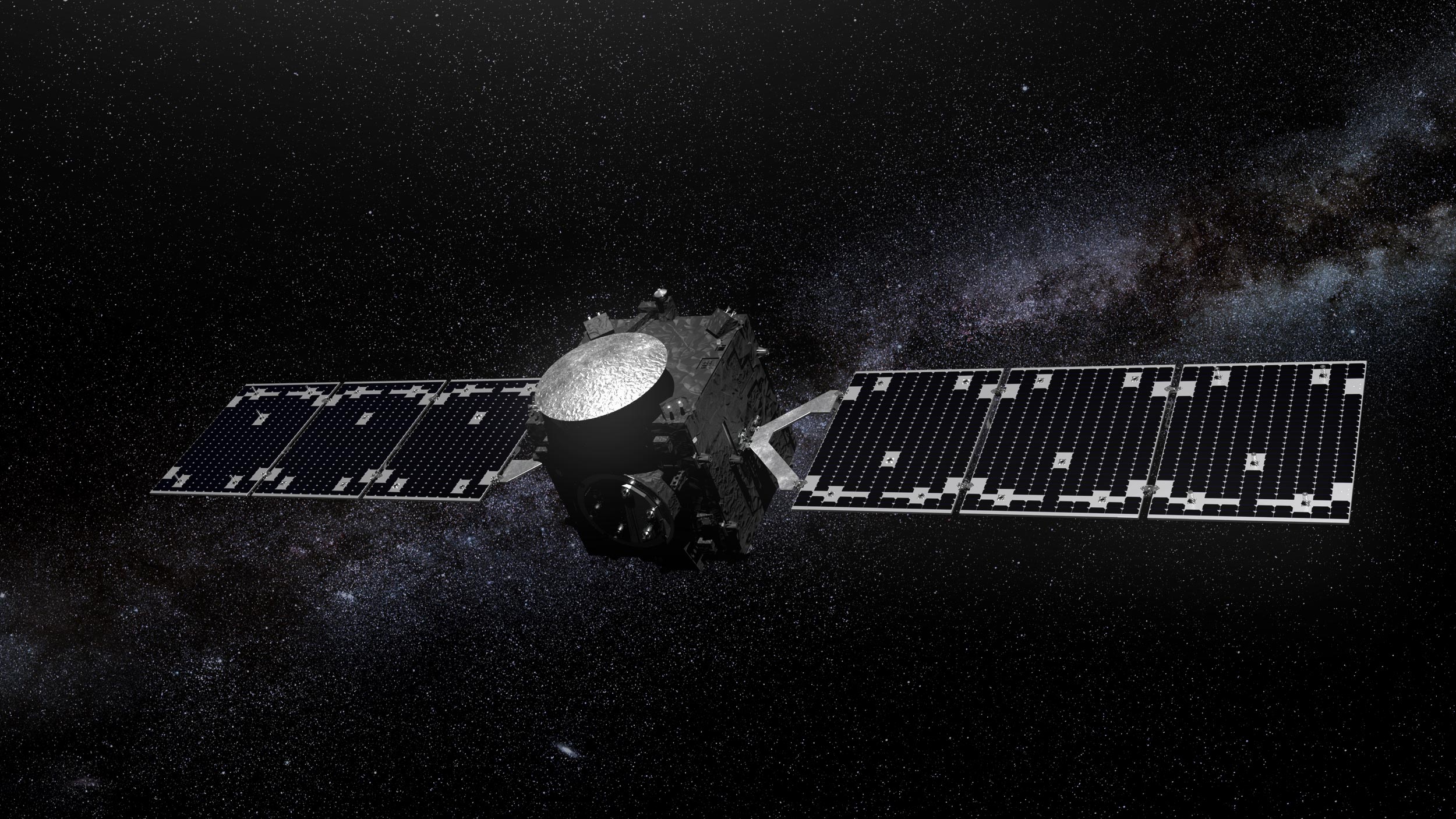
After a two-year journey, Hera has reached the binary asteroid system, located approximately 196.8 million km from Earth. The spacecraft is now preparing for a detailed ‘crash site investigation’ to determine how the collision affected both asteroids.
Turning an Asteroid Experiment Into a Defense for Earth
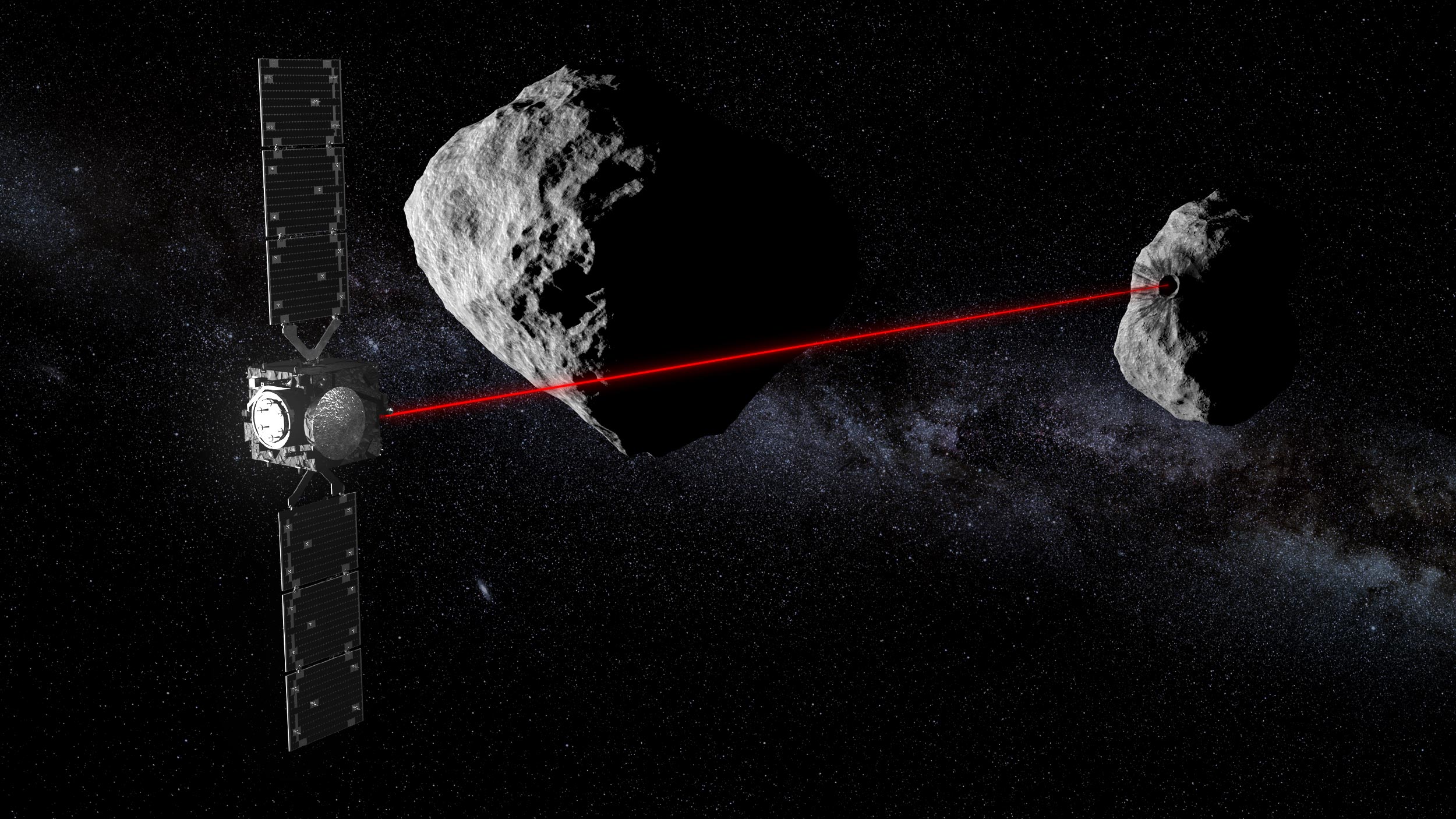
Hera’s findings could have major implications for planetary defense. While DART demonstrated that deliberately striking an asteroid can change its trajectory, scientists still need to understand precisely how the process works and what determines the size of the resulting orbital change.
By closely examining Dimorphos and Didymos, Hera will help researchers refine the kinetic impact technique, which uses the momentum of a spacecraft collision to alter an asteroid’s motion. The goal is to transform NASA’s successful experiment into a predictable, repeatable method that could one day protect Earth from a threatening asteroid.
“Seeing this image is a hugely exciting moment for the whole Hera family,” comments Hera mission manager Ian Carnelli. “It has taken years of hard work and dedication to reach this point – but we’re motivated to know that the adventure is only beginning!”
More detailed images of both asteroids are scheduled to be unveiled on November 25, offering scientists an even closer look at the aftermath of humanity’s first successful asteroid deflection experiment.
Never miss a breakthrough: Join the SciTechDaily newsletter.
Follow us on Google and Google News.