
Close Menu
    Facebook X (Twitter) Instagram
    SciTechDaily
    • Biology
    • Chemistry
    • Earth
    • Health
    • Physics
    • Science
    • Space
    • Technology
    Facebook X (Twitter) Pinterest YouTube RSS
    SciTechDaily
    Home»Space»Hubble Space Telescope Spies NGC 1803 in the Painter’s Easel
    Space

    Hubble Space Telescope Spies NGC 1803 in the Painter’s Easel

    By ESA/HubbleJanuary 16, 2020No Comments2 Mins Read
    Facebook Twitter Pinterest Telegram LinkedIn WhatsApp Email Reddit
    Share
    Facebook Twitter LinkedIn Pinterest Telegram Email Reddit
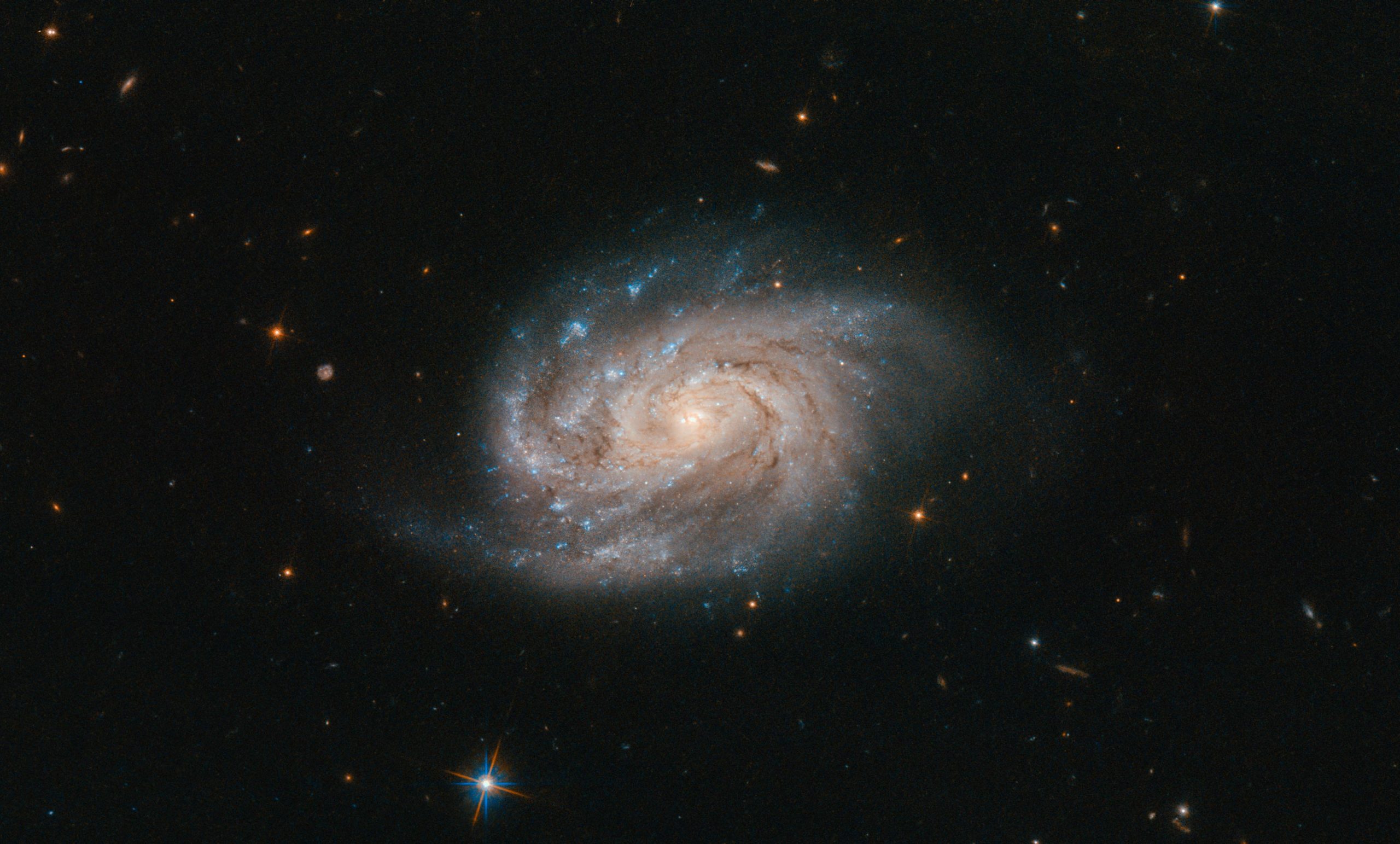
    Galaxy NGC 1803
    A galaxy named NGC 1803 as observed by the NASA/ESA Hubble Space Telescope Credit: ESA/Hubble & NASA, A. Bellini et al.

    This bright, somewhat blob-like object — seen in this stunning picture as observed by the NASA/ESA Hubble Space Telescope — is a galaxy named NGC 1803. It is about 200 million light-years away, in the southern constellation of Pictor (The Painter’s Easel).

    NGC 1803 was discovered in 1834 by astronomer John Herschel. Herschel is a big name in astronomy; John, his father William, and his aunt Caroline all made huge contributions to the field, and their legacies remain today. William systematically cataloged many of the objects he viewed in the night sky, named many moons in the Solar System, discovered infrared radiation, and more. Caroline discovered several comets and nebulae. John took this aforementioned catalog of night-sky objects and reworked and expanded it into his General Catalogue of Nebulae and Clusters of Stars. This was the basis for the cataloging system still used today by astronomers (Dreyer’s New General Catalogue of Nebulae and Clusters of Stars, or the New General Catalogue for short).

    This gives rise to the NGC names assigned to a vast number of galaxies — including NGC 1803. This galaxy is one of a galactic pair. It was described by Dreyer as being “faint, small, [and] round”, and located near a very bright star to the southeast. This star is in fact the nebulous lenticular galaxy PGC 16720 — not visible in this image.

    Never miss a breakthrough: Join the SciTechDaily newsletter.
    Follow us on Google and Google News.

    Astronomy European Space Agency Hubble Space Telescope NASA
    Share. Facebook Twitter Pinterest LinkedIn Email Reddit

    Related Articles

    Hubble’s Newest Discovery Isn’t a Star, It’s a Window Into the Dark Universe

    This Nearby Galaxy Shows How Frozen Clouds Ignite Into Stars

    This Chaotic Spiral Galaxy Is Still Recovering From a Cosmic Collision

    This Strange Spiral Galaxy Is Hiding a Massive Black Hole

    Hubble Zooms In on a Galaxy That Maps the Universe’s Expansion

    Hubble Captures a Dazzling Spiral Galaxy Alive With Birth and Destruction

    Hubble Spots a Glowing “Ring of Fire” in a Distant Spiral Galaxy

    Dust, Light & Ancient Collisions: The Sombrero Galaxy Like You’ve Never Seen It

    Star Formation in Motion: Hubble Reveals Spiraling Stars and Sculpted Nebulae

    Leave A Reply Cancel Reply

    • Facebook
    • Twitter
    • Pinterest
    • YouTube

    Don't Miss a Discovery

    Subscribe for the Latest in Science & Tech!

    Trending News

    Long COVID Brain Scans Reveal Damage to Dopamine Neurons

    Scientists Warn a Silent Oxygen Crisis Is Spreading Through Earth’s Waters

    James Webb Telescope Discovers Hidden Giant Planet in Famous Star System

    Scientists Build the First 3D Cloak That Makes Objects Invisible To Heat

    Common Food Additive Linked To Gut Inflammation

    Black Hole Collisions May Follow a Surprisingly Simple Rule

    The Eye Has a Hidden Cleanup System and Scientists Just Discovered It

    The Truth About Vikings Is More Complicated Than Museums Admit

    Follow SciTechDaily
    • Facebook
    • Twitter
    • YouTube
    • Pinterest
    • Newsletter
    • RSS
    SciTech News
    • Biology News
    • Chemistry News
    • Earth News
    • Health News
    • Physics News
    • Science News
    • Space News
    • Technology News
    Recent Posts
    • NASA Astronaut Comes Home After 3,856 Orbits of Earth
    • A Rare and Deadly Cancer May Have an Unexpected New Vulnerability
    • Sleep Disorders Don’t Just Exhaust You. New Research Shows They Change Your Brain
    • THC-CBD Treatment Dramatically Reduces Agitation in Dementia Trial
    • Rare 8,000-Year-Old Rock Shelter Captures a Turning Point in Human History
    Copyright © 1998 - 2026 SciTechDaily. All Rights Reserved.
    • Science News
    • About
    • Contact
    • Editorial Board
    • Privacy Policy
    • Terms of Use

    Type above and press Enter to search. Press Esc to cancel.