
Close Menu
    Facebook X (Twitter) Instagram
    SciTechDaily
    • Biology
    • Chemistry
    • Earth
    • Health
    • Physics
    • Science
    • Space
    • Technology
    Facebook X (Twitter) Pinterest YouTube RSS
    SciTechDaily
    Home»Biology»Monkeys Cured of Ebola Zaire Virus With Antibody Cocktail
    Biology

    Monkeys Cured of Ebola Zaire Virus With Antibody Cocktail

    By SciTechDailyJune 19, 2012No Comments2 Mins Read
    Facebook Twitter Pinterest Telegram LinkedIn WhatsApp Email Reddit
    Share
    Facebook Twitter LinkedIn Pinterest Telegram Email Reddit
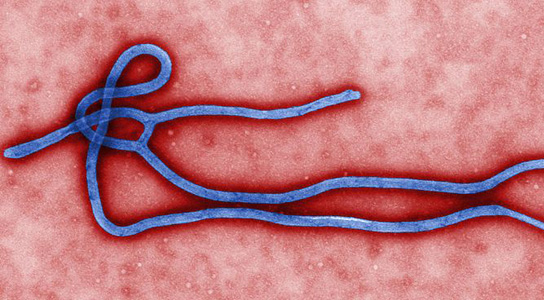
    ebola-virus-virion-microscope
    Ebola virus under the microscope.

    A cocktail of three antibodies has been able to cure monkeys infected with the Ebola virus if administered 24 hours or more after exposure. This could imply that a future treatment for humans could be possible. Some of the variants of the Ebola virus kill up to 90% of infected patients, and currently, most treatment regimens only improve survival when administered within an hour of infection.

    Researchers from the National Microbiology Laboratory in Winnipeg, Canada, published their findings in the journal Science Translational Medicines. The new cocktail is named ZMAb and was administered to cynomolgus monkeys (Macaca fascicularis) who were infected by the Ebola Zaire virus, the deadliest strain of Ebola which is still prevalent in the Congo and Gabon. The monkeys began their treatment within 24 hours of being infected and all three survived. Two of four monkeys given the cocktail within 48 hours of infection also survived. Untreated monkeys died within five days of being exposed to Ebola Zaire.
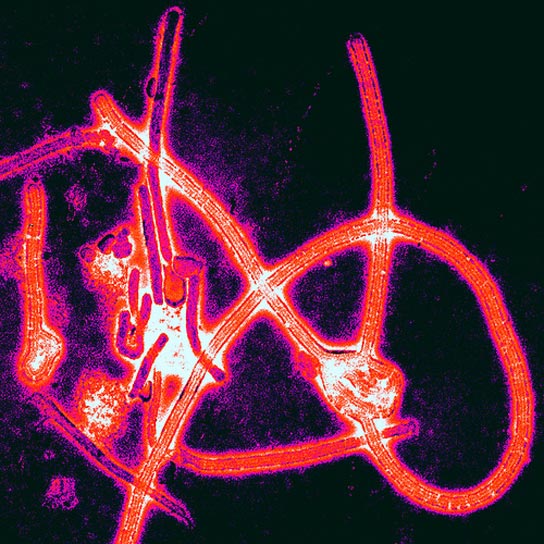
    ebola-virus-in-action

    The antibodies slowed the replication of the virus until the animals’ own immune systems kicked in and cleared the virus, states Gary Kobinger, a medical microbiologist at the University of Manitoba and lead author. The antibodies, obtained from mice vaccinated with fragments of the virus, target and neutralize a glycoprotein on the surface of the Ebola virus that allows it to enter and infect cells.
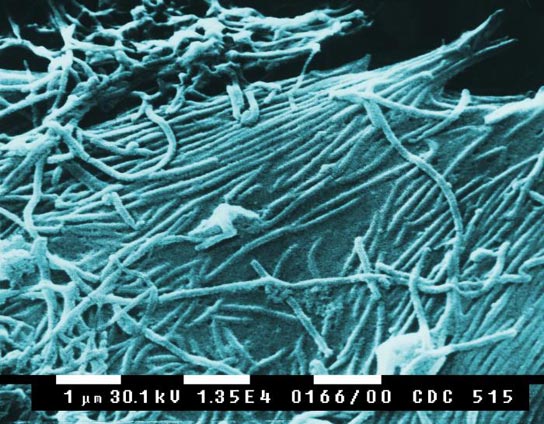
    ebola-virus-cdc

    This strategy isn’t new, but this cocktail contains multiple antibodies that target different locations of the glycoprotein, making it harder for the virus to resist it. Defyrus, a biotech company based in Toronto, Canada, is developing the antibodies as part of their Ebola treatment called Defilovir, which works in tandem with DEF201, an antiviral gene therapy. They plan on entering phase I clinical trials before the end of 2014.

    Reference: “Successful Treatment of Ebola Virus–Infected Cynomolgus Macaques with Monoclonal Antibodies” by Xiangguo Qiu, Jonathan Audet, Gary Wong, Stephane Pillet, Alexander Bello, Teresa Cabral, Jim E. Strong, Frank Plummer, Cindy R. Corbett, Judie B. Alimonti and Gary P. Kobinger, 13 June 2012, Science Translational Medicines.
    DOI: 10.1126/scitranslmed.3003876

    Never miss a breakthrough: Join the SciTechDaily newsletter.
    Follow us on Google and Google News.

    Antibodies Disease Ebola Epidemiology Monkey Virology Virus
    Share. Facebook Twitter Pinterest LinkedIn Email Reddit

    Related Articles

    Novel Coronavirus hCoV-EMC Infects Humans & Animals

    Cases of New Coronavirus Announced By WHO

    Crystal Meth Could Reduce Susceptibility to the Common Flu

    Gene Sequencing of New Coronavirus Speeds Up Testing

    New Coronavirus Could Infect Millions During Hajj in Saudi Arabia

    West Nile Virus Might Be Linked to Kidney Problems

    Brucella Blocked From Bonding With Host, Could Lead to Superbug Cure

    Visual Science’s Ebolavirus 3D Model is 10 Times More Complex Than Their HIV Model

    Ruminant Orthobunyavirus Takes Northern Europe By Surprise

    Leave A Reply Cancel Reply

    • Facebook
    • Twitter
    • Pinterest
    • YouTube

    Don't Miss a Discovery

    Subscribe for the Latest in Science & Tech!

    Trending News

    Scientists Built a Programmable Chip That Can Slow Light on Command

    The Backyard “Silly Sprinkler” That Cracked One of Physics’ Biggest Puzzles

    This Common Sleep Habit Could Be Making You Gain Weight

    Mathematician Offers New Solution to a Fundamental Cosmic Paradox

    Scientists Turn Plastic Waste Into Clean Hydrogen Fuel

    Long COVID Brain Scans Reveal Damage to Dopamine Neurons

    Scientists Warn a Silent Oxygen Crisis Is Spreading Through Earth’s Waters

    James Webb Telescope Discovers Hidden Giant Planet in Famous Star System

    Follow SciTechDaily
    • Facebook
    • Twitter
    • YouTube
    • Pinterest
    • Newsletter
    • RSS
    SciTech News
    • Biology News
    • Chemistry News
    • Earth News
    • Health News
    • Physics News
    • Science News
    • Space News
    • Technology News
    Recent Posts
    • Scientists Find a Way To Keep Cancer-Fighting T Cells From Burning Out
    • Scientists Turn an Old Antibiotic Back Into a Superbug Killer
    • Scientists Discover Two Competing Memories in Matter
    • Quantum Heat Waves Spotted at Room Temperature for the First Time
    • Invisible Black Holes Could Be Triggering Supernovae
    Copyright © 1998 - 2026 SciTechDaily. All Rights Reserved.
    • Science News
    • About
    • Contact
    • Editorial Board
    • Privacy Policy
    • Terms of Use

    Type above and press Enter to search. Press Esc to cancel.