
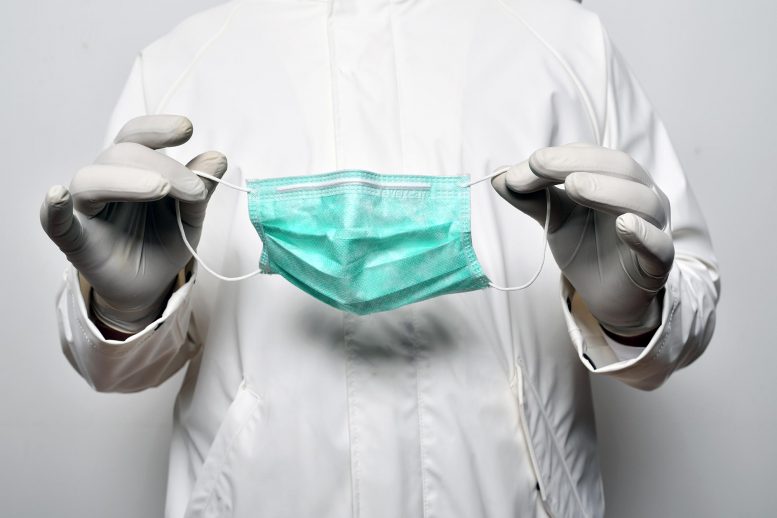
The research team utilized accessible and affordable equipment to improve N95 masks and cut waste.
Researchers at Rensselaer Polytechnic Institute have created a practical method for producing N95 face masks that are both excellent germ barriers and on-contact germ killers. The antiviral and antibacterial masks may be worn for longer periods of time, which would result in less plastic waste as the masks would not need to be replaced as often.
In order to combat infectious respiratory diseases and environmental pollution, Helen Zha, assistant professor of chemical and biological engineering and a member of the Center for Biotechnology and Interdisciplinary Studies at Rensselaer (CBIS), worked with Edmund Palermo, associate professor of materials science and engineering and a member of the Center for Materials, Devices, and Integrated Systems (cMDIS) at Rensselaer.
“This was a multifaceted materials engineering challenge with a great, diverse team of collaborators,” Palermo said. “We think the work is the first step toward longer-lasting, self-sterilizing personal protective equipment, such as the N95 respirator. It may help reduce transmission of airborne pathogens in general.”
Innovative Antimicrobial Polymer Technology
The researchers successfully grafted broad-spectrum antimicrobial polymers onto the polypropylene filters used in N95 face masks, according to the study that was recently published in Applied ACS Materials and Interfaces.
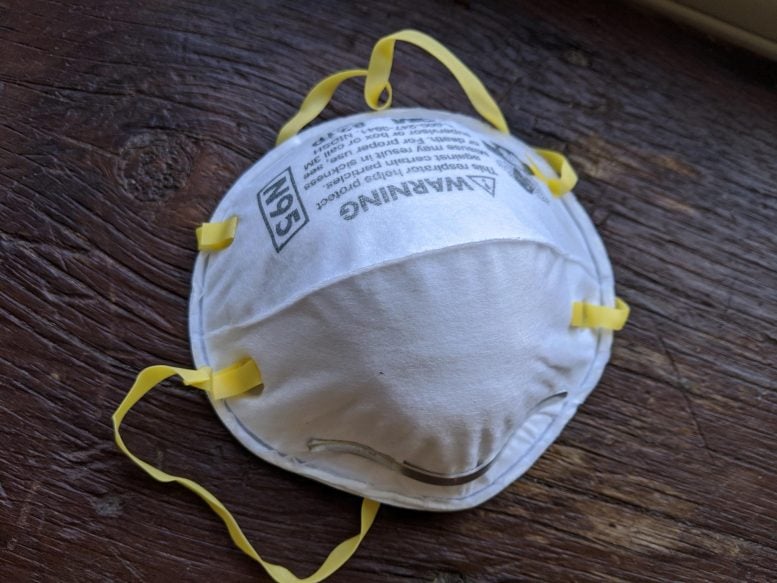
“The active filtration layers in N95 masks are very sensitive to chemical modification,” said Zha. “It can make them perform worse in terms of filtration, so they essentially no longer perform like N95s. They’re made out of polypropylene, which is difficult to chemically modify. Another challenge is that you don’t want to disrupt the very fine network of fibers in these masks, which might make them more difficult to breathe through.”
Scalable UV-Initiated Grafting Process
Zha and Palermo, along with other researchers from Rensselaer, Michigan Technological Institute, and Massachusetts Institute of Technology, covalently attached antimicrobial quaternary ammonium polymers to the fiber surfaces of nonwoven polypropylene fabrics using ultraviolet (UV)-initiated grafting. The fabrics were donated by Hills Inc. courtesy of Rensselaer alumnus Tim Robson.
“The process that we developed uses a really simple chemistry to create this non-leaching polymer coating that can kill viruses and bacteria by essentially breaking open their outer layer,” said Zha. “It’s very straightforward and a potentially scalable method.”
The team used only UV light and acetone in their process, which are widely available, to make it easy to implement. On top of that, the process can be applied to already manufactured polypropylene filters, rather than necessitating the development of new ones.
The team did see a decrease in filtration efficiency when the process was applied directly to the filtration layer of N95 masks, but the solution is straightforward. The user could wear an unaltered N95 mask along with another polypropylene layer with the antimicrobial polymer on top. In the future, manufacturers could make a mask with the antimicrobial polymer incorporated into the top layer.
Addressing PPE Shortages and Environmental Impact
Thanks to a National Science Foundation Rapid Response Research (RAPID) grant, Zha and Palermo started their research in 2020 when N95 face masks were in short supply.
Healthcare workers were even reusing masks that were intended to be single-use. Fast forward to 2022 and face masks of all types are now widely available. However, COVID-19 rates are still high, the threat of another pandemic in the future is a distinct possibility, and single-use, disposable masks are piling up in landfills.
“Hopefully, we are on the other side of the COVID pandemic,” said Zha. “But this kind of technology will be increasingly important. The threat of diseases caused by airborne microbes is not going away. It’s about time that we improved the performance and sustainability of the materials that we use to protect ourselves.”
“Attaching chemical groups that kill viruses or bacteria on contact with polypropylene is a smart strategy,” said Shekhar Garde, Dean of the School of Engineering at Rensselaer. “Given the abundance of polypropylene in daily life, perhaps this strategy is useful in many other contexts, as well.”
The study was funded by the NIH/National Institutes of Health.
Reference: “Virucidal N95 Respirator Face Masks via Ultrathin Surface-Grafted Quaternary Ammonium Polymer Coatings” by Mirco Sorci, Tanner D. Fink, Vaishali Sharma, Sneha Singh, Ruiwen Chen, Brigitte L. Arduini, Katharine Dovidenko, Caryn L. Heldt, Edmund F. Palermo and R. Helen Zha, 25 May 2022, ACS Applied Materials and Interfaces.
DOI: 10.1021/acsami.2c04165
Never miss a breakthrough: Join the SciTechDaily newsletter.
Follow us on Google and Google News.