
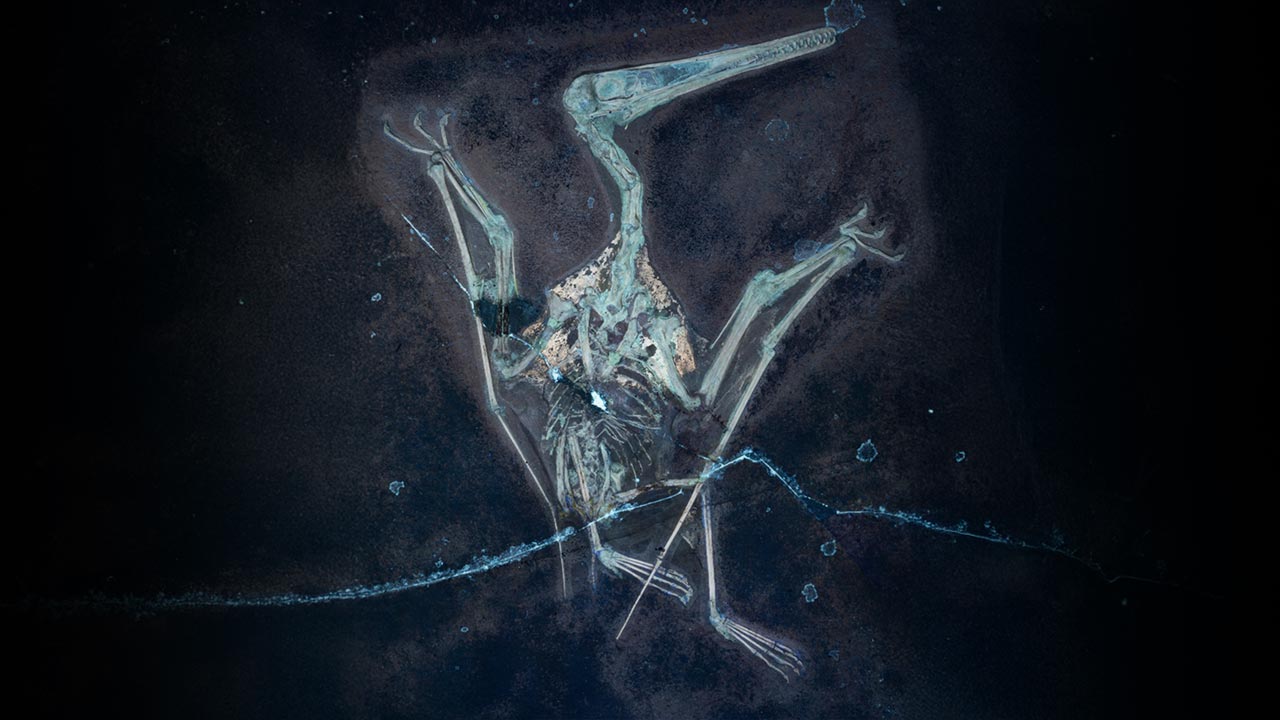
Just in time for Christmas, paleontologists at the University of Leicester have linked nearly 50 relatives of Pterodactylus, a 150-million-year-old pterosaur, revealing a detailed life history of these ancient creatures.
This breakthrough, using UV light to highlight previously unseen details, revolutionizes our understanding of the pterosaur family tree, from hatchlings to full-grown adults.
Festive Paleontological Discovery
Christmas is a time for families to come together, and this festive season brings a unique reunion—150 million years in the making. Paleontologists from the University of Leicester have uncovered nearly 50 previously unrecognized relatives of Pterodactylus, the first pterosaur ever discovered.
This groundbreaking study not only expands the known family tree of Pterodactylus but also provides crucial insights into its life cycle, from tiny hatchlings to fully grown adults.
The story of Pterodactylus began nearly 250 years ago when the first pterosaur fossil was unearthed in a Bavarian quarry. This 150-million-year-old specimen offered the first glimpse into a remarkable group of flying reptiles that dominated the skies during the Mesozoic Era. With wingspans reaching up to 10 meters, these creatures soared above dinosaurs, reshaping our understanding of prehistoric life. Remarkably, the original Pterodactylus fossil was no larger than a turtle dove, yet it sparked centuries of fascination and study.
Resolving Long-Standing Species Confusion
Despite being the original ‘pterodactyl’, Pterodactylus was soon quite literally overshadowed in the public consciousness by more dramatic, giant pterosaurs like Pteranodon and Quetzalcoatlus, which stole the spotlight. But Pterodactylus remained a favorite among pterosaur scientists.
Over the centuries, Pterodactylus and other similar pterosaurs from Bavaria have been central to ongoing scientific study, helping shape much of what we know about pterosaurs, from the shape of their wings and how they flew, to their diet and how they grew. But one question has always lingered: which of these many pterosaurs are truly Pterodactylus and which belong to completely different species? This confusion has persisted for centuries… until now. Thanks to a new study that analyzed dozens of specimens of Pterodactylus in museums around the world, the mystery has been solved, and the true identity of these fossils has finally been uncovered.

The Power of UV Light in Paleontology
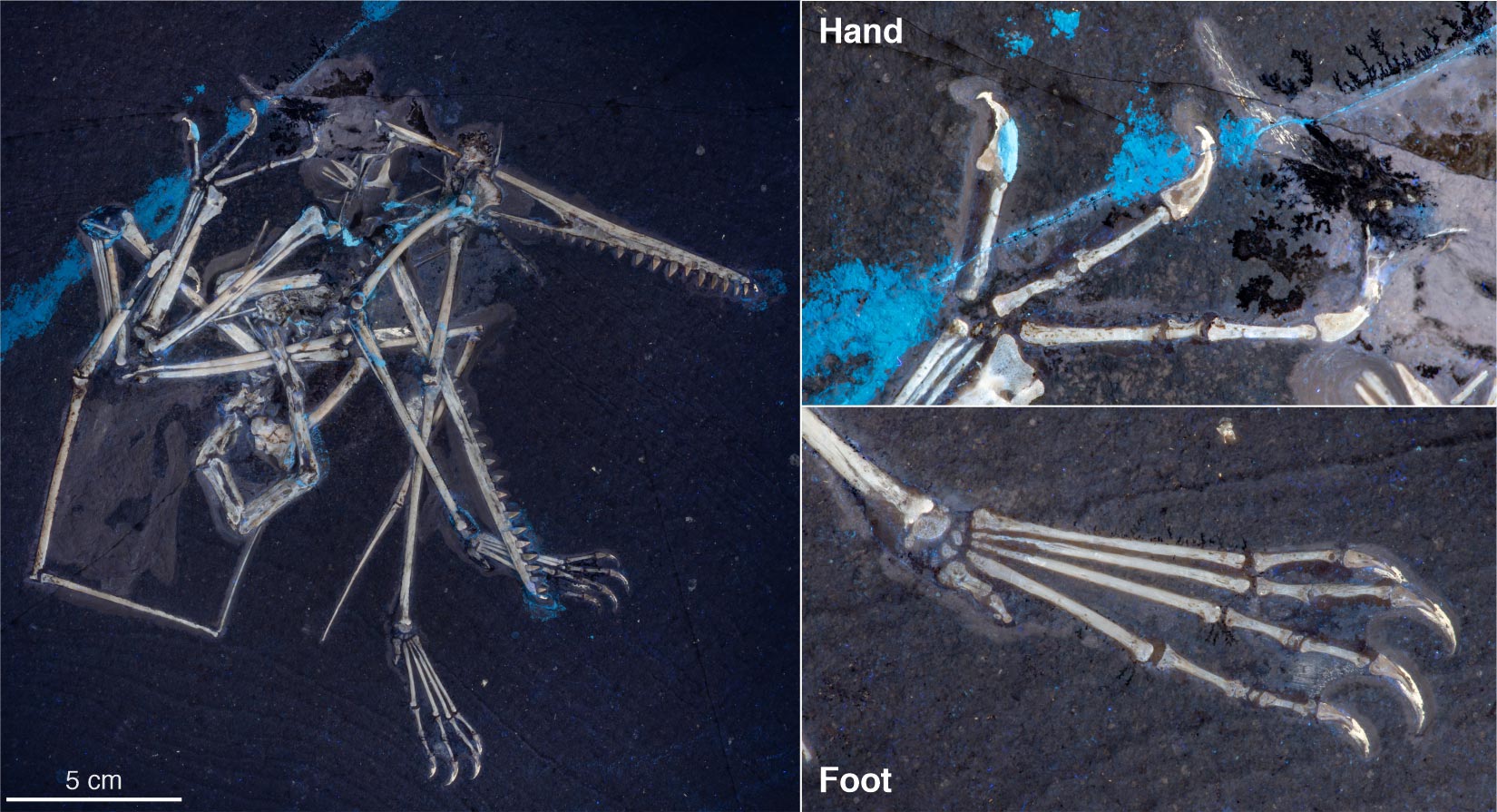
Shining powerful UV torches on fossil bones to make them fluoresce, University of Leicester paleontologists Robert Smyth and Dr. Dave Unwin were able to bring to light tiny near-invisible bony details that distinguish one kind of pterosaur from another. Using Pterodactylus’ unique features, found in the head, hips, hands and feet, Smyth and Unwin systematically checked other fossils from the same deposits and to their surprise discovered many other examples of Pterodactylus ‘hiding’ in among what were thought to be other species of pterosaur.
Lead author Robert Smyth, a doctoral researcher in the in the Centre for Palaeobiology and Biosphere Evolution (School of Geography, Geology and the Environment at the University of Leicester), explained: “By examining lots of fossils in collections across Europe we were able to reidentify more than forty specimens as Pterodactylus. UV-stimulated fluorescence is astonishing in the amount of detail it can reveal. Features that were once hidden were glowing in plain sight.”
A Family Portrait of Pterodactylus
In an eyeblink, the entire concept of Pterodactylus changed dramatically. With nearly 50 examples recognized so far, our knowledge of this most important of pterosaur has exploded. As co-author Dr. David Unwin from the University of Leicester explained: “We can now construct a complete and highly detailed skeletal anatomy for this key pterosaur. Soft tissues are fossilized in more than twenty examples so we can also reconstruct head crests, body shape, foot webs, and even the wings.”
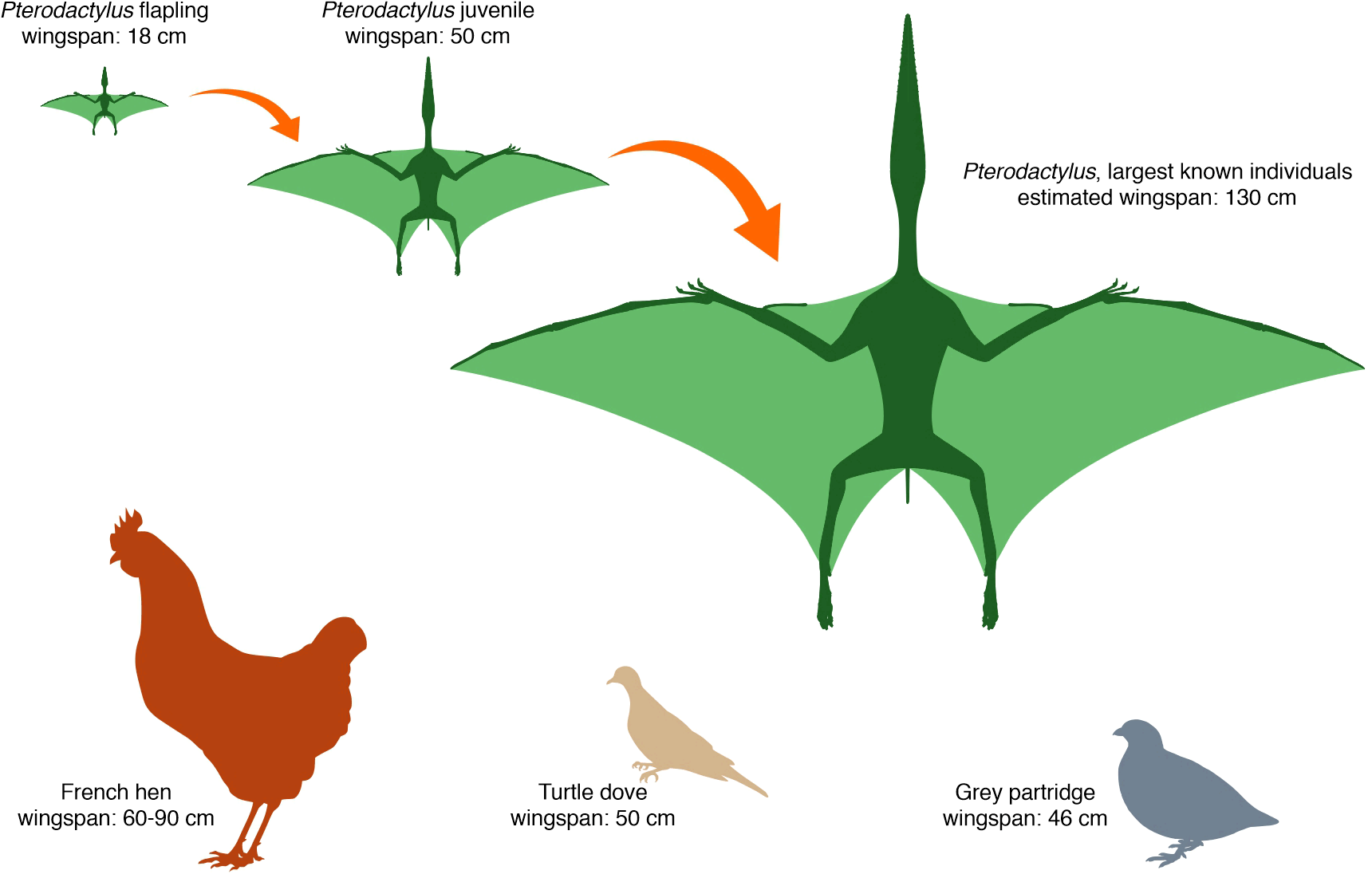
The result? A sprawling family portrait of Pterodactylus, providing a unique opportunity to reconstruct its full life history. This spans from robin-sized hatchlings (affectionately dubbed ’flaplings’) to ’teenage’ Pterodactylus, all the way to raven-sized adults with wingspans nearly ten times larger.
Dr. Unwin added: “UV stimulated fluorescence is a well-known technique, but the difference, in this case, is that we have been able to combine new high-quality light sources with a systematic ‘catch-all’ approach, and it’s going to have a revolutionary impact on our understanding of pterosaurs.”
Reference: “Re-evaluation of Pterodactylus antiquus and Diopecephalus kochi: two troublesome taxonomic concepts” by Robert S. H. Smyth and David M. Unwin, 17 December 2024, Journal of Systematic Palaeontology.
DOI: 10.1080/14772019.2024.2421845
Never miss a breakthrough: Join the SciTechDaily newsletter.
Follow us on Google and Google News.
4 Comments
Flying pterosaur again I guest they did not see the whale nose.the gator acetabular is dinosaur size the open hip socket like birds and dinosaur if you are not a expert I thought it was small the picture I saw the same picture is on researchgate the link.on the function of a perforated acetabular in archosaur.hardly can see it they did it this way it’s a possibility when I first saw it only read it did not look at picture of cartilage acetabular of usagator but look at bad picture and look at other thecodont .on researchgate function thing they say it look like stage 1 because hip does not look like dinosaur I saw that too and say crocodile is stage 2 because it’s bigger .crocodile hip looks more dinosaur because close to spinosauridae .on gobiosuchus link.gobiosuchus keilanae protosuchia.the perforated acetabular is circle stage 3 like advance dinosaur the stage 1,2, are partial open open hip socket I can not by picture if early bird dinosaur gator are fully open .perforated acetabular are in early thecodont the archosauriformies .thecodont pseudosuchus and spinosauridae dinosaur modern crocodilian .clearly gobiosuchus is a mesoeucrocodylia fuse frontal fuse parietal protosuchus lack fuse parietal but sphenosuchus do have it .the fuse premaxilla and fuse pterygoid and unique cranioquadrate passage .
On perforated acetabular Alan feduccia Clint’s reptile creation ministries all say modern crocodilian acetabular is close all of them are wrong clearly gator acetabular is open all of them are scientist so they never seen modern crocodilian acetabular I believe them they took word from other scientist the myth and corruption the school system is bad .i do not think they are hide something by may time in scientific world .alan feduccia researchgate report the avian acetabular.clearly modern crocodilian pseudosuchus some Archosauriformes thecodont are dinosaur.the gator close acetabular scientist would not say that if they know .clints reptile Amber dinosaur the author retract the story it’s a lizard on nbc news clearly he do not follow up investigate .before clear say it’s a maniraptoran a bird .sinosauropteryx is collagen fiber the 2 scientist said say this unique osteoderm armor skin is known for long time it’s found in one dwarf caiman and fossil gator type mesoeucrocodylia lot of layers they lack blood vessels it’s frill osteoderm
Frill dinosaur have these strong osteoderm skin it stronger than most modern crocodilian osteoderm the dwarf caiman most of osteoderm is none ornamentation I was reading about none ornamentation in early gator type mesoeucrocodylia that it is in mostly land crocodilian and they did not say anything about shieldcroc and cliam it’s not found in modern crocodilian .when they talk about frill skin I thought about sail like frill lizard skin some thing looks like a sail but I remember shieldcroc has these frill skin armor osteoderm .clint did not follow up on dinosaur color skin they do not have technology to tell skin color from fossil there aremore detail on report and new up date the North Carolina report that why there is no other animal report fossil skin color today. sinosauropteryx is a dinosaur that had sprawl ankle that show it was aquatic animal turn into modern crocodilian it not related to birds it has bird legs tibia is bigger than femur so do gator type fossil mesoeucrocodylia compsognathus is a tetanuran dinosaur with wider skull not bird like they have more foramen for blood vessel. bird do not .all tetanuran have most sensoritive face skin they have no feather in all there skin the caiman less skin foramen was not invented yet these dome skin have to work with feather they have skin fossil of these dome fenestra skin they are same as the gator the gator only have it on the face not like crocodile. compsognathidae is a thecodont animal .bird is not a thecodont .and gator is a bipedal animal the myth they are quadrupedal is over .the gator hip socket is open so easy tell people modern crocodilian is a dinosaur the only dinosaur that are alive the superior dinosaur the super dinosaur
On sinosauropteryx no feather were found like what you will find in a bird it’s theory of protofeather no won know how protofeather look like it’s theory what mite look like .feather are complex the science is still going.the Clint’s picture of crocodile acetabular hip is a fake it look worst than researchgate function report .the crocodile acetabular is all in yellow which is cliam modern crocodilian is close which is not true .the alligator acetabular good picture link.contrast enhanced xromm reveals .wiley online library.the dyrosaurid crocodile .academi edu.the new species of dyrosaurus.academi edu