
Close Menu
    Facebook X (Twitter) Instagram
    SciTechDaily
    • Biology
    • Chemistry
    • Earth
    • Health
    • Physics
    • Science
    • Space
    • Technology
    Facebook X (Twitter) Pinterest YouTube RSS
    SciTechDaily
    Home»Health»A New Biomarker for Acute COVID-19 May Have Been Found in Blood
    Health

    A New Biomarker for Acute COVID-19 May Have Been Found in Blood

    By Karolinska InstitutetDecember 11, 2022No Comments3 Mins Read
    Facebook Twitter Pinterest Telegram LinkedIn WhatsApp Email Reddit
    Share
    Facebook Twitter LinkedIn Pinterest Telegram Email Reddit
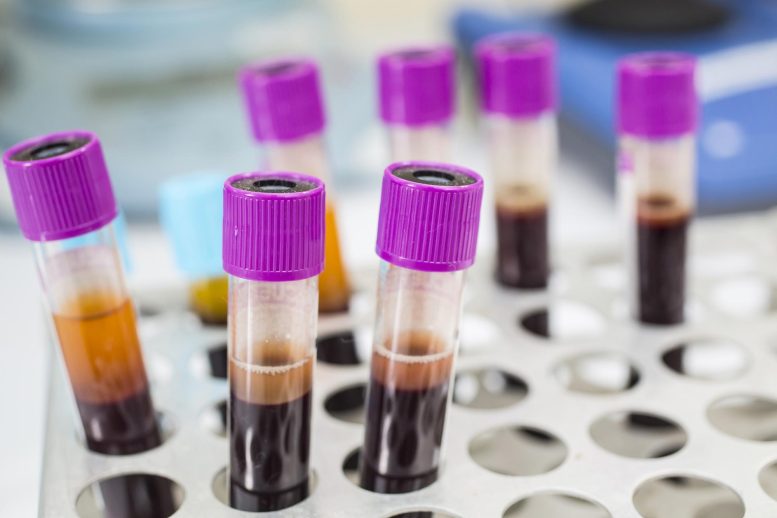
    Blood Diagnostic Test Tubes
    Researchers at Karolinska Institutet in Sweden completed a study that indicates that increased levels of the cytokine interleukin-26 (IL-26) in blood is a potential biomarker for severe COVID-19.

    Scientists have shown that patients with acute COVID-19 infection have increased levels of the cytokine IL-26 in their blood. Moreover, high IL-26 levels correlate with an exaggerated inflammatory response that signifies severe cases of the disease. The findings, which are presented in the peer-reviewed journal Frontiers in Immunology, suggest that IL-26 is a potential biomarker for severe COVID-19.

    Vaccines for SARS-CoV-2 have proved effective at reducing the number of cases of severe COVID-19. However, the emergence of new viral variants, limited distribution of the vaccine, and declining immunity are problems that drive scientists to find more efficacious treatments for the disease.

    Eduardo Cardenas
    Eduardo Cardenas, postdoc researcher at Karolinska Institutet. Credit: Ulf Sirborn

    “We need to understand more about underlying immunological mechanisms in order to find better treatments. There is also a need for improved diagnostics in COVID 19-patients,” says Eduardo Cardenas, postdoc researcher at the Institute of Environmental Medicine, Karolinska Institutet, and principal author of the new pilot study.

    The researchers have tried, for the first time, to ascertain whether immune signaling via the cytokine interleukin-26 (IL-26) is involved in severe COVID-19.

    “We already know that IL-26 is engaged in mobilizing immune cells that combat bacterial infections in the lungs and also in chronic respiratory disease in humans,” says the study’s last author Anders Lindén, consultant and professor at the Institute of Environmental Medicine, Karolinska Institutet. “What’s more, IL-26 has antiviral and antibacterial effects.”

    To study how the molecule is involved in COVID-19, the scientists recruited 49 patients who had been hospitalized with SARS-CoV-2 infection, 44 of whom had severe symptoms and needed oxygen therapy. The patients were recruited at a hospital in Stockholm from June 2020 to January 2021. A control group of 27 healthy individuals was also recruited during the same period. The researchers then measured levels of IL-26 protein and other inflammatory compounds in the blood.

    IL-26 as a Potential Biomarker and Therapeutic Target

    “We can show for the first time that blood levels of the cytokine IL-26 are much higher in patients with COVID-19 than in healthy controls,” says Dr. Cardenas.

    Anders Lindén
    Anders Lindén, professor at Karolinska Institutet. Credit: Privat

    The researchers could also see that the increase was associated with the so-called cytokine storm – an excessive and dangerous inflammatory response that signifies severe cases of COVID-19.

    “Our discovery gives us a potential biomarker for severe COVID-19, but given the antiviral effects of IL-26, we may also have identified a new therapeutic target,” says Professor Lindén.

    According to Dr. Cardenas, the results are promising but are preliminary and warrant further study with a larger patient cohort.

    “Such a study is on the way and can give more information on the clinical value of measuring IL-26 in COVID-patients, such as whether the levels reflect the severity of the disease.

    Reference: “Increased IL26 associates with markers of hyperinflammation and tissue damage in patients with acute COVID-19” by Eduardo I. Cardenas, Sandra Ekstedt, Krzysztof Piersiala, Marianne Petro, Agneta Karlsson, Åsa Kågedal, Susanna Kumlien Georén, Lars-Olaf Cardell and Anders Linden, 17 November 2022, Frontiers in Immunology.
    DOI: 10.3389/fimmu.2022.1016991

    The study was financed by the Swedish Research Council and the Swedish Heart-Lung Foundation.

    Never miss a breakthrough: Join the SciTechDaily newsletter.
    Follow us on Google and Google News.

    Biomarkers COVID-19 Infectious Diseases Karolinska Institutet
    Share. Facebook Twitter Pinterest LinkedIn Email Reddit

    Related Articles

    Why Can’t We Test for Long COVID? Unraveling the Diagnostic Puzzle

    “Unexpectedly Effective” – New COVID Vaccine’s Robust Response to Mutated Variants

    Immunological Markers for COVID-19 Reinfection Identified – Critical As Dangerous New Variants Emerge

    Cholesterol-Lowering Statins Linked to Reduced Risk of Death From COVID-19 in Major Study

    New COVID-19 Biomarker Discovery – Can Predict Patient Death or Hospitalization

    Low-Cost Technology Developed for Finding New COVID Variants

    One in Ten People Still Have Long-Term Effects 8 Months Following Mild COVID-19

    New Research May Explain Severe Virus Attacks on the Lungs, Contribute to Future Treatments for COVID-19

    Small Neutralizing Antibody Identified That May Prevent COVID-19 Infection

    Leave A Reply Cancel Reply

    • Facebook
    • Twitter
    • Pinterest
    • YouTube

    Don't Miss a Discovery

    Subscribe for the Latest in Science & Tech!

    Trending News

    Mezcal “Worm” in a Bottle Mystery: DNA Testing Reveals a Surprise

    New Research Reveals That Your Morning Coffee Activates an Ancient Longevity Switch

    This Is What Makes You Irresistible to Mosquitoes

    Shockingly Powerful Giant Octopuses Ruled the Seas 100 Million Years Ago

    Scientists Stunned by New Organic Molecules Found on Mars

    Rewriting Dinosaur Evolution: Scientists Unearth Remarkable 150-Million-Year-Old Stegosaur Skull

    Omega-3 Supplements Linked to Cognitive Decline in Surprising New Study

    First-of-Its-Kind Discovery: Homer’s Iliad Found Embedded in a 1,600-Year-Old Egyptian Mummy

    Follow SciTechDaily
    • Facebook
    • Twitter
    • YouTube
    • Pinterest
    • Newsletter
    • RSS
    SciTech News
    • Biology News
    • Chemistry News
    • Earth News
    • Health News
    • Physics News
    • Science News
    • Space News
    • Technology News
    Recent Posts
    • Doing This After 9 p.m. Could Double Your Risk of Gut Issues
    • New Research Challenges Long-Held Beliefs About How the Brain Makes Decisions
    • Breakthrough Technology Reveals New Treatment Targets for Cancer
    • Scientists Discover New Way To Make Drug-Resistant Cancer Treatable Again
    • This Simple Exercise Trick Builds Muscle With Less Effort, Study Finds
    Copyright © 1998 - 2026 SciTechDaily. All Rights Reserved.
    • Science News
    • About
    • Contact
    • Editorial Board
    • Privacy Policy
    • Terms of Use

    Type above and press Enter to search. Press Esc to cancel.