

Many reptiles excrete solid uric acid crystals instead of liquid urine, a water-saving adaptation that could hold clues for human medicine.
If you’ve never cared for a reptile, you might be surprised to learn that many species don’t urinate liquid at all. Instead, they release solid white crystals made of uric acid.
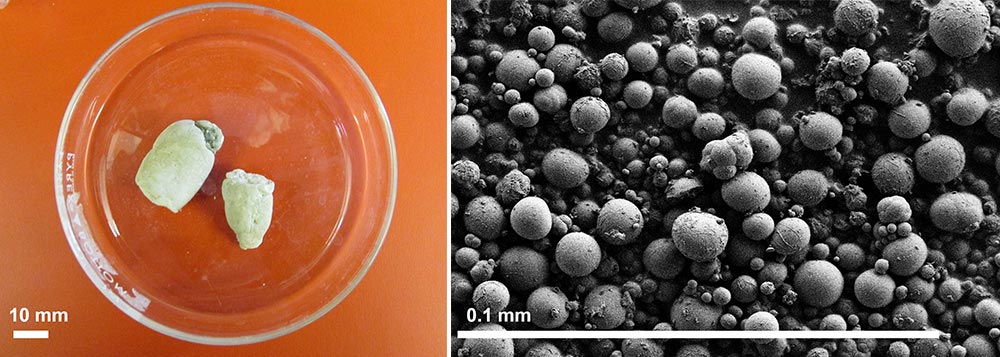
A recent study published in the Journal of the American Chemical Society examined the solid waste of more than 20 reptile species and found uric acid spheres in every sample. The discovery sheds light on how reptiles safely eliminate waste in a crystalline form and could eventually lead to new ways of treating human diseases linked to uric acid buildup, such as kidney stones and gout.
A Unique Waste System That Conserves Water
All animals have some way of removing waste from their bodies, since whatever goes in must come out. In humans, nitrogen-containing compounds like urea, uric acid, and ammonia are dissolved in water and expelled as urine. Reptiles and birds, however, have evolved a more efficient system.
They convert some of those same compounds into solid crystals called “urates,” which are expelled through a single opening known as the cloaca. Scientists think this solid waste process developed as a way for these animals to conserve water, an essential advantage in hot or arid environments.
What Helps Snakes Survive Can Harm Humans
For reptiles, turning waste into crystals is an adaptation that prevents dehydration, but in humans, uric acid crystals cause painful health problems. When uric acid levels rise too high, they can crystallize in the joints and trigger gout or form kidney stones in the urinary tract. To explore how reptiles avoid these complications, Jennifer Swift and her research team analyzed urates from more than 20 reptile species to understand how their bodies handle crystalline waste safely.
“This research was really inspired by a desire to understand the ways reptiles are able to excrete this material safely, in the hopes it might inspire new approaches to disease prevention and treatment,” says Swift, the study’s corresponding author.
Tiny Crystals With Big Medical Potential
Microscopic imaging revealed that three species—ball pythons, Angolan pythons, and Madagascan tree boas—produce urates made of textured microscopic spheres ranging from 1 to 10 micrometers across. Further X-ray analysis showed that these spheres are built from even smaller nanocrystals of uric acid and water.
The researchers also found that uric acid helps neutralize ammonia by turning it into a less harmful solid. They suspect uric acid might play a similar protective role in the human body. Although more research is needed, this work on reptile waste could ultimately provide valuable insights for treating conditions caused by uric acid buildup, improving health outcomes for millions of people.
Reference: “Uric Acid Monohydrate Nanocrystals: An Adaptable Platform for Nitrogen and Salt Management in Reptiles” by Alyssa M. Thornton, Timothy G. Fawcett, Amanda K. Rutledge, Gordon W. Schuett and Jennifer A. Swift, 22 October 2025, Journal of the American Chemical Society.
DOI: 10.1021/jacs.5c10139
The authors acknowledge funding from the National Science Foundation, Georgetown University, the International Centre for Diffraction Data, and the Chiricahua Desert Museum.
Never miss a breakthrough: Join the SciTechDaily newsletter.
Follow us on Google and Google News.