
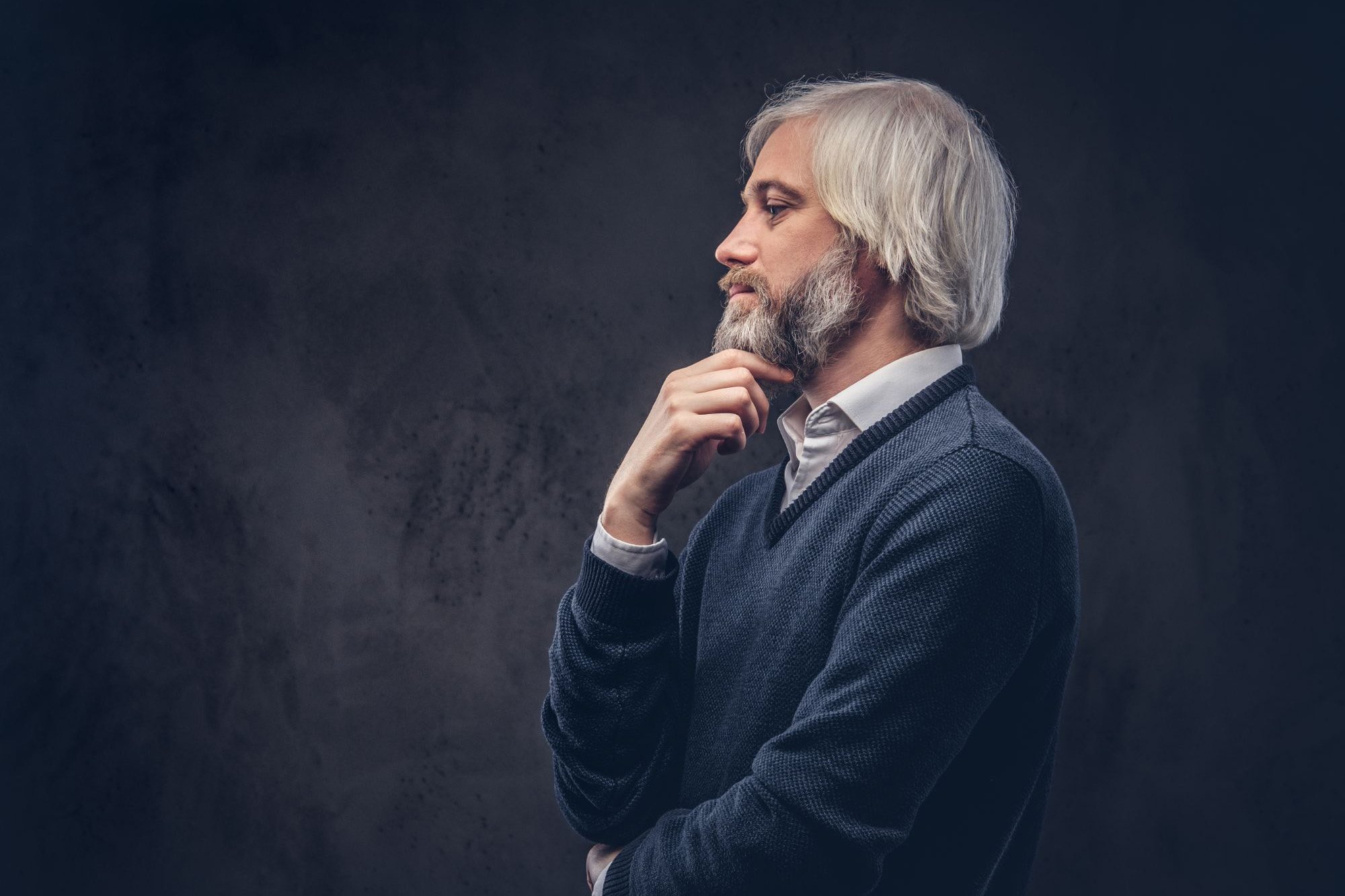
In various cultures and nations, the wisest individuals are often viewed as being logical and thoughtful, while also capable of understanding and appreciating the feelings and perspectives of others.
What makes someone seem wise? According to a recent study led by researchers from the University of Waterloo, wisdom is often seen as the ability to apply knowledge and think logically, while also taking into account the feelings and perspectives of others. This perception of wisdom was consistent across 12 countries and five continents.
Researchers examined the underlying principles guiding who we perceive as wise in political leadership, science, and daily life. Across different cultures, participants’ judgments converged on two dimensions: reflective orientation and socio-emotional awareness. Reflective orientation includes characteristics such as thinking logically, emotion control, and application of knowledge. Socio-emotional awareness includes characteristics like care for other’s feelings and attention to social context.
“To our surprise, the two dimensions emerged across all cultural regions we studied, and both were associated with explicit attribution of wisdom,” said Dr. Maksim Rudnev, a postdoctoral research associate in psychology at Waterloo and lead author.
Wisdom in Political and Social Leadership
The study suggests how people around the world might judge, support, and trust leaders, educators, and others in positions of influence. One example is how people view U.S. former president Donald Trump and current President Joe Biden.
“While both dimensions of wisdom work together, people associate wisdom more with the reflective orientation. If someone is viewed as not able to reflect and think logically, then perceptions of them as socio-emotionally competent and moral won’t compensate,” said Dr. Igor Grossmann, the senior corresponding author and the director of the Wisdom and Culture Lab at the University of Waterloo. “You could see it in the immediate aftermath of the infamous Trump-Biden 2024 presidential debate: both candidates did not appear reflective, yet Trump seemed to have won the debate with many viewers perceiving Biden as socio-emotionally well-meaning but cognitively frail.”
The collaboration among 26 research institutions was coordinated by the Geography of Philosophy consortium and included researchers from North and South Americas (Canada, U.S., Ecuador, and Peru), Asia (China, India, Japan, and South Korea), Africa (Morocco and South Africa), and Europe (Slovakia).
The study involved 2,707 participants from 16 socio-economically and culturally diverse groups. They were prompted to compare 10 individuals, including scientists, politicians, and teachers, in the context of making a difficult choice in a real-life scenario without a clear right or wrong answer. The participants were then asked to rate the degree of wisdom of these individuals and themselves. The data was analyzed to identify underlying dimensions governing perceptions of wisdom among individuals and between groups.
“Interestingly, our participants considered themselves inferior to most exemplars of wisdom in regard to reflective orientation but were less self-conscious when it comes to socio-emotional characteristics,” Rudnev said.
“Understanding perceptions of wisdom around the world has implications for leadership, education, and cross-cultural communication. It is the first step in understanding universal principles in how others perceive wisdom people in different contexts.”
Reference: “Dimensions of wisdom perception across twelve countries on five continents” by M. Rudnev, H. C. Barrett, W. Buckwalter, E. Machery, S. Stich, K. Barr, A. Bencherifa, R. F. Clancy, D. L. Crone, Y. Deguchi, E. Fabiano, A. D. Fodeman, B. Guennoun, J. Halamová, T. Hashimoto, J. Homan, M. Kanovský, K. Karasawa, H. Kim, J. Kiper, M. Lee, X. Liu, V. Mitova, R. B. Nair, L. Pantovic, B. Porter, P. Quintanilla, J. Reijer, P. P. Romero, P. Singh, S. Tber, D. A. Wilkenfeld, L. Yi and I. Grossmann, 14 August 2024, Nature Communications.
DOI: 10.1038/s41467-024-50294-0
Never miss a breakthrough: Join the SciTechDaily newsletter.
Follow us on Google and Google News.
4 Comments
Putting wisdom in the same sentence with the American-style presidential election is hilarious, particularly with the latest set of candidates. There’s no wisdom in it. It’s just a freak show in which the biggest liar wins and gets to own the nuclear codes for a while.
It is a sad commentary on the state of our society when the best that we can come up with to support democracy are ‘bad’ and ‘worse.’ To compound the tragedy, roughly half the voters come to different conclusions as to which of the two is the worst. And if that weren’t bad enough, many of them think that they are actually going to vote for a good president.
That dichotomy is manufactured and contolled by the unaccountable ones.
A global study by the University of Waterloo reveals that wisdom is primarily viewed through the lens of logical thinking and knowledge application, alongside socio-emotional awareness. In various cultures and nations, the wisest individuals are often viewed as being logical and thoughtful, while also capable of understanding and appreciating the feelings and perspectives of others.
VERY GOOD!!!
It is the existence of a the wisest individuals that has enabled pseudo academic publications like Physical Review to dominate for half a century and continue to do so.
Please witness the exemplary collaboration between theoretical physicists and experimentalists (https://scitechdaily.com/microscope-spacecrafts-most-precise-test-of-key-component-of-the-theory-of-general-relativity/#comment-854286). Some people in contemporary physics has always lived in a self righteous children’s story world. Whose values have been overturned by such a comical and ridiculous reality?
From Physical Review Letters (PRL), to Nature, and Science, even the Proceedings of the National Academy of Sciences (PNAS), the so-called academic journals firmly believe that two high-dimensional spacetime objects (such as two sets of cobalt-60) rotating in opposite directions can be transformed into two objects that mirror each other, and that the asymmetry between the amount of created matter and antimatter led to the matter-dominated Universe as we know it today.
Does the facts tell the so-called academic journals that two sets of cobalt-60 rotating in opposite directions can be transformed into two objects that mirror each other? Does mathematics tell the so-called academic journals that matter and antimatter are asymmetric? When physics no longer believes in facts and mathematics, it is no different from theology.
Naked walkers never consider themselves ugly, but rather consider themselves cool.
Space has physical properties of zero viscosity and absolute incompressibility. Zero viscosity and absolute incompressibility are physical characteristics of ideal fluids. The space with ideal fluid physical characteristics forms vortices via topological phase transitions, which is not difficult to understand mathematically. Once the topological vortex is formed, it occupies space and maintains its presence in time. This is the transition from chaos to order via two bidirectional coupled continuous chaotic systems.
From cosmic accretion disks to particle spins, topological vortex fractal structures are ubiquitous. Symmetry of topological vortex can be used to explore particle behavior under spatial, temporal, and quantum reversals, involving gravitation, discrete and continuous changes. It underpins the consistency of natural laws and experiment reproducibility.
The physical phenomena observed in scientific experiments are always just appearances, not the natural essence of things. The natural essence of things needs to be extracted and sublimated based on natural phenomena via mathematical theories. Mathematics is the main environment for modeling problems in other areas. Observations and experiments, theory, and modeling reinforce each other and together lead to our understanding of physical phenomena. After understanding and mastering the natural essence of things, humans can predict more possible natural phenomena, and even manipulate and implement them.