
Close Menu
    Facebook X (Twitter) Instagram
    SciTechDaily
    • Biology
    • Chemistry
    • Earth
    • Health
    • Physics
    • Science
    • Space
    • Technology
    Facebook X (Twitter) Pinterest YouTube RSS
    SciTechDaily
    Home»Space»Advancing Space Biology and Dragon Skills as ISS Celebrates 25 Years in Orbit
    Space

    Advancing Space Biology and Dragon Skills as ISS Celebrates 25 Years in Orbit

    By NASANovember 21, 2023No Comments3 Mins Read
    Facebook Twitter Pinterest Telegram LinkedIn WhatsApp Email Reddit
    Share
    Facebook Twitter LinkedIn Pinterest Telegram Email Reddit
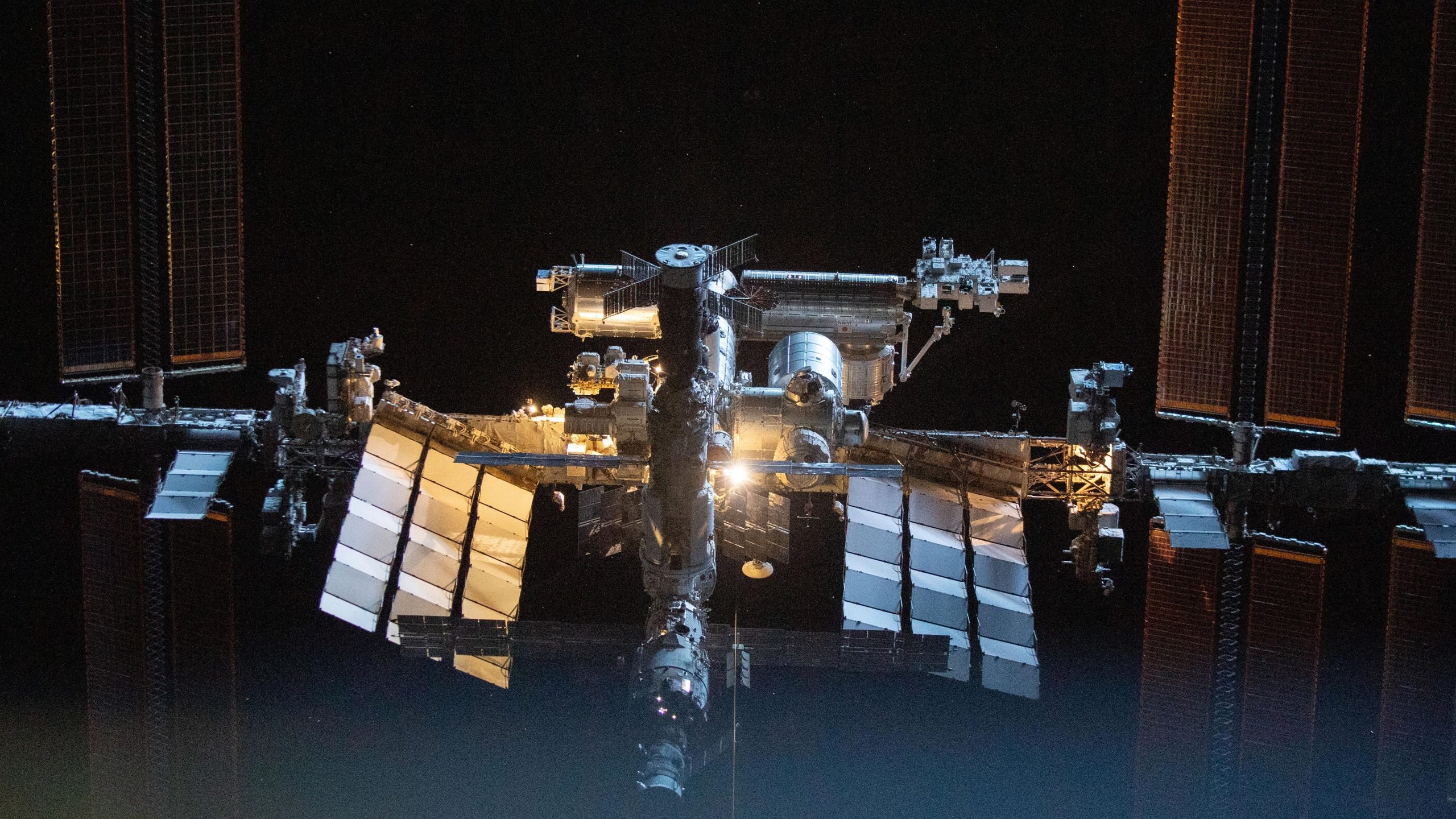
    Space Station Pictured From SpaceX Crew Dragon Crop
    The International Space Station is pictured from the SpaceX Crew Dragon Endeavour during a fly around of the orbiting lab that took place following its undocking from the Harmony module’s space-facing port on November 8, 2021. Credit: NASA

    Space biology and Dragon work were the top duties at the beginning of the week for the Expedition 70 crew. The International Space Station (ISS) also turned 25 years old today with its first module having orbited Earth since 1998.

    Biomedical Research and Eye Exams

    Eye scans were on the biomedical research schedule for four astronauts on Monday afternoon. Commander Andreas Mogensen kicked off the exams activating the Ultrasound 2 device and then setting up communications gear allowing doctors on the ground to remotely monitor the activities. Mogensen from ESA (European Space Agency) then took turns with flight engineers Loral O’Hara, Jasmin Moghbeli, and Satoshi Furukawa in the Columbus laboratory module participating in the regularly scheduled eye exams.
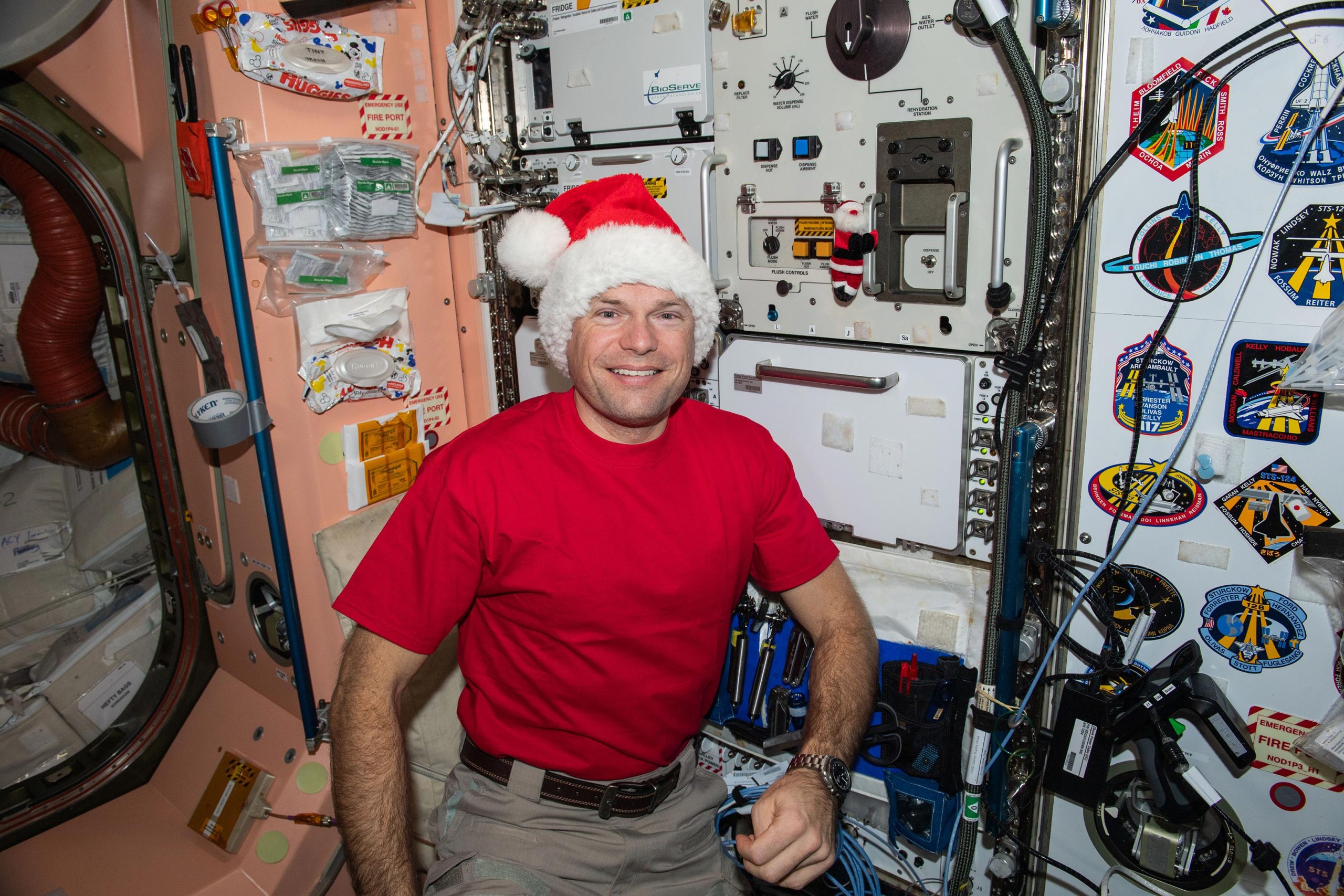
    Astronaut Andreas Mogensen Poses Wearing Santa Claus Hat
    ESA (European Space Agency) astronaut and Expedition 70 Commander Andreas Mogensen gets ready for the Christmas season and poses for a fun portrait wearing a Santa Claus hat. Credit: NASA

    Dragon Endurance Training and Maintenance

    Mogensen partnered with Moghbeli from NASA at the end of the day and practiced SpaceX Dragon Endurance undocking and landing procedures on the crew spacecraft’s computers. Mogensen earlier unpacked medical supply kits from Endurance and stowed them inside the orbital outpost. O’Hara from NASA and Furukawa from JAXA (Japan Aerospace Exploration Agency) worked inside Endurance as well configuring orbital plumbing gear in the vehicle that has been docked to the station since August 27.

    Space Botany and Cell Gravity Studies

    O’Hara later worked on a space botany study to promote STEM (Science, Technology, Engineering, and Math) education among tribal members. Five varieties of seeds provided by the Choctaw Nation of Oklahoma are exposed to microgravity for several months then returned to Earth and planted next to the same seeds left on Earth for comparison. Furukawa turned off a microscope in the Kibo laboratory module and removed samples for a study that was observing how cells sense gravity or the lack gravity. He then stayed in Kibo setting up research hardware and connecting an incubator for an upcoming experiment to observe stem cell growth that may support regenerative medicine technology.

    Expedition 70 Flight Engineers Loral O'Hara and Jasmin Moghbeli
    Expedition 70 Flight Engineers (from left) Loral O’Hara and Jasmin Moghbeli, both NASA astronauts, configure spacewalking tools inside the International Space Station’s Quest airlock. Credit: NASA

    Russian Cosmonauts’ Activities

    In the Roscosmos segment of the space station, veteran cosmonaut Oleg Kononenko spent the day inside the Nauka science module checking its airlock, ventilation, and docking systems. Flight Engineer Nikolai Chub attached sensors to himself monitoring his cardiac activity then cleaned air ducts inside the Nauka and Poisk modules. Flight Engineer Konstantin Borisov wore a sensor-packed cap that recorded his responses while practicing futuristic planetary and robotic piloting techniques on a computer.

    ISS Anniversary

    On November 20, the International Space Station passed 25 years since the first module launched into orbit. The Zarya module lifted off in November 1998 from the Baikonur Cosmodrome in Kazakhstan and would shortly be joined by the Unity module less than a month later. Through this global endeavor, 273 people from 21 countries now have visited the unique microgravity laboratory that has hosted more than 3,000 research and educational investigations from people in 108 countries and areas.

    Never miss a breakthrough: Join the SciTechDaily newsletter.
    Follow us on Google and Google News.

    Astronaut International Space Station NASA
    Share. Facebook Twitter Pinterest LinkedIn Email Reddit

    Related Articles

    NASA’s Crew-9 Returns After 286-Day Mission With a Spectacular Splashdown in the Gulf of America

    NASA’s SpaceX Crew-9 Splashes Down Off Coast of Florida

    SpaceX Dragon Undocks With NASA Crew-9 Members for Return to Earth

    Liftoff! NASA’s SpaceX Crew-10 Blasts Off From Kennedy Space Center [Video]

    Rocket Ready: NASA’s SpaceX Crew-10 Set for Liftoff

    NASA’s SpaceX Crew-10 Was Moments From Liftoff – Then a Last-Minute Malfunction Shut It Down

    NASA’s SpaceX Crew-10: Four Astronauts, a 17,500 MPH Rocket, and 200+ Experiments

    No Treadmill, No Problem – NASA’s Space Workout Experiment Could Change Fitness Forever

    NASA and SpaceX’s Unexpected Spacecraft Swap Sends Crew-10 to Space Sooner

    Leave A Reply Cancel Reply

    • Facebook
    • Twitter
    • Pinterest
    • YouTube

    Don't Miss a Discovery

    Subscribe for the Latest in Science & Tech!

    Trending News

    Why Popular Diabetes Drugs Like Ozempic Don’t Work for Everyone: The “Genetic Glitch”

    Scientists Stunned After Finding Plant Thought Extinct for 60 Years

    Scientists Discover Tiny New Spider That Hunts Prey 6x Its Size

    Natural Component From Licorice Shows Promise for Treating Inflammatory Bowel Disease

    Scientists Warn: Popular Sweetener Linked to Dangerous Metabolic Effects

    Monster Storms on Jupiter Unleash Lightning Beyond Anything on Earth

    Scientists Create “Liquid Gears” That Spin Without Touching

    The Simple Habit That Could Help Prevent Cancer

    Follow SciTechDaily
    • Facebook
    • Twitter
    • YouTube
    • Pinterest
    • Newsletter
    • RSS
    SciTech News
    • Biology News
    • Chemistry News
    • Earth News
    • Health News
    • Physics News
    • Science News
    • Space News
    • Technology News
    Recent Posts
    • Seeing the Invisible: Scientists Develop New Way To Track Particles in 3D
    • The Atomic Gap That Could Cost the Semiconductor Industry Billions
    • Earth’s Secret Advantage: Why Most Alien Worlds May Be Too Dry for Life
    • Ancient Bacteria Turned a DNA System Into a Cell Skeleton
    • Researchers Finally Solve 50-Year-Old Blood Group Mystery
    Copyright © 1998 - 2026 SciTechDaily. All Rights Reserved.
    • Science News
    • About
    • Contact
    • Editorial Board
    • Privacy Policy
    • Terms of Use

    Type above and press Enter to search. Press Esc to cancel.