
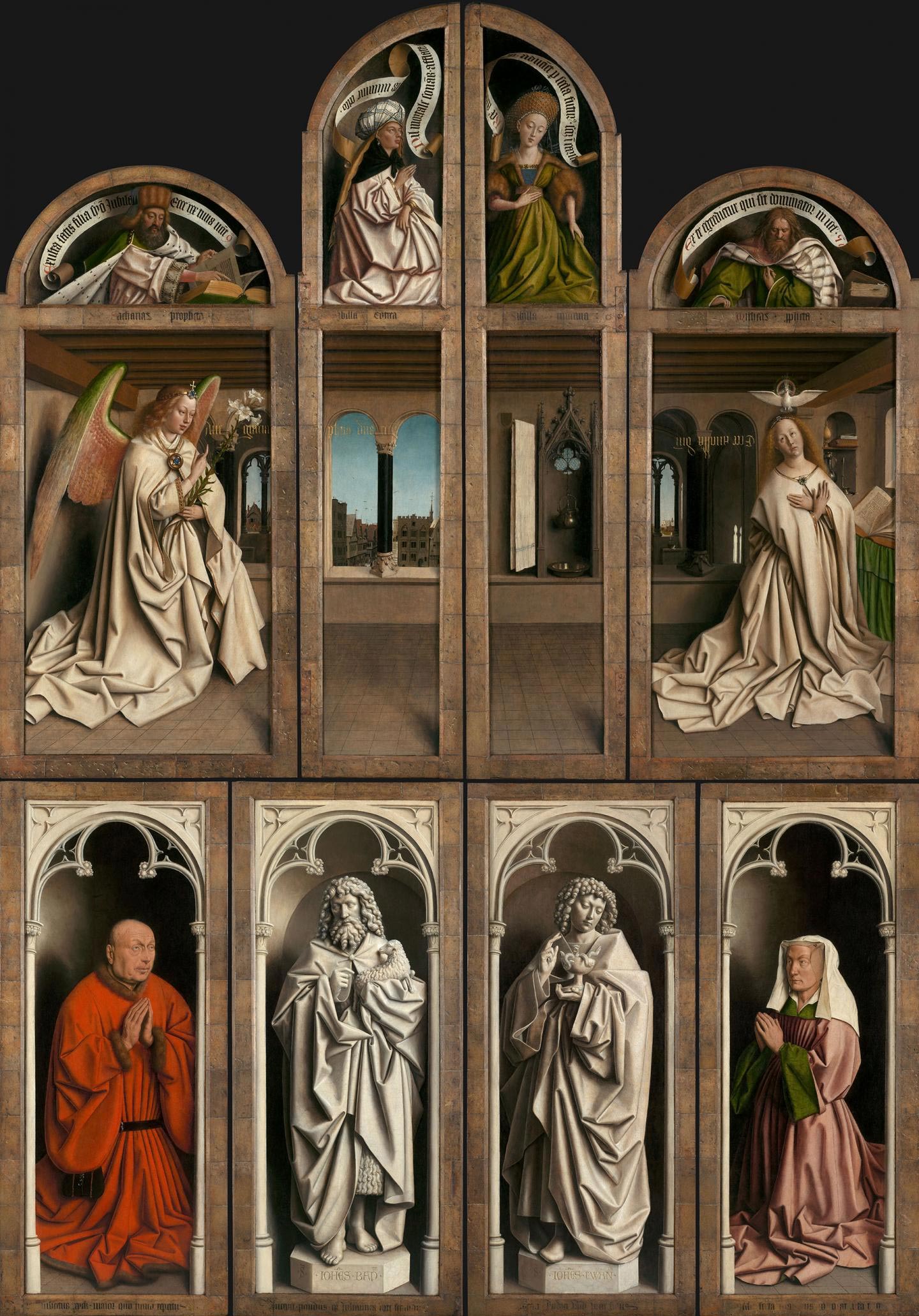
Artificial intelligence has been used to analyze high-resolution digital x-ray images of the world-famous Ghent Altarpiece, as part of an investigative project led by UCL.
The finding is expected to improve our understanding of art masterpieces and provide new opportunities for art investigation, conservation, and presentation.
Researchers from the National Gallery, Duke University, and UCL worked with technical images acquired from the brothers Van Eyck’s Ghent Altarpiece, a large and complex 15th-century altarpiece in St Bavo’s Cathedral, Belgium.
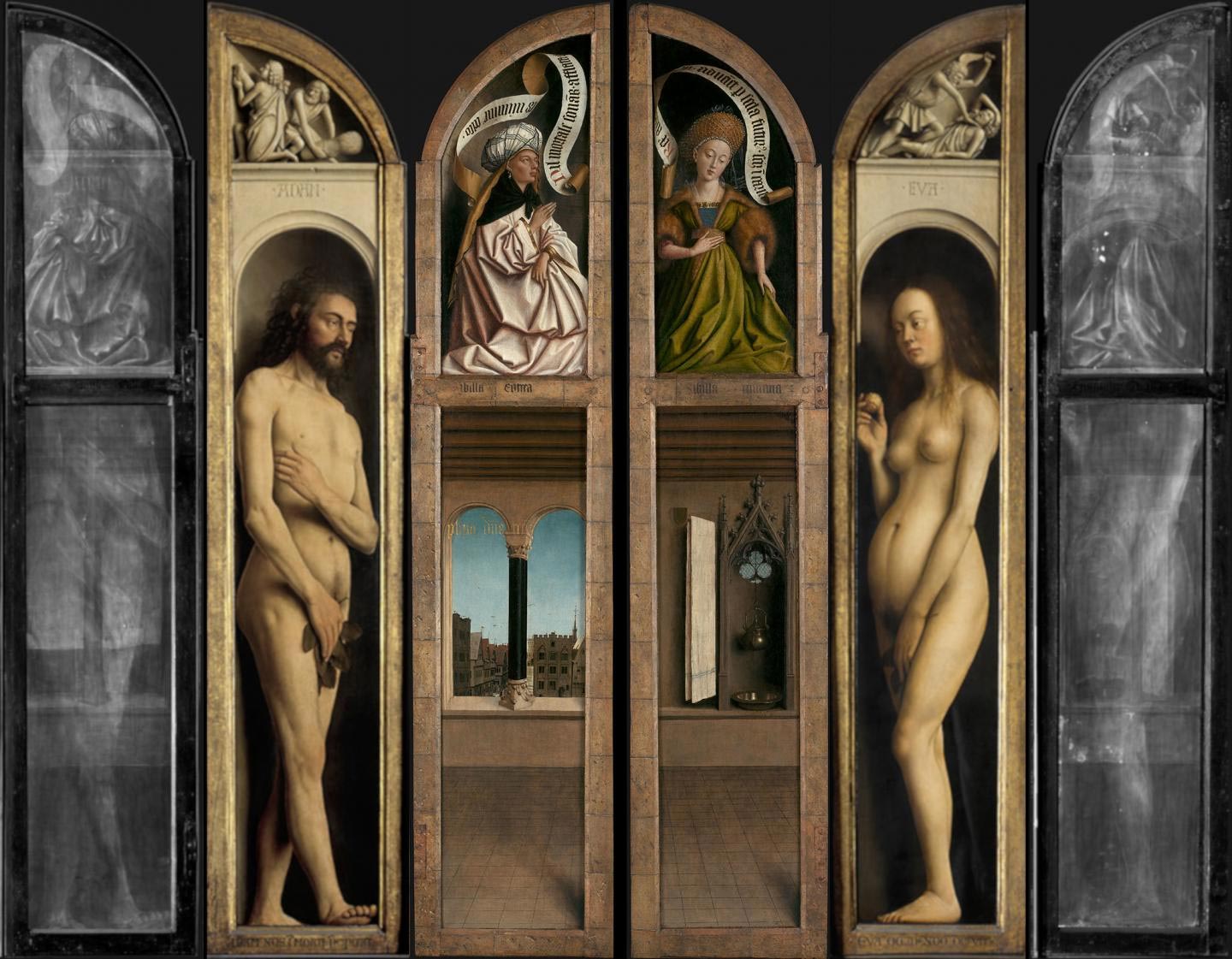
The paper, ‘Artificial Intelligence for Art Investigation: Meeting the Challenge of Separating X-ray Images of the Ghent Altarpiece’, demonstrates how academics used a newly developed algorithm to study mixed x-ray images containing features from the front and back of the painting’s double-sided panels, which scientists have deconstructed into two clear images.
These images are part of a comprehensive set of high-resolution pictures acquired using different imaging techniques as part of the altarpiece’s ongoing conservation by the Royal Institute for Cultural Heritage (KIK-IRPA), providing a wealth of data to interrogate and interpret.
“This approach demonstrates that artificial intelligence-oriented techniques — powered by deep learning — can be used to potentially solve challenges arising in art investigation,” commented lead academic Dr. Miguel Rodrigues (UCL Electronic & Electrical Engineering).
“We’d like to see the impact that the development of similar AI-oriented approaches will have on our ability to reveal other hidden features in a painting, such as earlier concealed designs,” he continued.
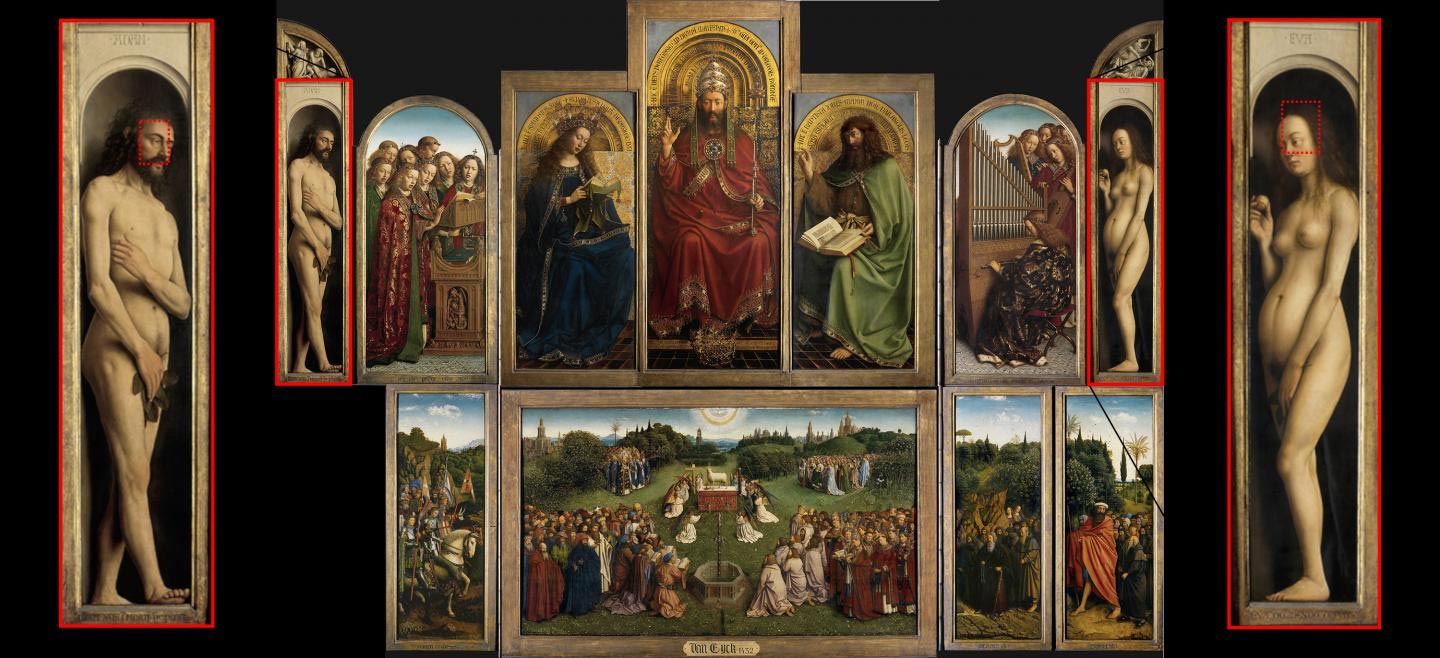
The Ghent Altarpiece originally consisted of twelve panels. The two wing sections, each originally made of four panels – painted on both sides – could be opened fully on feast days to reveal the four central panels. The painting has survived near destruction over the centuries and seizure by the Nazis in the 1940s.
X-ray images are a valuable tool for examining and restoring paintings as they can help to establish a piece’s condition and provide insights into an artist’s technique.
However, the penetrating nature of x-rays means that everything in its path will contribute to the resulting image, which is informative but can produce images that are difficult to interpret. This is particularly true for panels painted on both sides, or where an artist has re-used a canvas.
By separating the complex x-ray images, the new algorithm enables art historians, conservators, and heritage scientists to better understand Old Master paintings, and the information revealed can help experts when protecting and restoring delicate pieces.
Deep learning approaches are now being used to address challenges arising in other sectors including healthcare, fintech, defense and security.
Hélène Dubois, Head of the Conservation Project of the Ghent Altarpiece, Royal Institute for Cultural Heritage (KIK-IRPA) said: “The application of AI to x-ray image processing will provide very useful tools to decrypt complex technical images. The structural weaknesses of the wooden supports and of the ground and paint layers could be diagnosed with more precision.
“These images will also help to understand the brothers Van Eyck’s techniques and the changes carried out in the course of the successive execution of this unique masterpiece. This new development of the use of the traditional x-ray has great potential for countless applications in the conservation of irreplaceable works of art.”
The Ghent Altarpiece Conservation Team and the scientists involved in this challenging project will next research how the algorithm may lead to new insights supporting their conservation work.
The research was funded by the EPSRC and the Simons Foundation.
Reference: “Artificial intelligence for art investigation: Meeting the challenge of separating x-ray images of the Ghent Altarpiece” by Z. Sabetsarvestani1, B. Sober, C. Higgitt, I. Daubechies and M. R. D. Rodrigues, 30 August 2019, Science Advances.
DOI: 10.1126/sciadv.aaw7416
Never miss a breakthrough: Join the SciTechDaily newsletter.
Follow us on Google and Google News.