
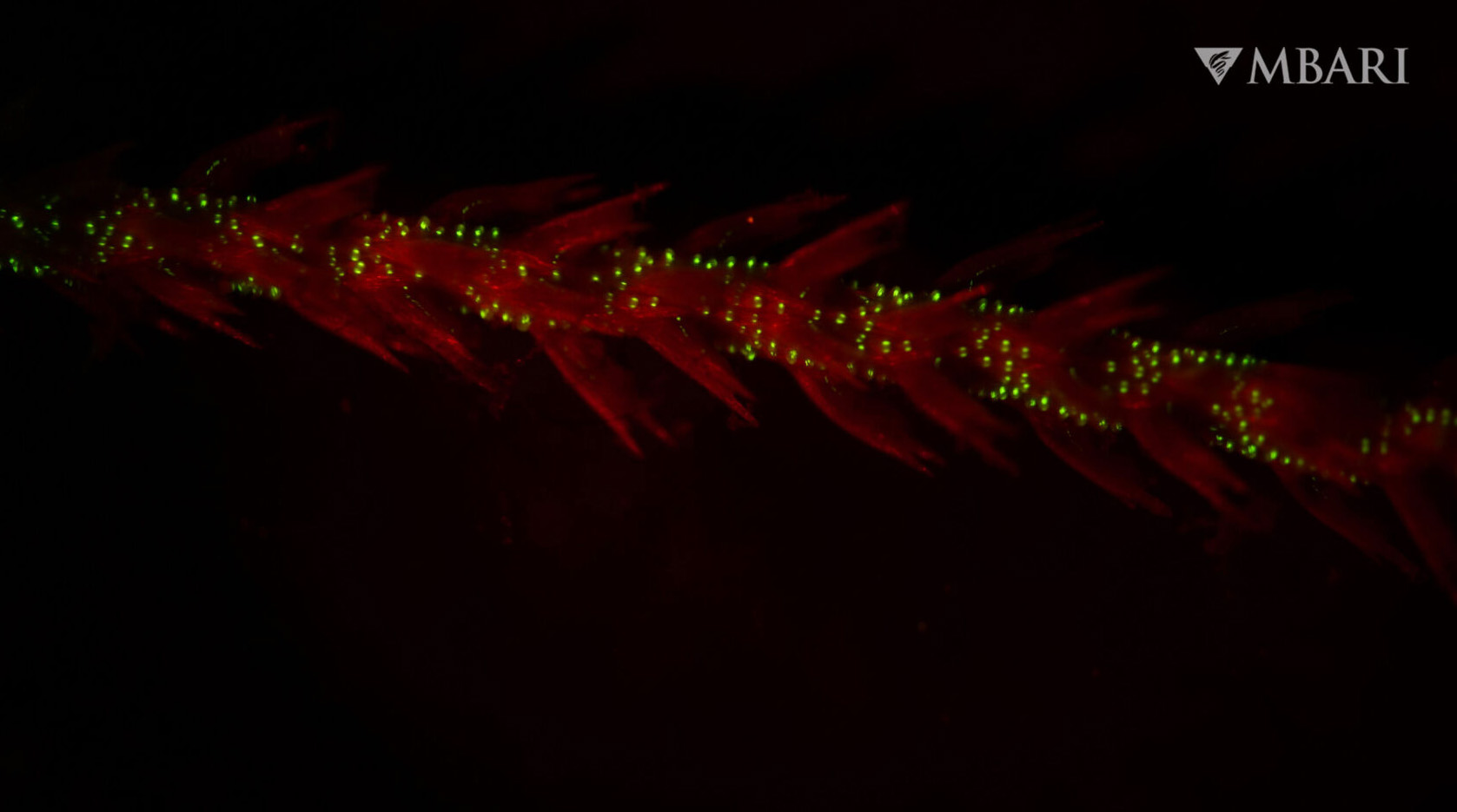
An international team of researchers, led by Danielle DeLeo from the Smithsonian Institution, has identified eight organisms with previously unknown luminosity. Using genetic findings from these organisms and previous studies, they estimated that coral bioluminescence originated about 540 million years ago in the Cambrian period, making them the earliest bioluminescent organisms.
During this period, they shared the oceans with invertebrates with light-sensitive eyes, hinting that interspecies interactions occurred involving light. They published their findings in Proceedings of the Royal Society B.
While shallow-water corals rarely exhibit bioluminescence, deep-sea varieties can be filled with vibrant colors and captivating displays. The purpose of these colorful glow-in-the-dark coral displays has long intrigued researchers. Researchers have theorized that the displays may attract large predators to scare away the smaller marine life that eat the coral or draw in prey.
Genetic Research Advances
The genetic research was based on discoveries by Manabu Bessho-Uehara, a researcher from Nagoya University (at the time of the study), and Andrea Quattrini, from the Smithsonian Institution. In a previous study, Bessho-Uehara identified several new bioluminescent corals in the deep sea. Based on this finding, he suspected the existence of numerous unidentified bioluminescent corals.
Bessho-Uehara and Quattrini performed fieldwork from the shallow to the deep sea floor including Nagoya University’s Sugashima Marine Station, near the city of Toba in central Japan to find more bioluminescent specimens. They found previously unidentified bioluminescence in two types of Hexacorallia (soft corals) and five types of Octocorallia.
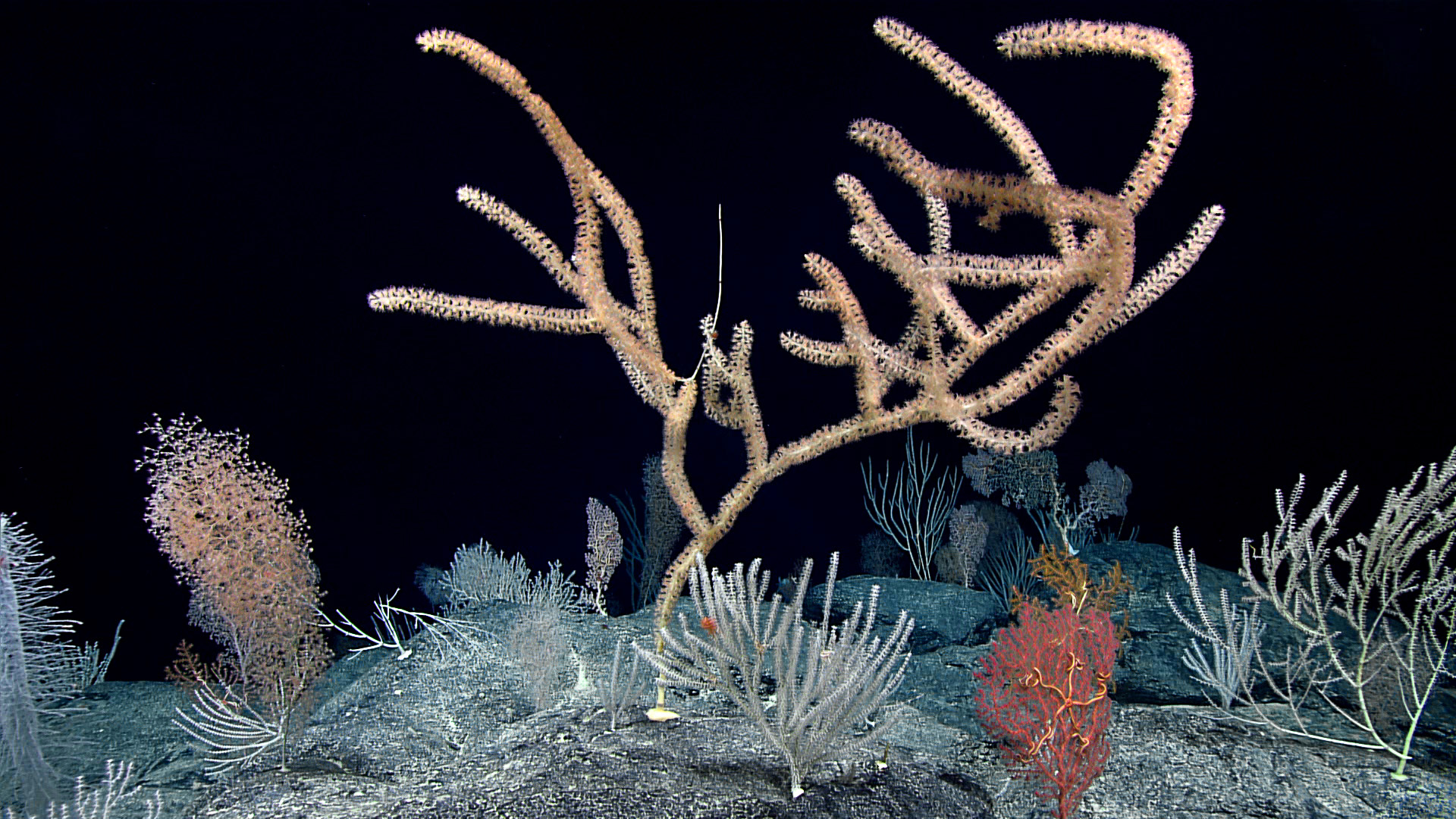
“I was excited, as we were the first to discover bioluminescence at the genus level in five genuses: Bullagumminzoanthus, Keratosidinae, and Corallizoanthus corals as well as Echinoptilum sea pens, and Metallogorgia deep sea fans,” said Bessho-Uehara about the discovery.
Using the team’s findings in modern organisms, a multidisciplinary team that included the Smithsonian’s National Museum of Natural History, Florida International University, Monterey Bay Aquarium Research Institute, University of California, and Harvey Mudd College used genetic information from these organisms to construct a phylogenetic tree to trace the origins of bioluminescence in anthozoans, the class of marine organisms that includes corals and similar organisms.
A phylogenetic tree is like a family tree except that it uses evolutionary relationships based on genetic data instead of bloodlines. It serves as a visual representation of the evolutionary connections and shared ancestry among diverse groups of organisms.
The researcher’s findings suggest that bioluminescence first originated in a common ancestor of Octocorallia corals. Using these data and the fossil record, the team found that the ancient coral existed during the Cambrian period, approximately 540 million years ago, making it the earliest known bioluminescent organism.
When he was told the results, the first thought that Bessho-Uehara had was that “the ocean is full of wonder.” He continued, “I remember feeling so amazed when we discovered bioluminescence emerging twice as long ago as previously thought.”
Their findings also offer insights into the evolution of organisms, which occurred primarily in the sea during the Cambrian era. During this period, invertebrates developed eyes with light-sensitive photoreceptors. This suggests the exciting possibility of light-mediated interactions between anthozoans and organisms with photoreceptors, shedding new light on the ecology of a crucial period in the evolution of life.
For more on this research, see Ancient Origins of Bioluminescence Uncovered.
Reference: “Evolution of bioluminescence in Anthozoa with emphasis on Octocorallia” by Danielle M. DeLeo, Manabu Bessho-Uehara, Steven H.D. Haddock, Catherine S. McFadden and Andrea M. Quattrini, 24 April 2024, Proceedings of the Royal Society B.
DOI: 10.1098/rspb.2023.2626
Never miss a breakthrough: Join the SciTechDaily newsletter.
Follow us on Google and Google News.