
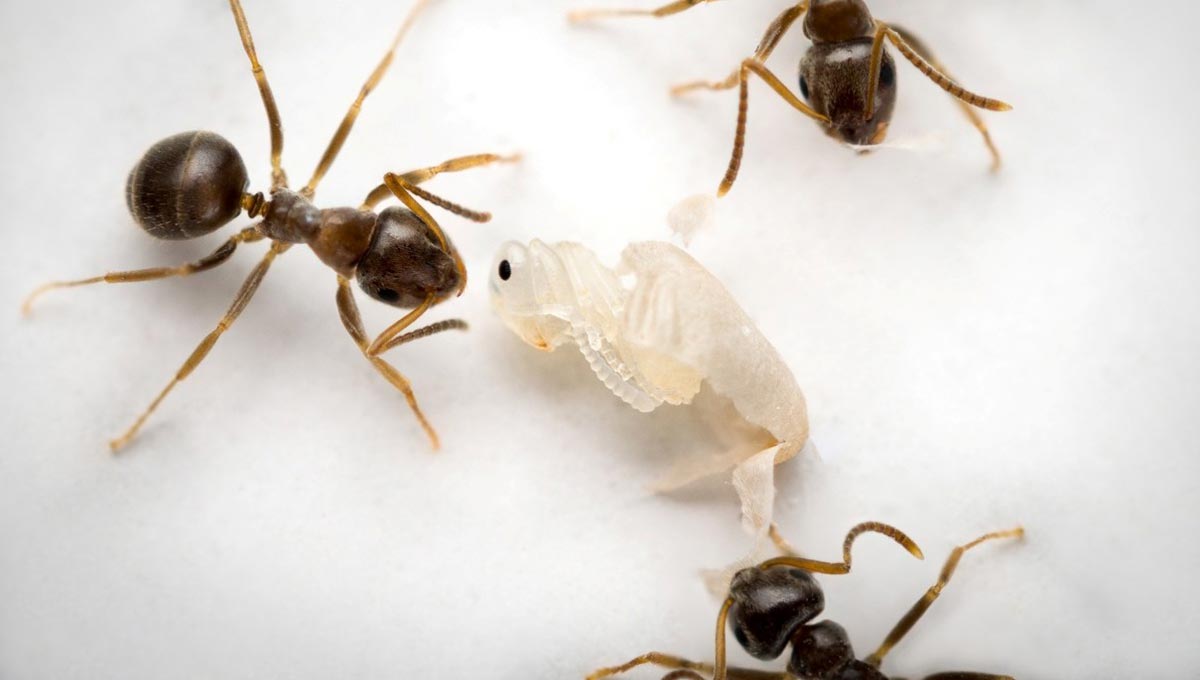
Ant colonies behave like tightly coordinated superorganisms, and new research shows that terminally ill ant pupae emit a special odor that warns workers they are fatally infected.
Instead of hiding sickness, these doomed brood send an early chemical alarm that prompts workers to slice open their cocoons and disinfect them with formic acid—killing both the pathogen and the pupa itself.
Brood Send Early Infection Warnings
In many social species, individuals often hide illness to avoid being pushed away by their peers. Ant brood take a very different approach. When ant pupae face an infection they cannot survive, they release a chemical alarm that alerts their nestmates to the danger they will soon pose.
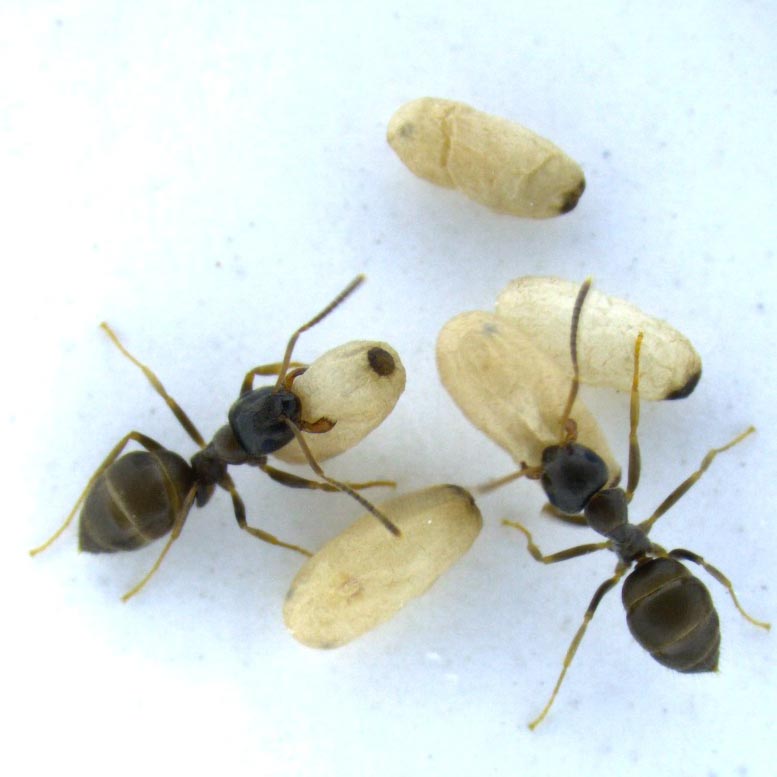
When workers detect this alarm, they respond quickly. They remove the dying pupa from its cocoon, create small openings in its outer surface, and treat it with formic acid, the ants’ own antimicrobial poison. This process destroys the pathogens multiplying inside the pupa but also kills the pupa itself.
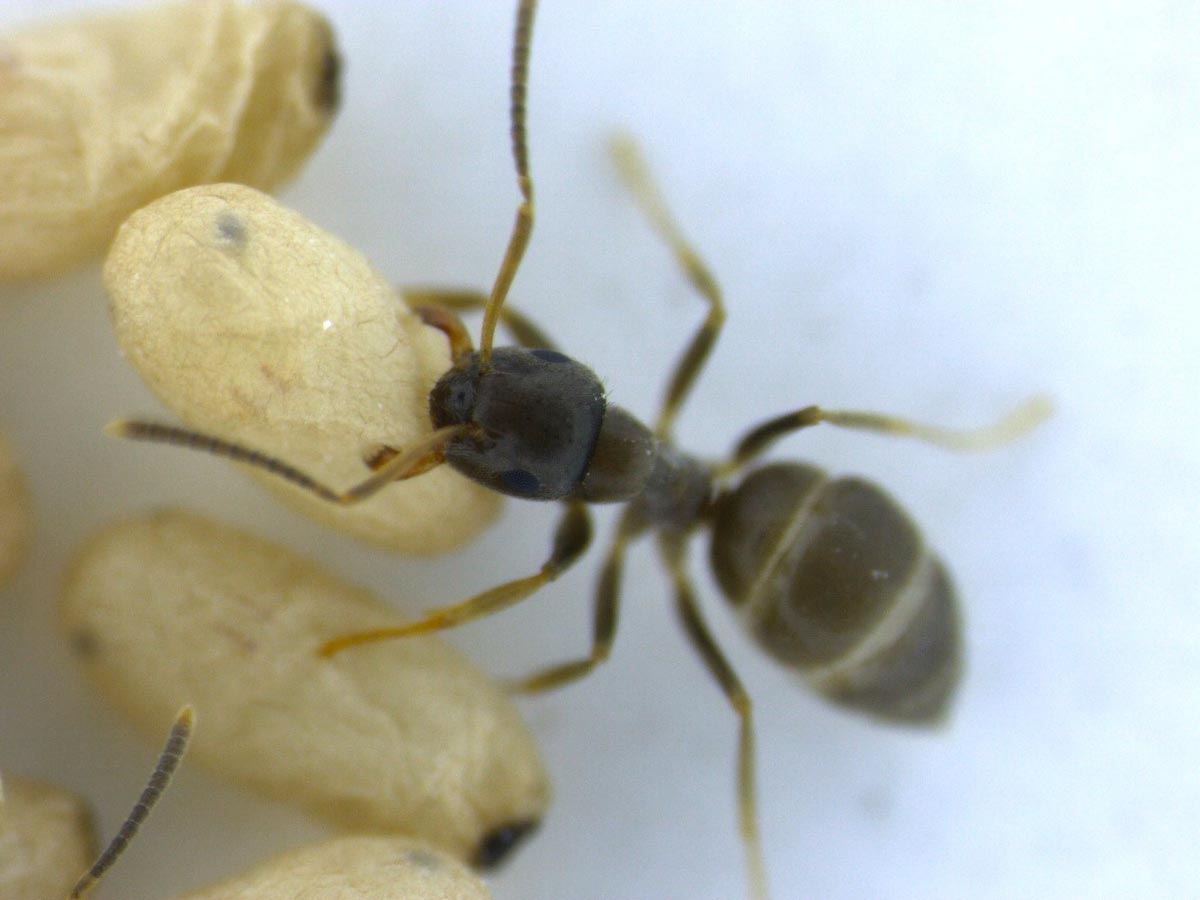
“What appears to be self-sacrifice at first glance is, in fact, also beneficial to the signaler: it safeguards its nestmates, with whom it shares many genes. By warning the colony of their deadly infection, terminally ill ants help the colony remain healthy and produce daughter colonies, which indirectly pass on the signaler’s genes to the next generation,” explains Erika Dawson, first author of the study and former postdoc in the Social Immunity’ research group headed by Sylvia Cremer at ISTA.
A collaborative study with chemical ecologist Thomas Schmitt from the University of Würzburg in Germany reports this form of altruistic disease signaling in social insects for the first time. Without such signals, a fatally infected ant could die unnoticed and become highly contagious, putting the entire colony at risk. By alerting their nestmates, mortally sick brood enable workers to identify and remove dangerous pathogens before they spread.
Ant Colonies as Superorganisms
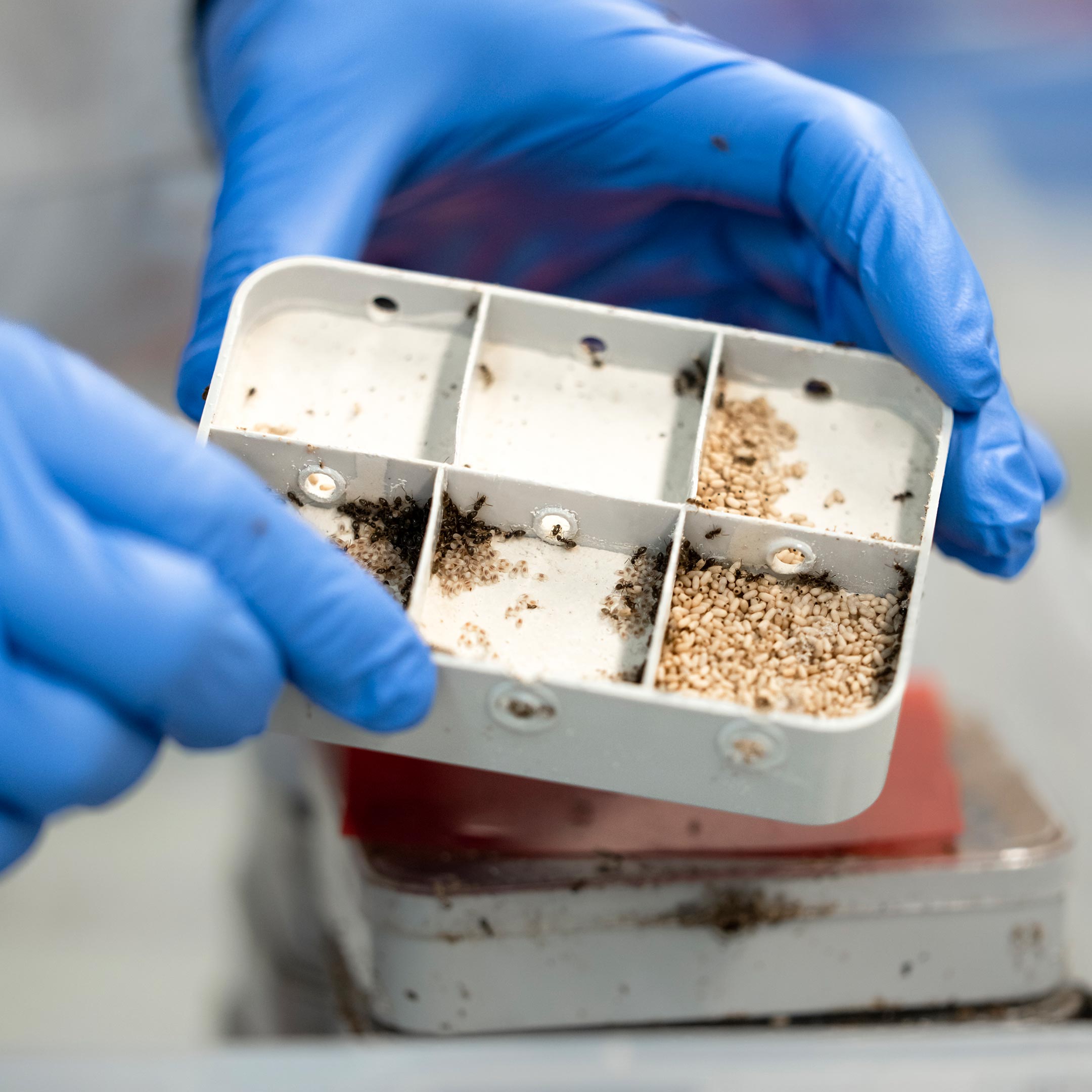
At the scale of the colony, ants operate as a “superorganism,” functioning much like a single living body. Queens produce new offspring, while non-reproductive workers perform all tasks related to care, health, and maintenance. This division of labor mirrors the way the human body separates reproductive cells from somatic cells that carry out essential everyday functions.
The survival of both organisms and superorganisms depends on close cooperation between reproductive and non-reproductive members. In ant societies, this cooperation can extend to extreme behaviors, including acts of self-sacrifice that protect the colony as a whole.
Why a Chemical Alarm Is Necessary
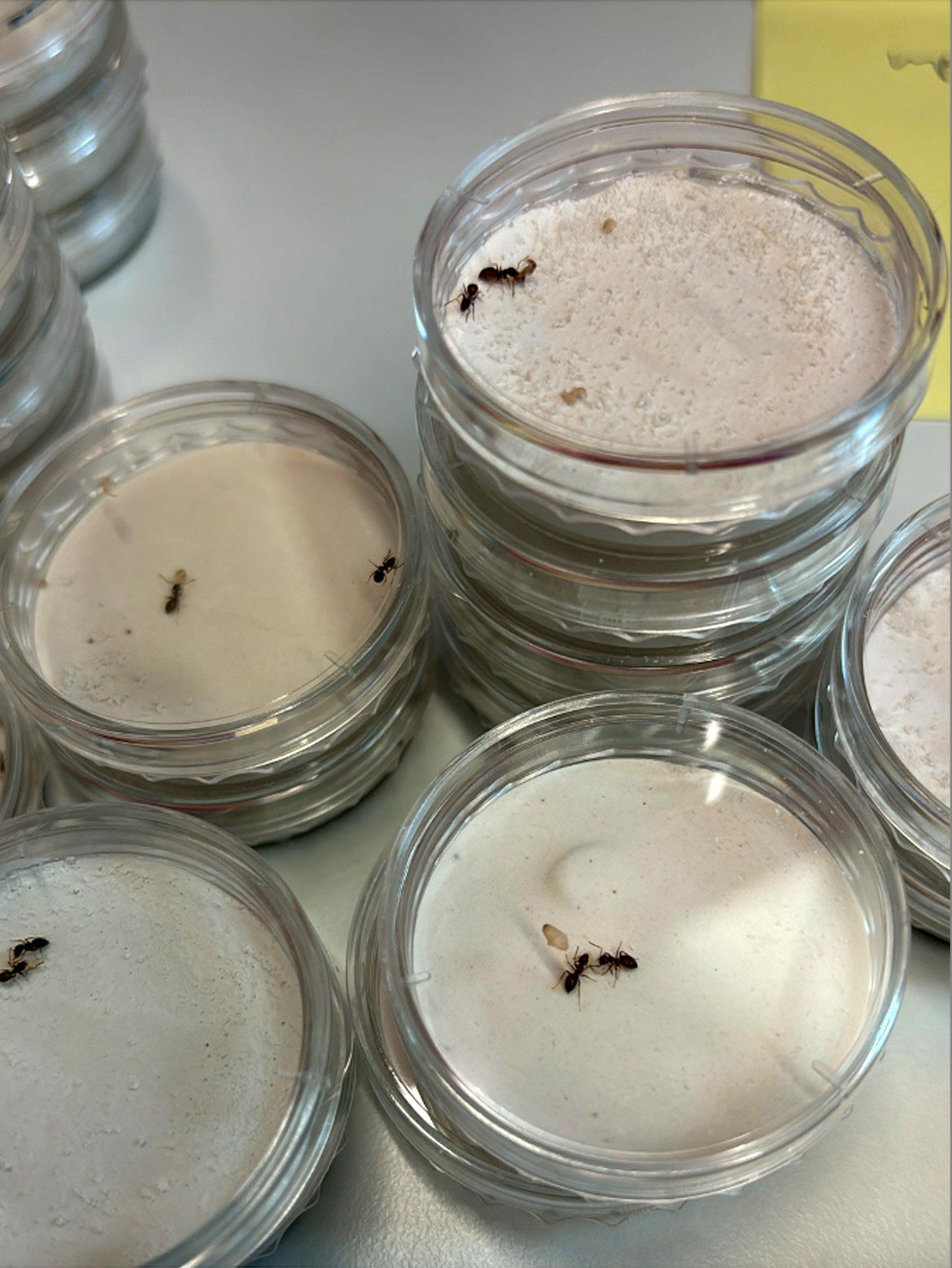
Why evolve an advanced chemical early-warning system if sick individuals can simply remove themselves from the group? According to Cremer, “Adult ants that approach death leave the nest to die outside the colony. Similarly, workers that have been exposed to fungal spores practice social distancing.” She notes that this is only possible for ants capable of moving on their own. Immobile brood, like developing pupae, have no ability to leave the nest, similar to infected cells in body tissues.
Both body cells and ant brood depend on helpers to prevent infection from spreading. Strikingly, both rely on a similar solution: they emit a chemical cue that attracts immune cells in the body or worker ants in the colony. These helpers then eliminate the infected individuals before they can cause harm. Immunologists refer to this cue as the “find-me and eat-me signal.”
“The signal must be both sensitive and specific,” explains Cremer. “It should help to identify all terminally-sick ant pupae but be precise enough to avoid triggering the unpacking of healthy pupae or those capable of overcoming the infection with their own immune system.” What properties must such a signal have to achieve this level of precision?
How Illness Changes the Pupal Scent
Schmitt, whose research focus is on chemical communication in social insects, explains that workers specifically target individual pupae out of the brood pile. “This means the scent cannot simply diffuse through the nest chamber but must be directly associated with the diseased pupa. Accordingly, the signal does not consist of volatile compounds but instead is made up of non-volatile compounds on the pupal body surface.”
In particular, the intensity of two odor components from the ants’ natural scent profile increases when a pupa is terminally ill. To test whether this odor change alone could trigger the workers’ disinfection behavior, the researchers transferred the signal odor to healthy pupae and observed the workers’ reaction.
“We extracted the smell from the signaling pupae and applied it to healthy brood,” Cremer says in describing the experimental approach. The results were conclusive: Transfer of the signal scent alone was sufficient to induce unpacking by the ants, revealing that the altered body odor of fatally-infected pupae serves the same function as the ‘find-me and eat-me’ signal of infected body cells.
The video shows worker ants inspecting their brood, selecting a pupa, and initiating the destructive disinfection process. Credit: © Christopher D. Pull / ISTA
A Warning Reserved for Hopeless Cases
According to Dawson, the fascinating aspect is that ants do not signal infection indiscriminately. “Queen pupae, which have stronger immune defenses than worker pupae and can limit the infection on their own, were not observed to emit this warning signal to the colony,” she explains. “Worker brood, on the other hand, were unable to control the infection and signaled to alert the colony.”
By signaling only when an infection becomes uncontrollable, the sick brood enable the colony to respond proactively to real threats. At the same time, this approach ensures that individuals capable of recovery are not sacrificed unnecessarily. “This precise coordination between the individual and colony level is what makes this altruistic disease signaling so effective,” Cremer concludes.
Reference: “Altruistic disease signalling in ant colonies” by Erika H. Dawson, Michaela Hoenigsberger, Niklas Kampleitner, Anna V. Grasse, Lukas Lindorfer, Jennifer Robb, Farnaz Beikzadeh, Florian Strahodinsky, Hanna Leitner, Harikrishnan Rajendran, Thomas Schmitt and Sylvia Cremer, 2 December 2025, Nature Communications.
DOI: 10.1038/s41467-025-66175-z
Information on Animal Studies
To better understand fundamental processes, for example in the fields of behavioral biology, immunology or genetics, the use of animals in research is indispensable. No other methods, such as in silico models, can serve as an alternative. The animals are collected, reared, and used in the experiments in accordance with strict legal regulations.
Never miss a breakthrough: Join the SciTechDaily newsletter.
Follow us on Google and Google News.