
New platform holds the promise to drive progress in the development of senolytic anti-aging compounds and research on longevity.
A recent paper published in Nature Aging by researchers from Integrated Biosciences, a biotechnology company combining synthetic biology and machine learning to combat aging. The paper demonstrates how artificial intelligence (AI) can be utilized to identify new senolytic compounds. These are a class of small molecules receiving significant attention due to their potential to inhibit aging-related processes like fibrosis, inflammation, and cancer.
The research paper is the result of a collaborative effort involving researchers from the Massachusetts Institute of Technology (MIT) and the Broad Institute of MIT and Harvard. The publication outlines the AI-led analysis of over 800,000 compounds, which successfully identified three potential drugs with comparable efficacy and superior medicinal chemistry properties to those of senolytics currently under investigation.
“This research result is a significant milestone for both longevity research and the application of artificial intelligence to drug discovery,” said Felix Wong, Ph.D., co-founder of Integrated Biosciences and first author of the publication. “These data demonstrate that we can explore chemical space in silico and emerge with multiple candidate anti-aging compounds that are more likely to succeed in the clinic, compared to even the most promising examples of their kind being studied today.”
A New Frontier in Aging Research
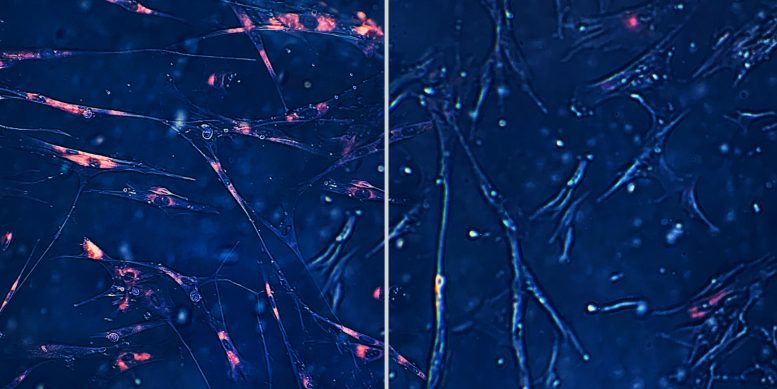
Senolytics are compounds that selectively induce apoptosis, or programmed cell death, in senescent cells that are no longer dividing. A hallmark of aging, senescent cells have been implicated in a broad spectrum of age-related diseases and conditions including cancer, diabetes, cardiovascular disease, and Alzheimer’s disease.
Despite promising clinical results, most senolytic compounds identified to date have been hampered by poor bioavailability and adverse side effects. Integrated Biosciences was founded in 2022 to overcome these obstacles, target other neglected hallmarks of aging, and advance anti-aging drug development more generally using artificial intelligence, synthetic biology, and other next-generation tools.
“One of the most promising routes to treat age-related diseases is to identify therapeutic interventions that selectively remove these cells from the body similarly to how antibiotics kill bacteria without harming host cells. The compounds we discovered display high selectivity, as well as the favorable medicinal chemistry properties needed to yield a successful drug,” said Satotaka Omori, Ph.D., Head of Aging Biology at Integrated Biosciences and joint first author of the publication. “We believe that the compounds discovered using our platform will have improved prospects in clinical trials and will eventually help restore health to aging individuals.”
AI-Powered Discovery of Highly Selective Senolytics
In their new study, Integrated Biosciences researchers trained deep neural networks on experimentally generated data to predict the senolytic activity of any molecule. Using this AI model, they discovered three highly selective and potent senolytic compounds from a chemical space of over 800,000 molecules.
All three displayed chemical properties suggestive of high oral bioavailability and were found to have favorable toxicity profiles in hemolysis and genotoxicity tests. Structural and biochemical analyses indicate that all three compounds bind Bcl-2, a protein that regulates apoptosis and is also a chemotherapy target. Experiments testing one of the compounds in 80-week-old mice, roughly corresponding to 80-year-old humans, found that it cleared senescent cells and reduced the expression of senescence-associated genes in the kidneys.
“This work illustrates how AI can be used to bring medicine a step closer to therapies that address aging, one of the fundamental challenges in biology,” said James J. Collins, Ph.D., Termeer Professor of Medical Engineering and Science at MIT and founding chair of the Integrated Biosciences Scientific Advisory Board. “Integrated Biosciences is building on the basic research that my academic lab has done for the last decade or so, showing that we can target cellular stress responses using systems and synthetic biology. This experimental tour de force and the stellar platform that produced it make this work stand out in the field of drug discovery and will drive substantial progress in longevity research.”
Reference: “Discovering small-molecule senolytics with deep neural networks” by Felix Wong, Satotaka Omori, Nina M. Donghia, Erica J. Zheng and James J. Collins, 4 May 2023, Nature Aging.
DOI: 10.1038/s43587-023-00415-z
Dr. Collins, who is senior author on the Nature Aging paper, led the team which discovered the first antibiotic identified by machine learning in 2020.
Never miss a breakthrough: Join the SciTechDaily newsletter.
Follow us on Google and Google News.