

Close Menu
    Facebook X (Twitter) Instagram
    SciTechDaily
    • Biology
    • Chemistry
    • Earth
    • Health
    • Physics
    • Science
    • Space
    • Technology
    Facebook X (Twitter) Pinterest YouTube RSS
    SciTechDaily
    Home»Chemistry»Artificial Photosynthesis: Scientists Crack Nature’s Code for Clean Energy
    Chemistry

    Artificial Photosynthesis: Scientists Crack Nature’s Code for Clean Energy

    By University of WürzburgMarch 14, 2025No Comments3 Mins Read
    Facebook Twitter Pinterest Telegram LinkedIn WhatsApp Email Reddit
    Share
    Facebook Twitter LinkedIn Pinterest Telegram Email Reddit
    Plant Leaf Photosynthesis Art
    Scientists have successfully mimicked a key step in photosynthesis, using stacked dye molecules to transfer light energy efficiently. This breakthrough could lead to artificial photosynthesis systems capable of reducing CO2 and generating sustainable fuels. Credit: SciTechDaily.com

    Artificial photosynthesis holds the key to cleaner energy and carbon capture, but replicating nature’s process is no easy feat.

    A breakthrough from JMU Würzburg researchers has brought science one step closer by creating a stacked dye system that efficiently moves charge carriers using light—just like in plant cells.

    Harnessing Sunlight: The Magic of Photosynthesis

    Photosynthesis is the process plants use to convert sunlight, carbon dioxide, and water into energy-rich sugars and oxygen. This remarkable system fuels plant growth and releases the oxygen we breathe.

    If scientists could replicate photosynthesis, the benefits would be immense. Solar energy could be harnessed to remove carbon dioxide from the air and transform it into valuable compounds like carbohydrates. Additionally, since photosynthesis naturally splits water into oxygen and hydrogen, artificial versions could provide a new way to produce clean hydrogen fuel.

    Photosynthesis: A Complex Process With Many Participants

    Given its potential, researchers around the world are working to develop artificial photosynthesis. However, replicating nature’s method is a major challenge. The process involves multiple intricate steps within plant cells, relying on a network of pigments, proteins, and other molecules. Despite these complexities, scientific progress in this field continues to accelerate.

    One of the leading experts in artificial photosynthesis is Professor Frank Würthner from Julius-Maximilians-Universität (JMU) Würzburg in Germany. His team has successfully mimicked one of the early steps of natural photosynthesis using an advanced arrangement of artificial dye molecules. This breakthrough has provided new insights into how energy is transferred and stored in the process.

    This achievement, developed in collaboration with Professor Dongho Kim’s research team at Yonsei University in South Korea, was published today (March 14) in Nature Chemistry.
    Stack of Dyes for Artificial Photosynthesis
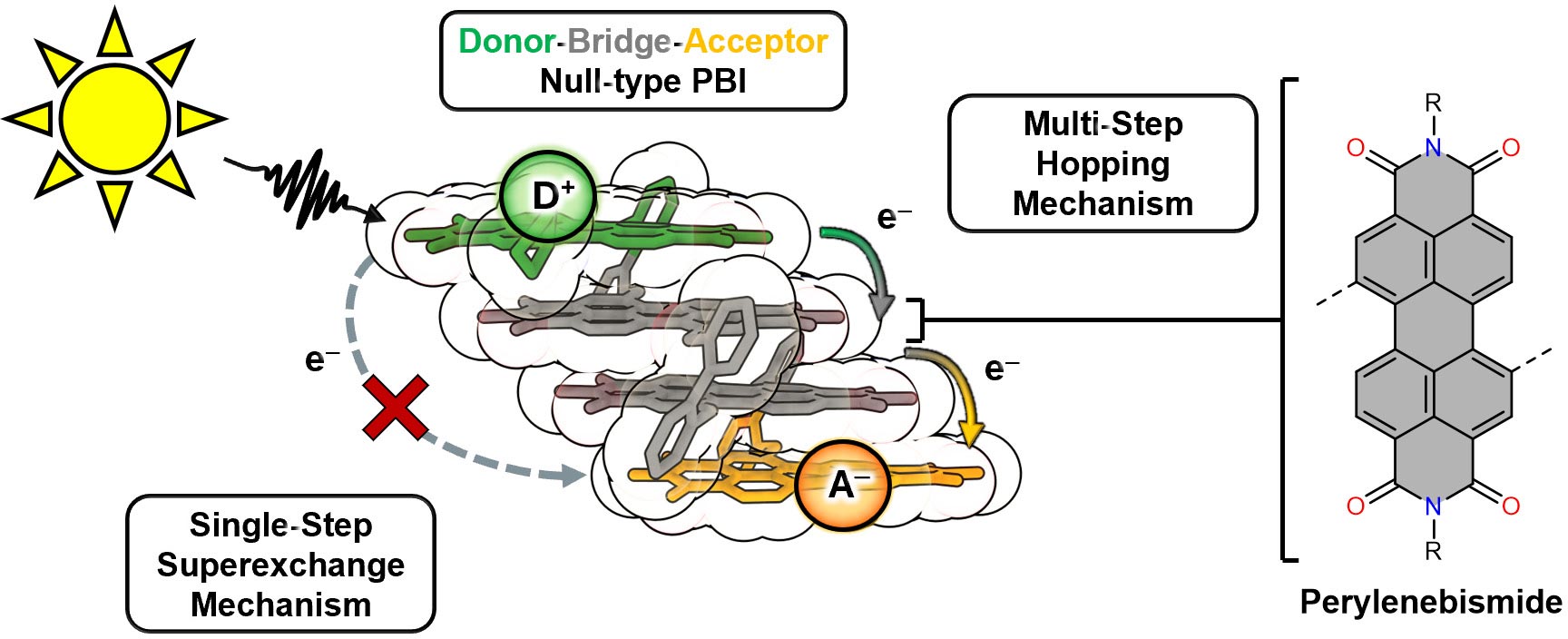
    This is what the stack of four dyes synthesized in Würzburg looks like. It represents a further step towards artificial photosynthesis because it absorbs light energy and transfers it quickly and efficiently in the stack. Credit: Leander Ernst / University of Wuerzburg

    Fast and Efficient Energy Transport in a Stacking System

    The researchers have succeeded in synthesizing a stack of dyes that is very similar to the photosynthetic apparatus in plant cells – it absorbs light energy at one end, uses it to separate charge carriers, and transfers them step by step to the other end via a transport of electrons. The structure consists of four stacked dye molecules from the perylene bisimide class.

    “We can specifically trigger the charge transport in this structure with light and have analyzed it in detail. It is efficient and fast. This is an important step towards the development of artificial photosynthesis,” says JMU PhD student Leander Ernst, who synthesized the stacked structure.

    Supramolecular Wires as the Goal of the Research Work

    Next, the JMU research team wants to expand the nanosystem of stacked dye molecules from four to more components – with the aim of ultimately creating a kind of supramolecular wire that absorbs light energy and transports it quickly and efficiently over longer distances. This would be a further step towards novel photofunctional materials that can be used for artificial photosynthesis.

    Reference: “Photoinduced stepwise charge hopping in π-stacked perylene bisimide donor–bridge–acceptor arrays” by Leander Ernst, Hongwei Song, Dongho Kim and Frank Würthner, 14 March 2025, Nature Chemistry.
    DOI: 10.1038/s41557-025-01770-7

    Never miss a breakthrough: Join the SciTechDaily newsletter.
    Follow us on Google and Google News.

    Carbon Capture Energy Photosynthesis Popular Solar Energy University of Würzburg
    Share. Facebook Twitter Pinterest LinkedIn Email Reddit

    Related Articles

    Artificial Photosynthesis Breakthrough: Revolutionary Gel Turns Sunlight Directly Into Clean Fuel

    More Efficient Than Natural Photosynthesis – New Photocatalytic System Converts Carbon Dioxide Into Valuable Fuel

    Solar-Powered Reactor Converts CO2 and Plastic Waste Into Sustainable Fuels

    Carbon Capture Gets Cheaper: Making Methane From CO2

    Artificial Photosynthesis Promises Clean, Sustainable Source of Energy

    Cheaper Carbon Capture Is on the Way – Marathon Research Effort Drives Down Cost

    Improving Carbon Capture Technology: Faster, Greener Way of Producing Carbon Spheres

    Like a Leaf – New Artificial Photosynthesis Method to Capture CO2 Directly From the Air and Turn It Into Fuel

    Future Energy Source: Scientists Build Tiny Microbial Factories That Produce Hydrogen by Photosynthesis

    Leave A Reply Cancel Reply

    • Facebook
    • Twitter
    • Pinterest
    • YouTube

    Don't Miss a Discovery

    Subscribe for the Latest in Science & Tech!

    Trending News

    Just a Few Breathless Minutes a Day Could Slash Your Risk of 8 Major Diseases

    This Simple Habit Could Cut Your Risk of Dementia by 30%

    Scientists Debunk Rattlesnake Myth That Fooled Hikers and Doctors for Decades

    Scientists Discover Plants Can “Count” – and May Be Smarter Than We Thought

    New Research Reveals Ancient Mars May Have Been Warm, Wet – and Possibly Alive

    This Surprising Daily Habit Could Cut Dementia Risk by 35%

    Just 10 Minutes a Day: Scientists Say This Ancient Chinese Practice Shows Powerful Blood Pressure Benefits

    Scientists Say This Popular Food Could Help Your Body Get Rid of Microplastics

    Follow SciTechDaily
    • Facebook
    • Twitter
    • YouTube
    • Pinterest
    • Newsletter
    • RSS
    SciTech News
    • Biology News
    • Chemistry News
    • Earth News
    • Health News
    • Physics News
    • Science News
    • Space News
    • Technology News
    Recent Posts
    • Scientists Uncover Massive Climate Secret Beneath Sweden’s Forests
    • Scientists Unlock 3 Million Years of Climate Secrets Hidden in Antarctic Ice
    • “We Were Truly Astonished”: New Discovery Rewrites Earth’s Origin Story
    • A Simple Nose Swab Could Detect Alzheimer’s Years Before Symptoms Appear
    • Scientists Warn: Vaping Likely Causes Cancer
    Copyright © 1998 - 2026 SciTechDaily. All Rights Reserved.
    • Science News
    • About
    • Contact
    • Editorial Board
    • Privacy Policy
    • Terms of Use

    Type above and press Enter to search. Press Esc to cancel.