
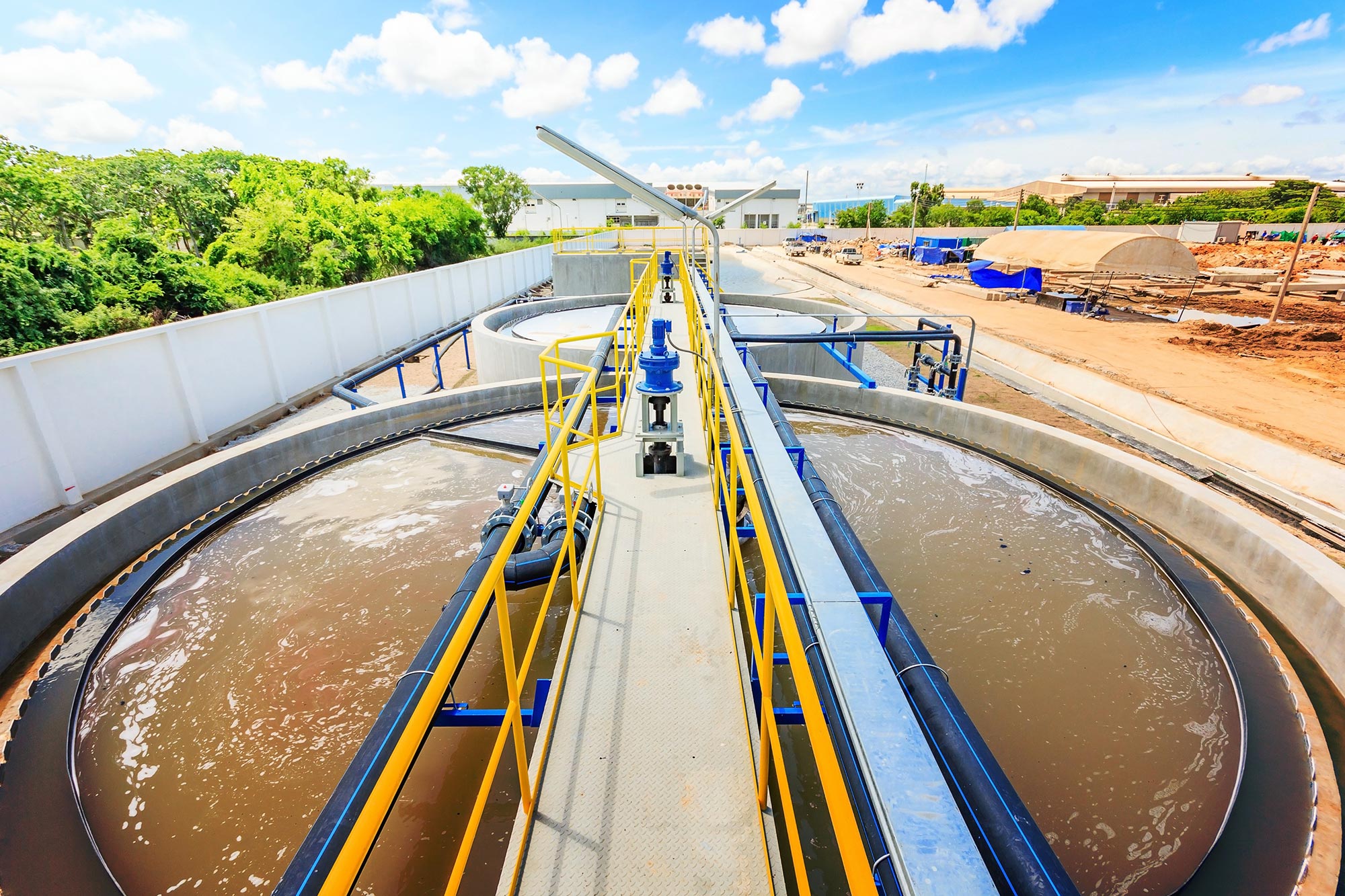
Adopting a method from the medical field, this technique can separate substances with minimal dilution.
Researchers at Rice University, in partnership with Guangdong University of Technology, have developed a groundbreaking method for treating high-salinity organic wastewater—waste streams that contain both high salt and organic content—by adapting dialysis technology commonly used in medicine.
In medical dialysis, a machine called a dialyzer filters waste and excess fluids from the blood of patients with kidney failure. Blood is drawn from the body, purified in the dialyzer, and then returned through a separate needle or tube.
In their study published in Nature Water, the research team demonstrated that a similar process can effectively separate salts from organic compounds in wastewater with minimal dilution. This approach overcomes major limitations of traditional treatment methods and offers significant benefits, including reduced environmental impact, lower operational costs, and the potential to recover valuable resources across various industries.
“Dialysis was astonishingly effective in separating the salts from the organics in our trials,” said Menachem Elimelech, a corresponding author on the study and the Nancy and Clint Carlson Professor of Civil and Environmental Engineering and Chemical and Biomolecular Engineering. “It’s an exciting discovery with the potential to redefine how we handle some of our most intractable wastewater challenges.”
Challenges with Traditional Wastewater Treatment Methods
Numerous industries generate high-salinity organic wastewaters, including petrochemical, pharmaceutical, and textile manufacturing. Because of the combined high salt and high organic content, these wastewaters pose serious challenges for existing treatment processes. Biological treatment and advanced oxidation methods often become compromised by elevated salinity levels, reducing their overall effectiveness. Thermal methods, although technically feasible, are energy-intensive and susceptible to corrosion, clogging, and operational inefficiencies that can escalate costs and complicate maintenance. Meanwhile, pressure-driven membrane processes such as ultrafiltration frequently encounter severe membrane fouling, leading to the need for multiple wastewater dilution steps, which increases both water usage and operational complexity.
“Traditional methods often demand a lot of energy and require repeated dilutions,” said Yuanmiaoliang “Selina” Chen, a co-first author and postdoctoral student in Elimelech’s lab at Rice. “Dialysis eliminates many of these pain points, reducing water consumption and operational overheads.”

The research team employed a combination of bench-scale dialysis experiments and comprehensive transport modeling to evaluate dialysis performance in separating salts and organic compounds. The researchers first selected commercial ultrafiltration membranes with different molecular weight cutoffs to study salt transport and organic rejection. They then established a bilateral countercurrent flow mode in the dialysis setup, which included a feed stream containing high-salinity organic wastewater passed on one side of the membrane, while a freshwater stream flowed on the other side without any applied hydraulic pressure.
The researchers tracked salt and water fluxes over time to demonstrate that salts diffused across the membrane into the dialysate, while water flux remained negligible. They measured organic removal by comparing organic concentrations in the feed before and after dialysis. To assess fouling resistance, they monitored changes in membrane performance, if any, during extended run times. The researchers further developed mathematical models to deepen their understanding of salt and water transport mechanisms.
Key Findings and Advantages of Dialysis Treatment
They found that dialysis effectively removed salt from water without requiring large amounts of fresh water. The process allowed salts to move into the dialysate stream while keeping most organic compounds in the original solution. Compared to ultrafiltration with the same membrane, dialysis was better at separating salts from small, neutral organic molecules. Since dialysis relies on diffusion instead of pressure, salts and organics crossed the membrane at different speeds, making the separation more efficient.
“We found that one of the biggest advantages of dialysis for wastewater treatment is the potential for resource recovery,” Elimelech said. “Beyond simply treating the wastewater, we can also recover valuable salts or chemicals, contributing to a more circular economy.”
Another significant advantage of dialysis is its resistance to fouling. Unlike pressure-driven systems, dialysis experienced notably less buildup of organic materials on the membrane because it doesn’t rely on hydraulic pressure. This could translate to lower energy use, less maintenance, and fewer membrane replacements.
“By forgoing hydraulic pressure altogether, we minimized the risk of fouling, which is one of the biggest hurdles in membrane-based treatment,” said Zhangxin Wang, a co-corresponding author and professor in the School of Ecology, Environment and Resources at Guangdong Tech. “This allows for a more stable and consistent performance over extended operating cycles.”
Moreover, while dialysis alone doesn’t fully purify wastewater, it effectively reduces salinity, making other treatments — like biological processes, advanced oxidation, or zero-liquid discharge systems — more efficient.
“Dialysis offers a sustainable solution for treating complex, high-salinity waste streams by conserving freshwater, reducing energy costs, and minimizing fouling,” Elimelech said. “Its diffusion-driven approach could revolutionize the treatment of some of the most challenging industrial wastewaters.”
Reference: “Dialysis opens a new pathway for high-salinity organic wastewater treatment” by Yuanmiaoliang Chen, Longchao Wang, Martina del Cerro, Li Wang, Xuan Zhang, Menachem Elimelech and Zhangxin Wang, 9 January 2025, Nature Water.
DOI: 10.1038/s44221-024-00368-6
Never miss a breakthrough: Join the SciTechDaily newsletter.
Follow us on Google and Google News.
5 Comments
thank you
Lovely!
Sir/madam,
I am trying to harvest rain water and waste water at my home. I have installed separate 500 ltrs tank for use exclusively for flushing toilet.any information, advice welcome. How can I use waste water from washing machine?
Yeah, everything is “astonishingly effective” – in a lab. We’ll see when it gets out.
Need fresh water… Then salt disposed of without killing stuff. Probably need to get the microplastics and pfas with all the other chemicals separate from the salts.