
Close Menu
    Facebook X (Twitter) Instagram
    SciTechDaily
    • Biology
    • Chemistry
    • Earth
    • Health
    • Physics
    • Science
    • Space
    • Technology
    Facebook X (Twitter) Pinterest YouTube RSS
    SciTechDaily
    Home»Space»Astronomers Prepare for Juno’s Fifth Science Pass of Jupiter
    Space

    Astronomers Prepare for Juno’s Fifth Science Pass of Jupiter

    By DC Agle, Jet Propulsion LaboratoryMay 18, 2017No Comments2 Mins Read
    Facebook Twitter Pinterest Telegram LinkedIn WhatsApp Email Reddit
    Share
    Facebook Twitter LinkedIn Pinterest Telegram Email Reddit
    Astronomers Prepare for Fifth Science Pass of Jupiter
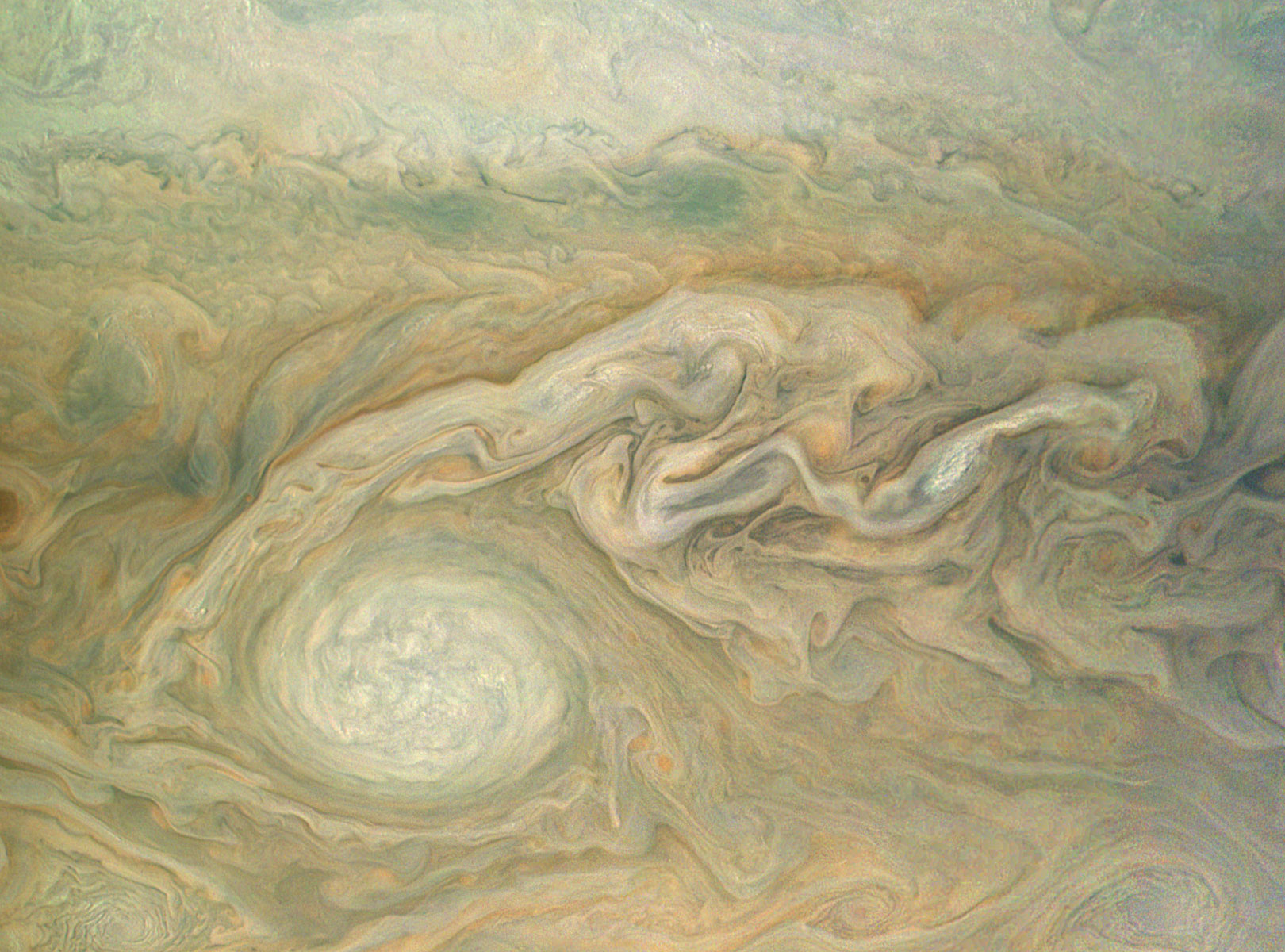
    This view of Jupiter, taken by the JunoCam imager of NASA’s Juno spacecraft, highlights Oval BA — a massive storm known as the Little Red Spot.

    NASA astronomers prepare for Juno’s fifth science flyby of Jupiter.

    On Thursday, May 18, at 11 p.m. PDT, NASA’s Juno spacecraft will make its fifth science flyby over Jupiter’s mysterious cloud tops. At the time of perijove (defined as the point in Juno’s orbit when it is closest to the planet’s center), the spacecraft will have logged 63.5 million miles (102 million kilometers) in Jupiter’s orbit and will be about 2,200 miles (3,500 kilometers) above the planet’s cloud tops.

    Juno launched on August 5, 2011, from Cape Canaveral, Florida, and arrived in orbit around Jupiter on July 4, 2016. During its mission of exploration, Juno soars low over the planet’s cloud tops — as close as about 2,100 miles (3,400 kilometers) During these flybys, Juno is probing beneath the obscuring cloud cover of Jupiter and studying its auroras to learn more about the planet’s origins, structure, atmosphere and magnetosphere.

    The above view of Jupiter, taken by the JunoCam imager of NASA’s Juno spacecraft, highlights Oval BA — a massive storm known as the Little Red Spot. Despite its unofficial name, the Little Red Spot is about as wide as Earth. The storm reached its current size when three smaller spots collided and merged in the year 2000. The Great Red Spot, which is about twice as wide as the Little Red Spot, may have formed from the same process centuries ago.

    Juno acquired this image on February 2, 2017, at 6:13 a.m. PDT (9:13 a.m. EDT), as the spacecraft performed a close flyby of Jupiter. When the image was taken, the spacecraft was about 9,000 miles (14,500 kilometers) from the planet.

    This enhanced color image was processed by citizen scientist Bjorn Jonsson.

    Never miss a breakthrough: Join the SciTechDaily newsletter.
    Follow us on Google and Google News.

    Astronomy Juno Spacecraft Jupiter Planetary Science
    Share. Facebook Twitter Pinterest LinkedIn Email Reddit

    Related Articles

    Juno Mission Prepares for Jupiter Flyby

    Juno Images Provide an Unprecedented View of Jupiter

    A Billion or More Jupiter-Like Worlds Could Be Orbiting Stars in the Milky Way

    First In-orbit View from NASA’s Juno Spacecraft

    Juno Spacecraft in Orbit Around Jupiter

    Hubble Telescope Views Vivid Auroras in Jupiter’s Atmosphere

    NASA Juno Mission Trailer – Jupiter: Into the Unknown

    ScienceCasts Video: Close Encounters with Jupiter

    NASA’s Juno Spacecraft Adjusts Flight Path for Jupiter

    Leave A Reply Cancel Reply

    • Facebook
    • Twitter
    • Pinterest
    • YouTube

    Don't Miss a Discovery

    Subscribe for the Latest in Science & Tech!

    Trending News

    Beyond Pain Relief: Scientists Discover a Protein That Could Stop Osteoarthritis in Its Tracks

    Scientists Discover Why Alcohol Prevents the Liver From Healing, Even After You Quit

    Scientists Stunned As Volcano Removes Methane From the Air

    Scientists Discover Signs Africa May Be Splitting Apart Beneath Zambia

    Common Blood Pressure Drug Supercharges Cancer Treatment in Surprising New Study

    540-Million-Year-Old Fossils Reveal a Huge Surprise About Early Life on Earth

    Scientists Reverse Stroke Damage Using Stem Cells in Breakthrough Study

    Eating One Egg a Day Could Cut Alzheimer’s Risk by 27%

    Follow SciTechDaily
    • Facebook
    • Twitter
    • YouTube
    • Pinterest
    • Newsletter
    • RSS
    SciTech News
    • Biology News
    • Chemistry News
    • Earth News
    • Health News
    • Physics News
    • Science News
    • Space News
    • Technology News
    Recent Posts
    • New Brain “Bypass” Technology Could Transform Treatment for Neurological Disorders
    • Physicists Observe Strange Quantum Rotation Effect That Defies Intuition
    • Europe Was Never a Giant Dark Forest, New 20-Million-Year Study Reveals
    • Scientists Discover Bizarre 100-Million-Year-Old Insect With Giant Claws
    • New Study Challenges What We Know About Consciousness and the Brain
    Copyright © 1998 - 2026 SciTechDaily. All Rights Reserved.
    • Science News
    • About
    • Contact
    • Editorial Board
    • Privacy Policy
    • Terms of Use

    Type above and press Enter to search. Press Esc to cancel.