
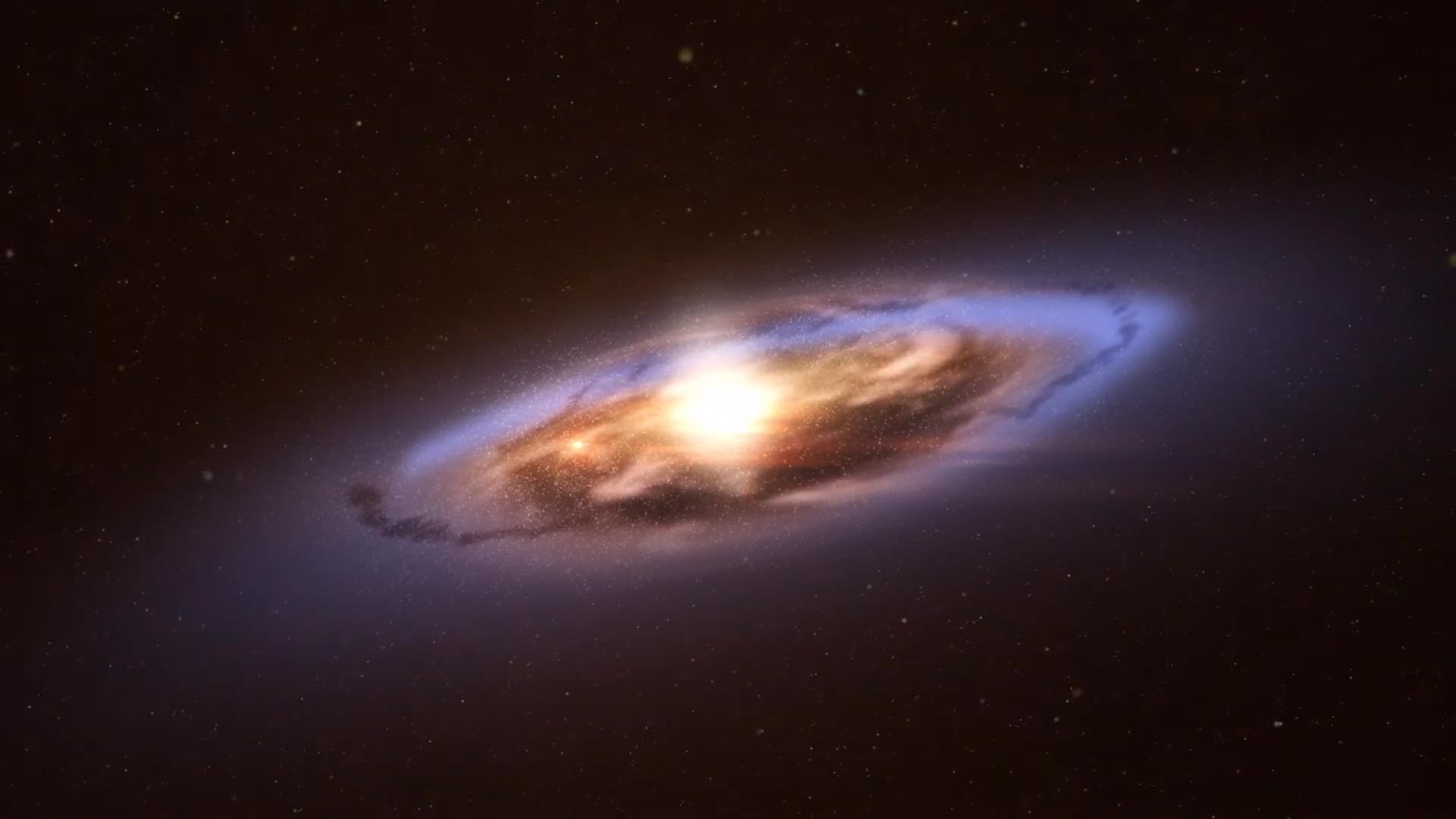
A new radio survey reveals that the Milky Way’s magnetic field is intricate, widespread, and deeply connected to how the galaxy is organized.
An international team led by UBC Okanagan has produced the sharpest picture yet of the Milky Way’s magnetic field, and the view is anything but simple. The findings show that this vast, invisible structure is far more intricate than scientists once thought.
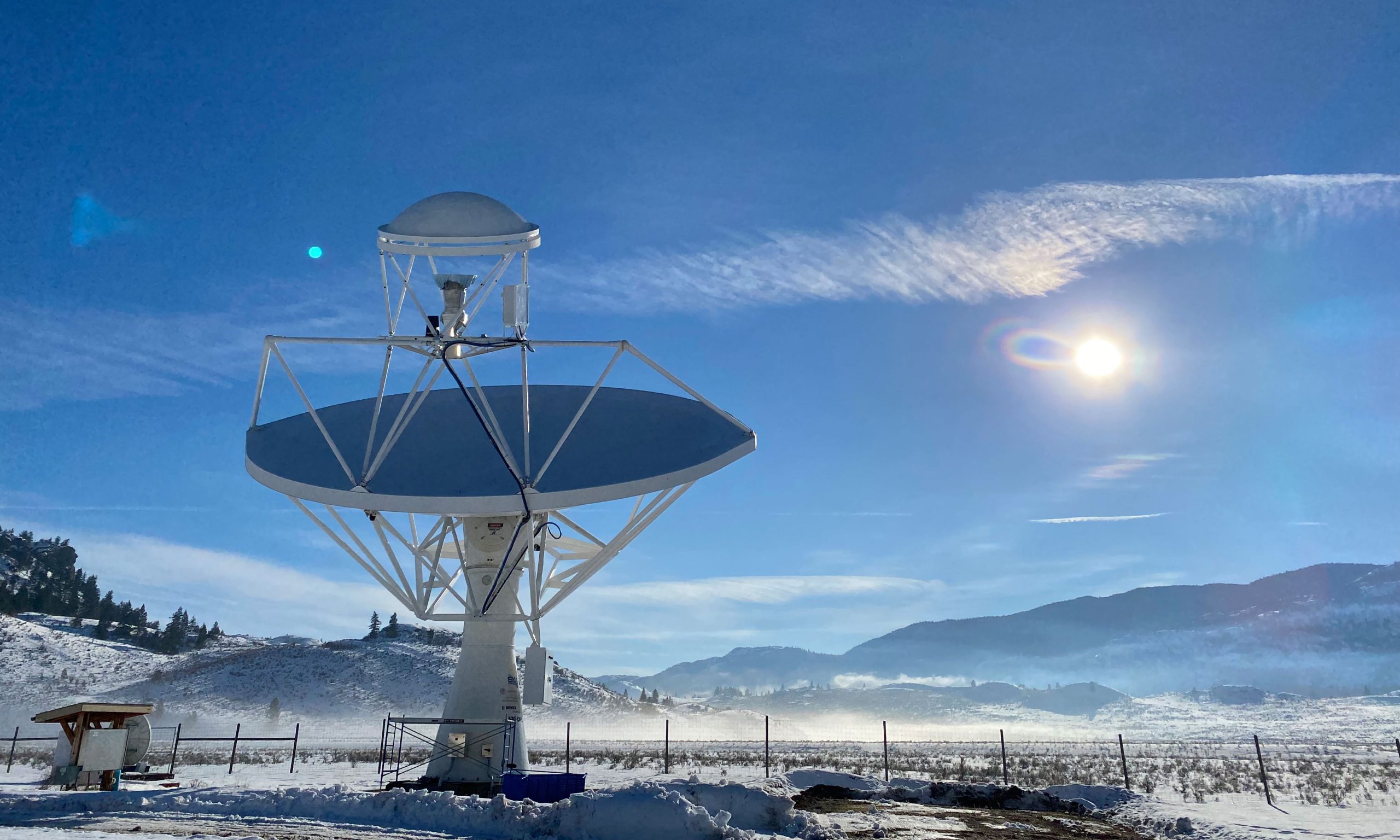
The project is led by Dr. Alex Hill, an assistant professor in the Irving K. Barber Faculty of Science at UBCO who specializes in radio astronomy. Based at the Dominion Radio Astrophysical Observatory (DRAO) near Penticton, Hill and his colleagues analyzed observations from the DRAO 15-metre telescope to create the first broadband map of Faraday rotation. This effect allows researchers to trace magnetic fields by measuring how radio waves change as they travel through space, providing coverage across the northern sky.
That all sky map comes from the Dominion Radio Astrophysical Observatory GMIMS of the northern sky (DRAGONS), a dataset led by former UBCO postdoctoral researcher Dr. Anna Ordog. By capturing polarized radio emission across a wide span of frequencies, DRAGONS can separate overlapping magnetic features along the same line of sight and reveal structures that previously blended together or disappeared in narrower surveys. The project is one piece of the Global Magneto-Ionic Medium Survey (GMIMS), launched by Dr. Tom Landecker, a DRAO astronomer and an adjunct professor at both UBCO and the University of Calgary.
“With our new dataset, we can look at the polarized emissions from within the galaxy itself, and we see that the magnetic field has a lot of structure to it,” Dr. Ordog explains. “DRAGONS is the first to show this level of complexity on such large spatial scales and across the entire northern sky.”
From Theory to Technology
The approach traces back to a key insight proposed in 1966: if you observe polarized radio waves at many different frequencies, you can reconstruct the Milky Way’s magnetic field in 3D rather than flattening it into a single averaged signal. Researchers simply did not have instruments capable of making those broad frequency measurements at the time. Today’s broadband radio technology, including the DRAO 15m, finally makes the method practical on a sky-wide scale.
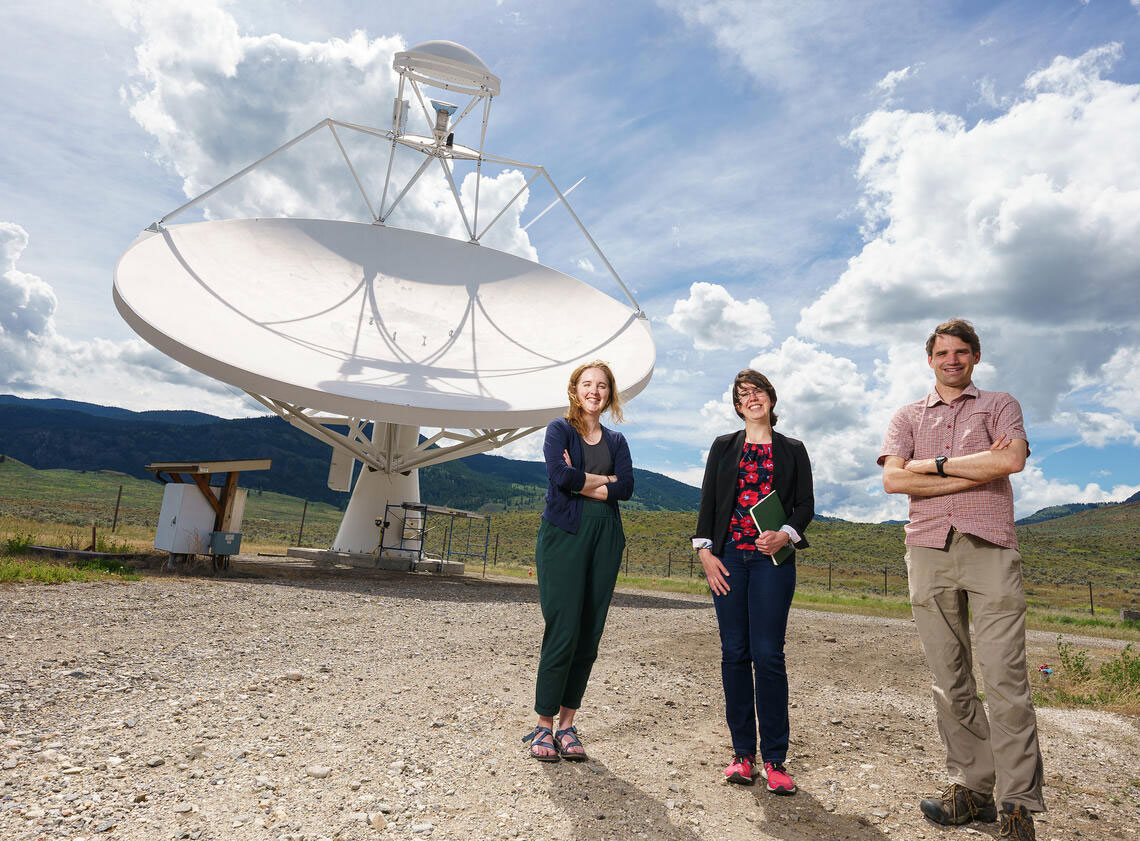
DRAGONS also served as the first scientific project for the 15m telescope itself. DRAO originally built it as a prototype antenna for the SKA, a large radio telescope currently under construction in Southern Africa and Western Australia. Dr. Ordog led the survey setup with help from five students from UBCO and the University of Calgary, alongside DRAO engineers and technologists who brought the instrument and observing system online for the campaign.
“The 15m is the ideal instrument for this all-sky survey of large-scale magnetized structures—it can scan rapidly, effectively ‘painting’ a map of the polarized sky in just six months,” she says. “Having the 15m so close to UBCO allowed students to contribute to hands-on testing in preparation for the survey.”
UBCO students analyzed “first light” signals from the instrument, developed algorithms to identify human-made radio interference, and assessed the survey data quality.
A Sky Rich in Complexity
The study, recently published in The Astrophysical Journal Supplement Series, tracks how polarized radio waves twist as they travel through the galaxy, revealing the strength, structure and direction of magnetic fields along the line of sight. This survey shows that more than half the sky contains complex magnetic structures rather than simple, uniform fields.
Dr. Landecker says the biggest surprise for the researchers was just how much of the sky is what is known as “Faraday complex.”
“With our new dataset, we can look at the polarized emission from within the galaxy itself, and we can see that the magnetic field has much more structure to it than we could detect with earlier observation methods,” says Dr. Landecker, who is also the leader of a larger effort to map magnetic fields in three dimensions and an astronomer emeritus at DRAO.
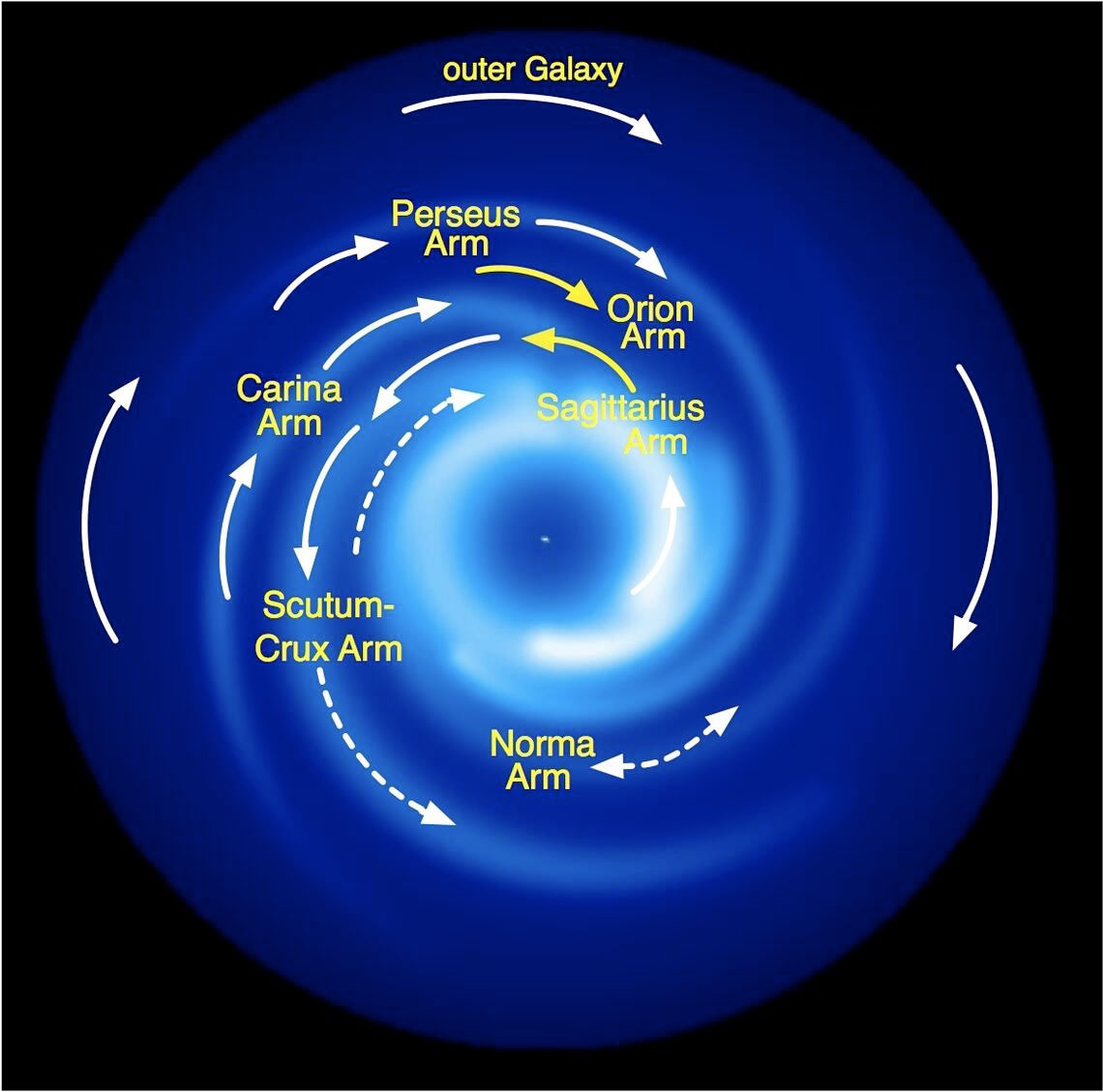
“DRAGONS is like a compass, telling us how matter and magnetic fields in the galaxy are organized and how the magnetic field interacts with bubbles created by supernova explosions, spiral arms, and other parts of the galaxy in ways that have never been possible before.”
Magnetic fields shape how stars are formed and how galaxies evolve, explains Dr. Hill.
“For decades, we could only measure the Milky Way’s magnetic field in a very averaged, simplified way,” says Dr. Hill. “But its magnetic field is an important piece of the puzzle when it comes to understanding how the universe and everything in it operates and came into being.”
Already, the DRAGONS data have been used in a study of the mysterious large-scale reversal in the galactic magnetic field. This latest study was led by University of Calgary doctoral student Rebecca Booth and published in an accompanying paper in The Astrophysical Journal. This is a good example of how the dataset will provide opportunities for continued research in this field, says Dr. Ordog.
“DRAGONS is part of a new generation of radio surveys that allow scientists to map the Milky Way’s three-dimensional magnetic field structure in the space between the stars,” she adds. “It is an important Canadian contribution to the global astronomical community.”
References:
“A Three-dimensional Model for the Reversal in the Local Large-scale Interstellar Magnetic Field” by Rebecca A. Booth, Anna Ordog, Jo-Anne Brown, T. L. Landecker, Alex S. Hill, Jennifer L. West, Minjie Lei, S. E. Clark, Andrea Bracco, John M. Dickey and Ettore Carretti, 29 January 2026, The Astrophysical Journal.
DOI: 10.3847/1538-4357/ae28d1
“GMIMS-DRAGONS: A Faraday Depth Survey of the Northern Sky Covering 350–1030 MHz” by Anna Ordog, Rebecca A. Booth, T. L. Landecker, Ettore Carretti, Alex S. Hill, Jo-Anne C. Brown, Artem Davydov, Leonardo Moutinho Caffarello, Luca B. Galler, Jonas Flygare, Jennifer L. West, A. G. Willis, Mehrnoosh Tahani, G. J. Hovey, Dustin Lagoy, Stephen Harrison, Michael A. Smith, Charl Baard, Rob H. Messing, D. A. Del Rizzo, Benoit Robert, Timothy Robishaw, John M. Dickey, George Morgan, Ian R. Kennedy, Marijke Haverkorn, Andrea Bracco and John Conway, 29 January 2026, The Astrophysical Journal Supplement Series.
DOI: 10.3847/1538-4365/ae2471
Funding: National Research Council Canada, U.S. National Science Foundation, Natural Sciences and Engineering Research Council of Canada, Dunlap Institute for Astronomy and Astrophysics
Never miss a breakthrough: Join the SciTechDaily newsletter.
Follow us on Google and Google News.