
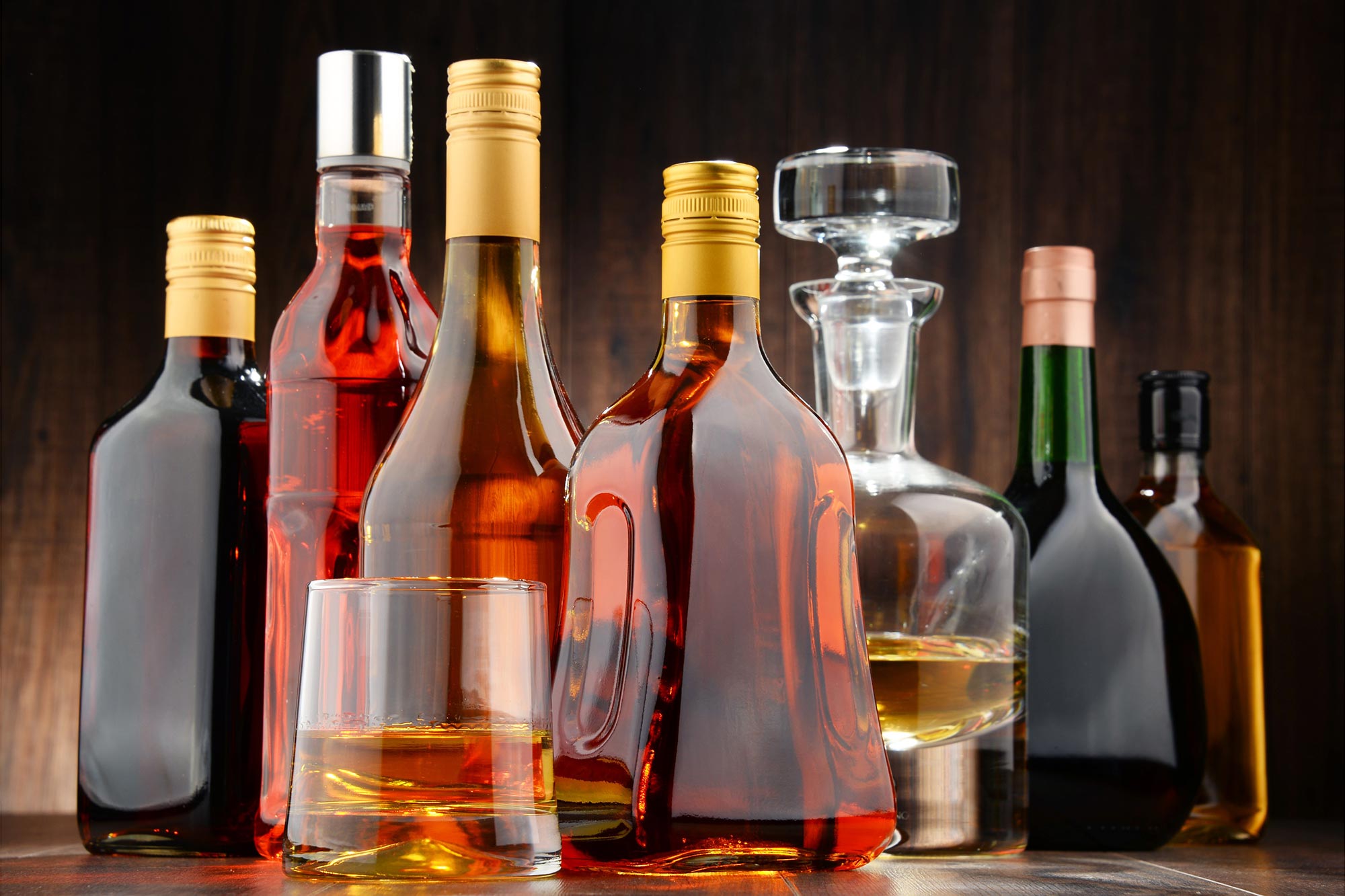
A team of scientists is compiling a database to identify counterfeit spirits, which aims to streamline testing and reduce expenses.
In the shadowy world of counterfeit alcoholic spirit production, where profits soar and brands are exploited, the true extent of this illegal market remains shrouded.
Now scientists from the International Centre for Brewing and Distilling (ICBD) at Heriot-Watt University, in Edinburgh, Scotland, working alongside Dr. John Edwards of Process NMR Associates, based in New York, are compiling a database to test, compare, and log counterfeit spirits.
The research has featured in a paper, titled, “Worldwide Illicit and Counterfeit Alcoholic Spirits: Problem, Detection, and Prevention,” published in the Journal of the American Society of Brewing Chemists.
Advancements in Detection Techniques
The team has spent the last six months using lab-based analytical techniques to detect the chemical fingerprint of hundreds of international spirits, including whisky, tequila, mezcal, and bourbon.
Michael Bryan of the ICBD at Heriot-Watt, is leading the research as part of his PhD project. He said: “Once complete, this database will provide in-depth analysis of hundreds of legitimate spirits, becoming an information source to determine the authenticity of a product.
Challenges in Current Testing Methods
“At present, testing apparatus, methodology, and human resources are ridiculously expensive, costing up to half a million or more pounds. And the analysis machinery is huge, they can be size of a car or bigger. So, it’s a very difficult process and what I want to do is to take a different approach.
“Let’s transfer the heavy lifting from analytical services to comparative mathematics.”
While counterfeit spirit production is sizeable, the paper acknowledges there is no single solution with tougher legislation and increased fines not proven to be significant deterrents. It highlights the need for the development of low-cost methods to determine the authenticity of a product without the need to physically open a bottle.
Utilizing a Variety of Analytical Tools
Working with Process NMR Associates, the scientists are using a variety of analytical tools including near infrared spectroscopy (NIR), ultra-violet visible (UV-Vis) spectroscopy, liquid chromatography (HPLC-DAD), and nuclear magnetic resonance spectroscopy (NMR) to determine the chemistry of sample spirits.
Michael continues: “By having a database of hundreds of spirits, outlining the legitimacy of a product, we can use less expensive techniques to sample a product. If it doesn’t meet those benchmarks, then we can quickly determine that it requires further analysis.
“This will ultimately save time and resources and ensure that we focus efforts on products that we suspect of being counterfeit.”
The Global Impact of Counterfeit Spirits
The true scale of counterfeit spirit production is unknown however the World Health Organization (WHO) estimates that at least 25% of all spirits consumed are illicit. Many other authorities including the United Nations Conference on Trade and Development place this figure at over 40% in some areas.
Counterfeit spirits are commonly sold through online marketplaces, social media, and black-market websites, making them difficult to regulate and allowing sellers to hide their identity. In many cases, the buyer of counterfeit spirits does so willingly, often due to affordability.
Health and Economic Consequences
A major impact of illicit spirit production relates to public health. Some counterfeit spirits can contain harmful ingredients including, in extreme cases, aviation fuel or embalming fluid to increase the alcoholic concentration. Consequently, cases of liver damage, blindness, and death result.
Only last year, Iran saw a rise in fatalities linked to counterfeit alcohol and poisoning in the Alborz region in the north of the country with 14 deaths and at least 120 additional poisonings.
The economic impact of this illegal trade is significant, with up to 23,400 jobs said to be lost and eroding the trust of reputable manufacturers. It costs the EU, each year, around €3B in lost revenue.
As much as 33% of tested old and collected Scotch whisky is said to be counterfeit. A figure underlined in 2018 when the Scottish Universities Environmental Research Centre tested 55 bottles of Scotch Whisky that were old and considered rare. These were obtained from private collectors, auctions, and retail. The test concluded 21 bottles (38%) were faked, and every bottle from before 1900 was found to be counterfeit.
Efforts to Combat Counterfeit Spirits
Professor Annie Hill from Heriot-Watt University is the academic supervisor for the project. She said: “The Scotch Whisky Association drives the fight against counterfeit Scotch, and The Scotch Whisky Research Institute is a world leader in the detection of counterfeit spirits.
“This paper defines the problems and highlights potential solutions and our continuing research aims to further increase awareness, and to develop accessible and affordable methods to enable wider detection and identification of illicit distilled spirit products.”
Reference: “Worldwide Illicit and Counterfeit Alcoholic Spirits: Problem, Detection, and Prevention” by Michael A. Bryan and Annie E. Hill, 12 April 2024, Journal of the American Society of Brewing Chemists.
DOI: 10.1080/03610470.2024.2319934
Never miss a breakthrough: Join the SciTechDaily newsletter.
Follow us on Google and Google News.