
Close Menu
    Facebook X (Twitter) Instagram
    SciTechDaily
    • Biology
    • Chemistry
    • Earth
    • Health
    • Physics
    • Science
    • Space
    • Technology
    Facebook X (Twitter) Pinterest YouTube RSS
    SciTechDaily
    Home»Science»Bacteria Could Help Build Sustainable, Eco-Friendly Construction Materials
    Science

    Bacteria Could Help Build Sustainable, Eco-Friendly Construction Materials

    By University of BathSeptember 30, 20211 Comment2 Mins Read
    Facebook Twitter Pinterest Telegram LinkedIn WhatsApp Email Reddit
    Share
    Facebook Twitter LinkedIn Pinterest Telegram Email Reddit
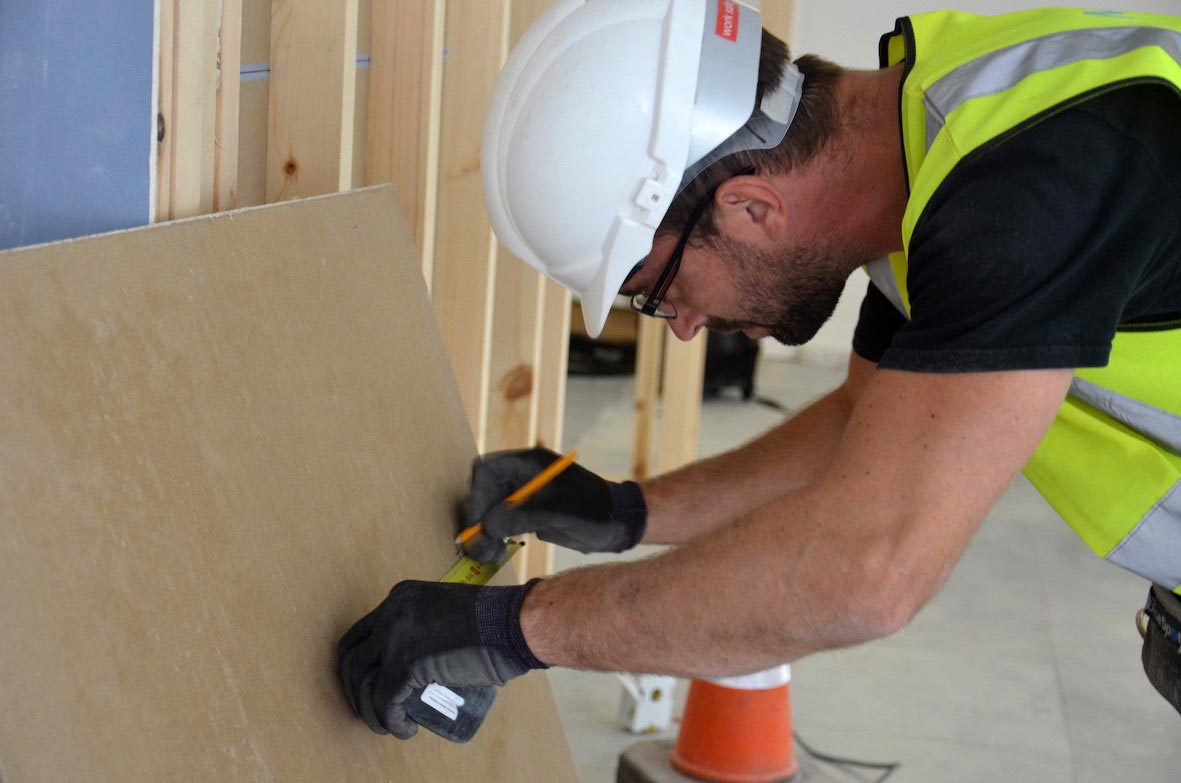
    Builder Measuring Plasterboard
    Adaptavate is developing biodegradable plasterboard that is made using crop waste instead of gypsum. Credit: Adaptavate

    Researchers at the University of Bath are investigating whether the natural properties of bacteria could help in developing a new type of environmentally friendly plasterboard.

    They are working with start-up company Adaptavate, which makes sustainable building materials. Their biodegradable plasterboard, Breathaboard uses compostable crop waste instead of gypsum, is lighter, and has better thermal and acoustic insulation compared with traditional plasterboard.

    Microbiologists from the University of Bath’s Department of Biology & Biochemistry, and concrete experts from the Department of Architecture and Civil Engineering have been awarded funding by the National Biofilms Innovation Centre (NBIC), for a six-month pilot project that aims to optimize the properties of the prototype plasterboard using their bacteria-based construction technology (BBCT).

    If successful, the plasterboard can be scaled up and developed further.

    Dr. Susanne Gebhard, Senior Lecturer in the University’s Department of Biology and Biochemistry and the Milner Centre for Evolution, is leading the project in collaboration with Professor Kevin Paine from the University’s Department of Architecture and Civil Engineering.

    She said: “Biofilms are formed when bacteria stick together to coat a surface, as opposed to growing neat dot-shaped clumps on a petri dish.

    A Bacterial Boost to Construction Materials

    “This is a really exciting project that will see whether we can exploit the natural biofilm-forming abilities of bacteria to function as a kind of glue that will help improve the properties of biodegradable construction materials.”

    Jeff Ive, Technical Director at Adaptavate, said: “Gypsum is the third most used construction material and accounts for 3% of UK carbon emissions.

    “It’s either mined or produced from waste from coal power stations and is becoming increasingly expensive to produce. As it’s calcium sulphate based, it also needs to be disposed of carefully so it doesn’t harm the environment.

    “Our Breathaboard is a low carbon sustainable alternative to gypsum based plasterboard and could make a real difference to the carbon emissions of the construction industry.

    “We’re delighted to be working with the University of Bath to further develop this product.”

    Never miss a breakthrough: Join the SciTechDaily newsletter.
    Follow us on Google and Google News.

    Bacteria Construction Microbiology Sustainability University of Bath
    Share. Facebook Twitter Pinterest LinkedIn Email Reddit

    Related Articles

    Applying a Special Type of Bacteria to Concrete Increases Its Strength by 30%

    Used Beer Yeast Could Be Simple Solution to Heavy Metal Contamination in Water

    MIT Pioneers Technology To Grow Customizable Wood Products in the Lab With Little Waste

    Three Decade Wildlife Mystery Solved: International Investigation Discovers Bald Eagles’ Killer

    Microbiologists Modify Bacteria to Produce Climate-Neutral and Rapidly Degradable Bioplastics

    Shrinking (Ultra)Violet: Using Narrow Wavebands of UV Light to Kill Germs in Drinking Water

    New Mass-Timber Sustainable Building Takes Shape in Boston

    Scientists Genetically Engineered Bacteria to Protect Bees From Colony Collapse

    Relative Refutation of the Claim of Arsenic-Based Life

    1 Comment

    1. Neil B on October 1, 2021 9:06 am

      Uh, crop waste is humus that reduces runoff and watering needs. They’re kind of robbing Peter to pay Paul here.

      Reply
    Leave A Reply Cancel Reply

    • Facebook
    • Twitter
    • Pinterest
    • YouTube

    Don't Miss a Discovery

    Subscribe for the Latest in Science & Tech!

    Trending News

    Artificial Sweeteners May Harm Future Generations, Study Suggests

    Splashdown! NASA Artemis II Returns From Record-Breaking Moon Mission

    What If Consciousness Exists Beyond Your Brain

    Scientists Finally Crack the 100-Million-Year Evolutionary Mystery of Squid and Cuttlefish

    Beyond “Safe Levels”: Study Challenges What We Know About Pesticides and Cancer

    Researchers Have Found a Dietary Compound That Increases Longevity

    Scientists Baffled by Bizarre “Living Fossil” From 275 Million Years Ago

    Your IQ at 23 Could Predict Your Wealth at 27, Study Finds

    Follow SciTechDaily
    • Facebook
    • Twitter
    • YouTube
    • Pinterest
    • Newsletter
    • RSS
    SciTech News
    • Biology News
    • Chemistry News
    • Earth News
    • Health News
    • Physics News
    • Science News
    • Space News
    • Technology News
    Recent Posts
    • Scientists Break Optical Limits With Quantum Dot-Powered Nanoscopy
    • Scientists Shrink a Lab Spectrometer to the Size of a Grain of Sand
    • Quantum Reality Gets Stranger: Physicists Put a Lump of Metal in Two Places at Once
    • 34-Million-Year-Old Snake Found in Wyoming Rewrites Our Understanding of Evolution
    • Prehistoric “Vomit Fossil” Reveals Never-Before-Seen Flying Reptile
    Copyright © 1998 - 2026 SciTechDaily. All Rights Reserved.
    • Science News
    • About
    • Contact
    • Editorial Board
    • Privacy Policy
    • Terms of Use

    Type above and press Enter to search. Press Esc to cancel.