
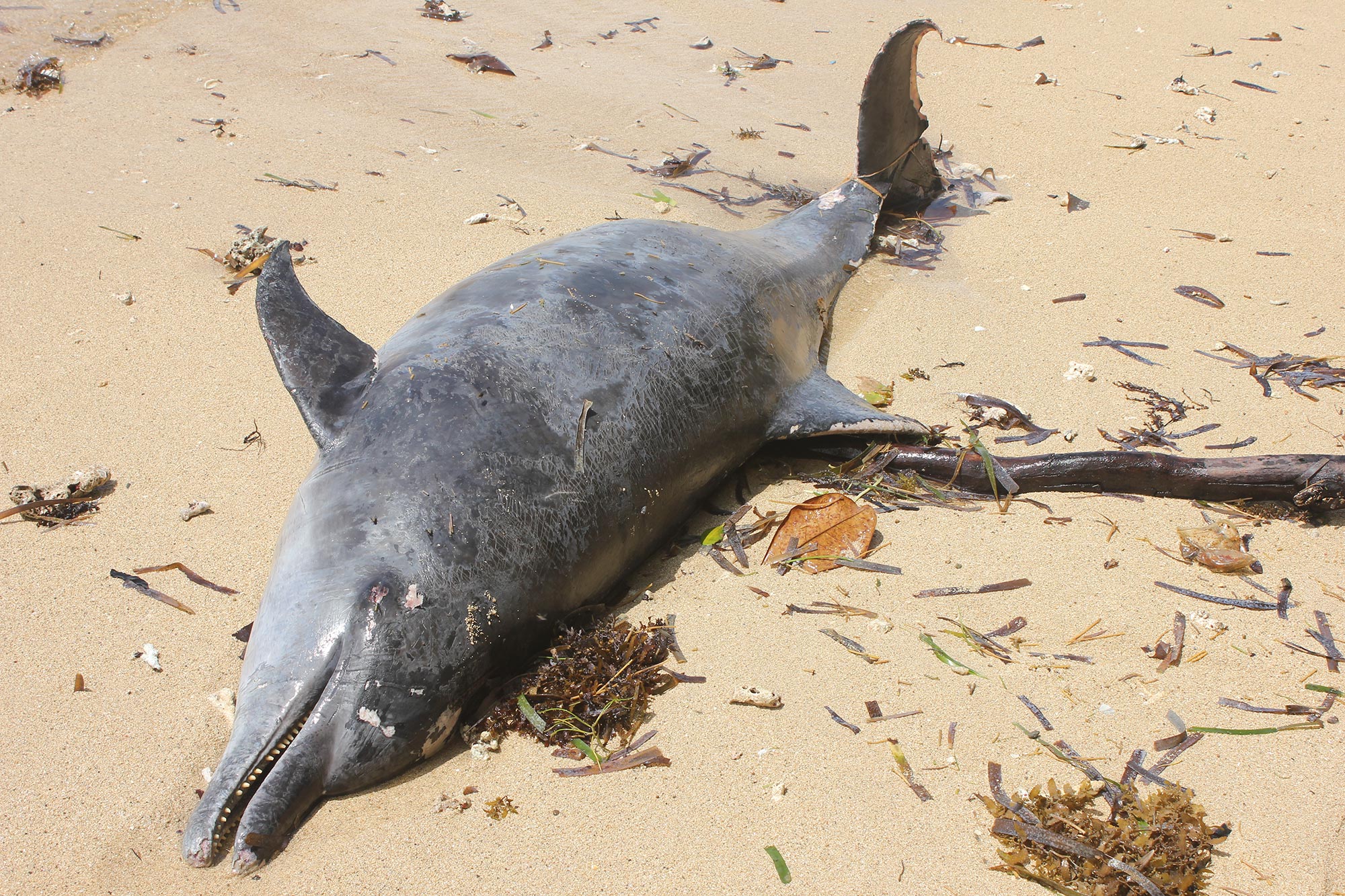
Researchers investigating why dolphins sometimes strand on beaches have uncovered an unsettling link between toxic algae and Alzheimer’s-like brain damage.
Studies show that cyanobacteria, tiny organisms that flourish in warm, nutrient-rich waters, produce toxins such as BMAA that can accumulate in the marine food chain. Dolphins exposed to these toxins exhibit the same brain abnormalities seen in humans with Alzheimer’s, including amyloid plaques and tau tangles.
Tragic Encounters on the Shore
For anyone who loves the ocean, few experiences are as heartbreaking as finding a stranded whale or dolphin lying helpless on the sand. When rescuers discover one that is still alive, marine biologists and volunteers quickly step in to help. They pour seawater over the animal to keep its skin moist, shield it from the sun, and often cover it with wet blankets. Others work to guide the dolphin or whale back toward deeper water once the tide begins to rise.
Sadly, not every stranded marine mammal survives. When beachings end in tragedy, they raise a troubling question that has long puzzled scientists: why do these intelligent creatures become stranded at all?
A New and Unsettling Hypothesis
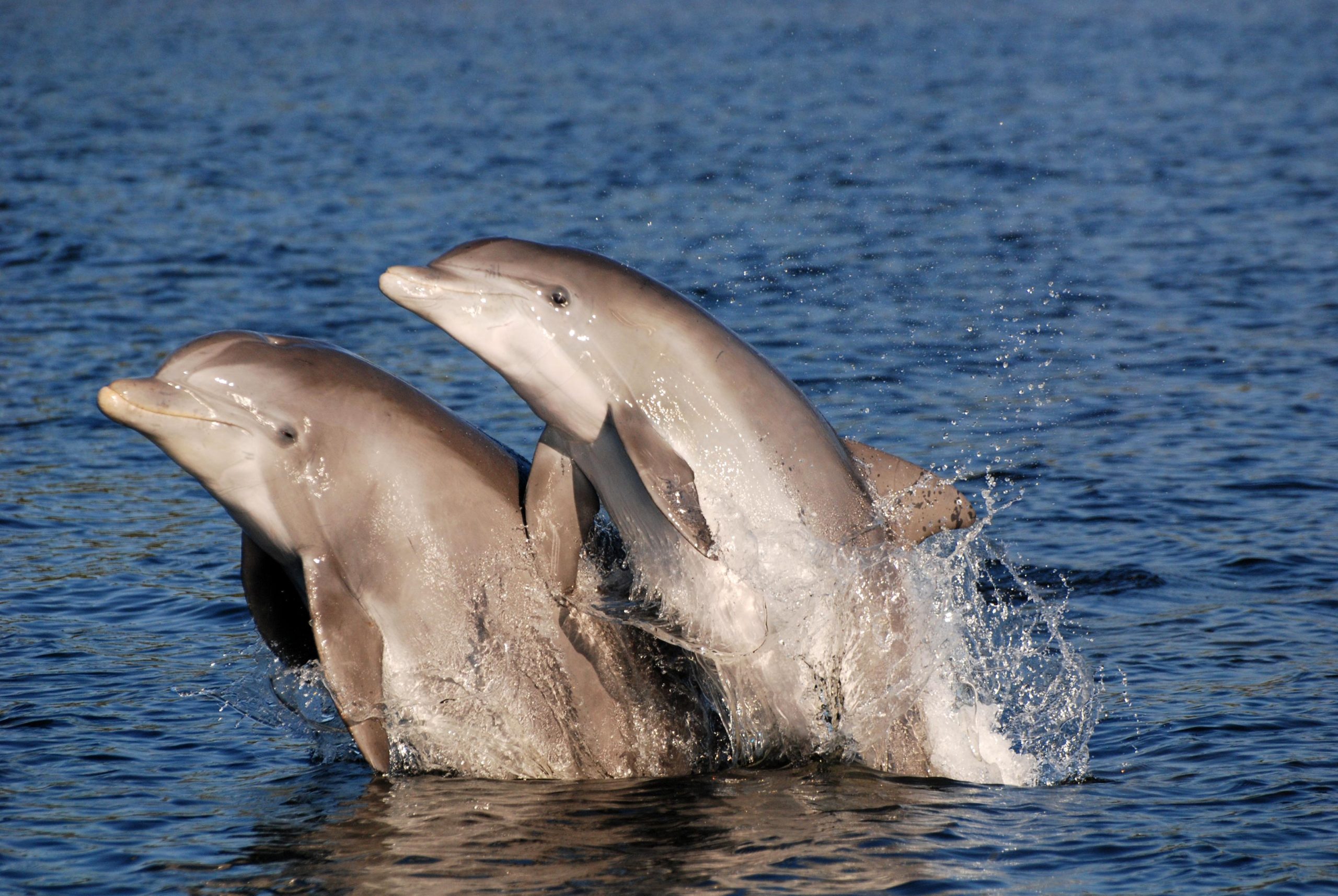
A team of researchers from Florida to Wyoming believes they may have found a surprising clue. They propose that dolphins might experience a form of Alzheimer’s-like illness that leaves them confused and unable to navigate, much like how some people with dementia may wander far from home. In dolphins, the scientists suspect this disorientation could stem from repeated exposure to toxic compounds produced by cyanobacteria, microscopic organisms that flourish in warm, nutrient-rich waters.
Evidence supporting this idea comes from studies of people living on Guam, where long-term dietary exposure to cyanobacterial toxins has been linked to the same kinds of brain changes seen in Alzheimer’s disease. These include the buildup of abnormal tau proteins and amyloid plaques. One toxin in particular, β-N-methylamino-L-alanine (BMAA), along with its chemical relatives 2,4-Diaminobutyric acid (2,4-DAB) and N-2-aminoethylglycine (AEG), has been shown to be highly toxic to nerve cells. Laboratory research demonstrates that BMAA can trigger Alzheimer’s-like brain damage and memory loss in animals. Once these toxins enter marine ecosystems, they can climb up the food chain, accumulating in top predators such as dolphins.
Dolphins With Alzheimer’s-Like Brains
A study of twenty common bottlenose dolphins stranded in the Indian River Lagoon in eastern Florida showed that their brains contained BMAA and its isomers, particularly 2,4-DAB. Dolphins stranded during the summer cyanobacterial bloom season contained 2,900 times the concentration of 2,4-DAB than those from non-bloom seasons.
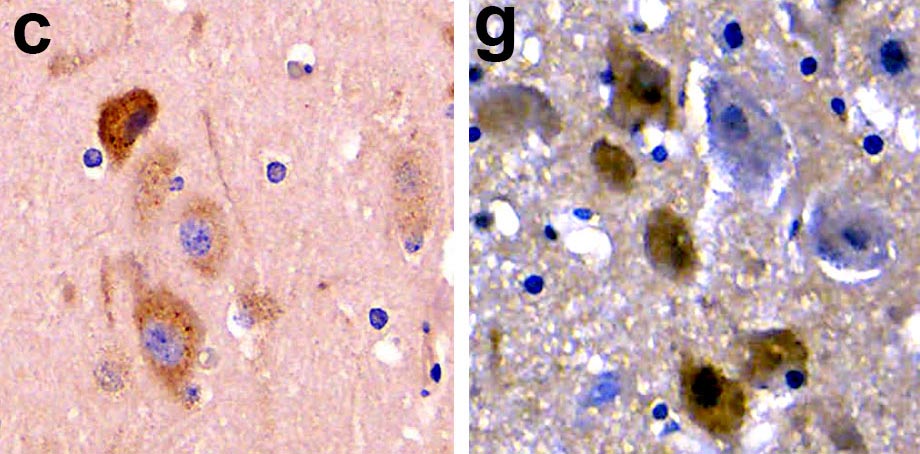
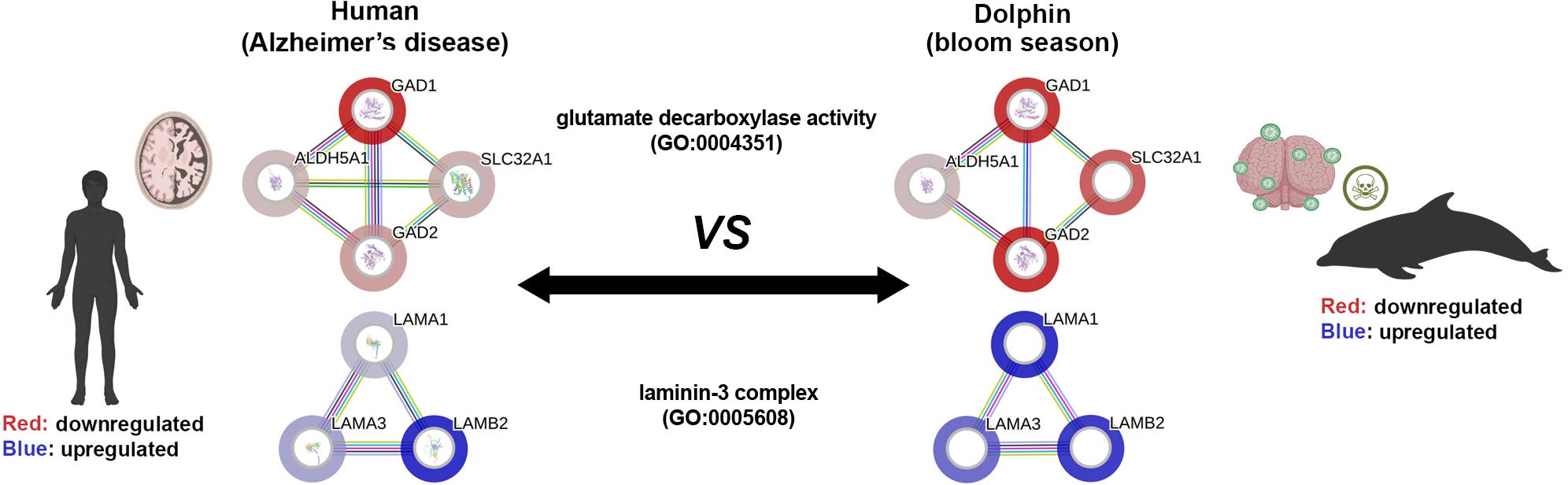
Brain neuropathology similar to Alzheimer’s patients including β-amyloid plaques and hyperphosphorylated tau proteins were found in the dolphin brains. In addition, TDP-43 protein inclusions characteristic of a particularly severe form of Alzheimer’s were also found in the dolphin brains. During bloom seasons, the same dolphins showed 536 differentially expressed genes associated with Alzheimer’s disease.
Warming Waters, Blooming Threats
The duration of cyanobacterial blooms is increasing with climate warming and nutrient inputs associated with agricultural runoff and sewage discharges. Cyanobacterial-laden waters have often been released down the St. Lucie River from Lake Okeechobee into the Indian River Lagoon.
“Since dolphins are considered environmental sentinels for toxic exposures in marine environments,” Dr. David Davis at the Miller School of Medicine explains, “there are concerns about human health issues associated with cyanobacterial blooms.”

Human Health Implications
In 2024, Miami Dade County had the highest prevalence of Alzheimer’s disease in the United States. “Although there are likely many paths to Alzheimer’s disease, cyanobacterial exposures increasingly appear to be a risk factor,” adds Dr. Davis.
“Among Guam villagers, exposure to cyanobacterial toxins appeared to trigger neurological disease,” said Dr. Paul Alan Cox of the Brain Chemistry Labs in Jackson Hole.
Reference: “Alzheimer’s disease signatures in the brain transcriptome of estuarine dolphins” by Wendy Noke Durden, Megan K. Stolen, Susanna P. Garamszegi, Sandra Anne Banack, Daniel J. Brzostowicki, Regina T. Vontell, Larry E. Brand, Paul Alan Cox and David A. Davis, 30 September 2025, Communications Biology.
DOI: 10.1038/s42003-025-08796-0
This research was published in the current Nature journal Communication Biology by researchers at Hubbs-SeaWorld Research Institute in Melbourne Beach, Florida, The Blue World Research Institute in Cocoa, Florida, The University of Miami Miller School of Medicine, Miami, Florida, Brain Chemistry Labs, Jackson Hole, Wyoming, Rosenstiel School of Marine, Atmospheric, and Earth Science, University of Miami, Miami, Florida.
Never miss a breakthrough: Join the SciTechDaily newsletter.
Follow us on Google and Google News.