
Close Menu
    Facebook X (Twitter) Instagram
    SciTechDaily
    • Biology
    • Chemistry
    • Earth
    • Health
    • Physics
    • Science
    • Space
    • Technology
    Facebook X (Twitter) Pinterest YouTube RSS
    SciTechDaily
    Home»Biology»Better, Redder Biosensor: This Red Light Means “Go” for Medical Discoveries
    Biology

    Better, Redder Biosensor: This Red Light Means “Go” for Medical Discoveries

    By University of Virginia Health SystemOctober 22, 2020No Comments3 Mins Read
    Facebook Twitter Pinterest Telegram LinkedIn WhatsApp Email Reddit
    Share
    Facebook Twitter LinkedIn Pinterest Telegram Email Reddit
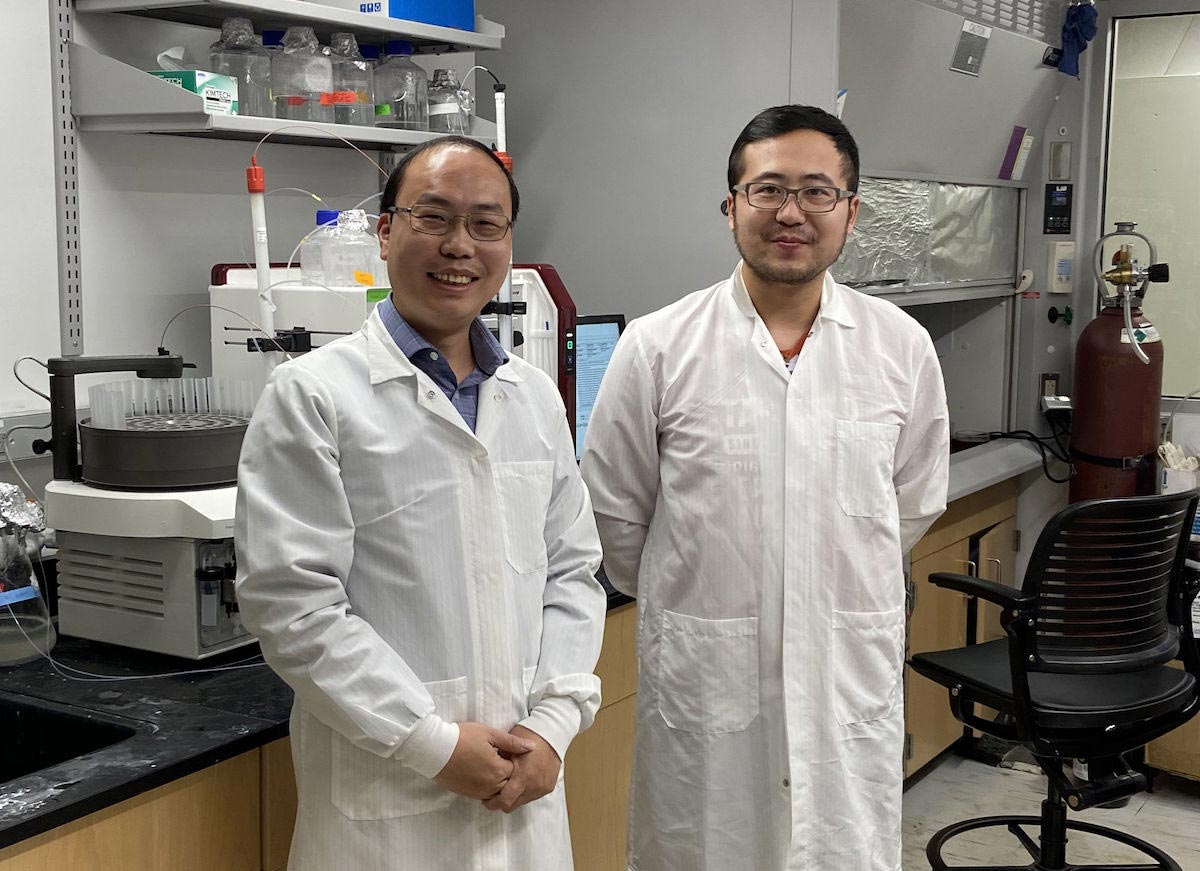
    Hui-wang Ai and Shen Zhang
    Hui-wang Ai, PhD, (left) and Shen Zhang, PhD, have developed a simple and effective improvement to fluorescent “biosensors” widely used in scientific and medical research. Credit: Courtesy Ai lab

    Scientists develop a better, redder biosensor for biological research.

    With a little tweak of the color palette, School of Medicine researchers have made it easier for scientists to understand biological processes, track happenings inside individual cells, unravel the mysteries of disease and develop new treatments.

    UVA’s Hui-wang Ai, PhD, and Shen Zhang, PhD, have developed a simple and effective improvement to fluorescent “biosensors” widely used in scientific and medical research. The biosensors detect specific targets inside cells and set them aglow, so that scientists can monitor and quantify biological events they otherwise could not.

    Most fluorescent protein biosensors give a green or yellow glow, but Ai and Zhang have discovered a way to shift the green to red. This comes with big benefits, including making it easier for scientists to monitor multiple targets at a time and to peer more deeply into tissues.

    “This innovative method can convert not only existing biosensors, but also any green biosensors developed in the future,” Ai said. “Multicolor and/or multiplexed imaging with fluorescent biosensors cells will thus become widely accessible.”

    Lighting the Way

    While there are existing red biosensors, they are typically outperformed by their green counterparts. So scientists have been eager to find ways to shift the green color into red, retaining the benefits of the green sensors while adding new ones, such as reducing the visual confusion that can be caused by the natural fluorescence of tissues and cells.

    Ai and Zhang found a solution partly by a stroke of luck – or “serendipity,” as they describe it in a new scientific paper. In the course of their regular lab work, they found that adding a particular amino acid, 3-aminotyrosine, to the green biosensor made it turn red. This is simple to do and quite effective, they report. The red version preserved the brightness, dynamic range, and responsiveness of the green sensor, while offering the additional benefits of a red one.

    “We modified a panel of green biosensors for metal ions, neurotransmitters, and cell metabolites,” Zhang said. “Spontaneous and efficient green-to-red conversion was observed for all tested biosensors, and little optimization on individual sensors was needed.”

    The researchers tested their improved biosensor on cells that make insulin in the pancreas. They were able to monitor the effect of high levels of glucose on the cells, gaining new insights and giving the researchers new directions to explore.

    They hope their quick-and-easy sensor upgrade will offer similar benefits to many other scientists and lines of scientific research.

    “It will have lots of applications,” Ai said, “such as acceleration of our understanding of how pancreas controls insulin secretion or how neuronal activity patterns in the brain correlate with complex behavior.”

    Biosensor Technique Described

    The researchers have described their technique in the scientific journal Nature Chemical Biology. Ai and Zhang are both part of UVA’s Department of Molecular Physiology and Biological Physics, UVA’s Department of Chemistry, the Center for Membrane and Cell Physiology, and the UVA Cancer Center.

    Reference: “A general strategy to red-shift green fluorescent protein-based biosensors” by Shen Zhang and Hui-wang Ai, 14 September 2020, Nature Chemical Biology.
    DOI: 10.1038/s41589-020-0641-7

    The research was supported by UVA and the National Institutes of Health, grants R01GM118675, R01GM129291, U01CA230817 and R01DK122253.

    Never miss a breakthrough: Join the SciTechDaily newsletter.
    Follow us on Google and Google News.

    Biotechnology Cell Biology Microbiology Molecular Biology Neuroscience University of Virginia
    Share. Facebook Twitter Pinterest LinkedIn Email Reddit

    Related Articles

    “Superpower” Discovered in Squids: They Can Massively Edit Their Own Genetics

    New Tool Developed to Sequence Circular DNA

    Microbes Have Memory: Surprising Parallels Between Simple Microrganisms and Sophisticated Neurons

    Strange, Extremely Disordered Proteins Are Heroes in Disguise – Protect Other Proteins

    CRISPR-HOT: New Genetic Tool Can Label Specific Genes and Cells

    Real-Time Movement of Millions of Molecules Captured in 3D

    Video Shows Single-Cell Organism Making Complex Decisions – Resolves Century-Old Scientific Debate

    Neuroscientists Devise New Technique To Preserve Biological Tissue

    Seasonal Color-Enhanced Images Reveal the Science Behind Stem Cells

    Leave A Reply Cancel Reply

    • Facebook
    • Twitter
    • Pinterest
    • YouTube

    Don't Miss a Discovery

    Subscribe for the Latest in Science & Tech!

    Trending News

    Scientists Uncover Potential Brain Risks of Popular Fish Oil Supplements

    Scientists Discover a Surprising Way To Make Bread Healthier and More Nutritious

    After 60 Years, Scientists Uncover Unexpected Brain Effects of Popular Diabetes Drug Metformin

    New Research Uncovers Hidden Side Effects of Popular Weight-Loss Drugs

    Scientists Rethink Extreme Warming After Surprising Ocean Discovery

    Landmark Study Links Never Marrying to Significantly Higher Cancer Risk

    Researchers Discover Unknown Beetle Species Just Steps From Their Lab

    Largest-Ever Study Finds Medicinal Cannabis Ineffective for Anxiety, Depression, PTSD

    Follow SciTechDaily
    • Facebook
    • Twitter
    • YouTube
    • Pinterest
    • Newsletter
    • RSS
    SciTech News
    • Biology News
    • Chemistry News
    • Earth News
    • Health News
    • Physics News
    • Science News
    • Space News
    • Technology News
    Recent Posts
    • Not Just Alzheimer’s: Scientists Uncover Clues to a Second, Overlooked Disorder
    • Scientists Uncover Dangerous Connection Between Serotonin and Heart Valve Disease
    • Scientists Discover a “Protector” Protein That Could Help Reverse Hair Loss
    • Powerful Lasers Reveal How Matter Becomes Plasma in Trillionths of a Second
    • A Simpler Path to Super-Resolution: Scientists Reinvent Microscopy
    Copyright © 1998 - 2026 SciTechDaily. All Rights Reserved.
    • Science News
    • About
    • Contact
    • Editorial Board
    • Privacy Policy
    • Terms of Use

    Type above and press Enter to search. Press Esc to cancel.