

A first-of-its-kind oral drug boosts muscle metabolism to improve blood sugar and body composition is now headed into larger clinical trials.
Lowering blood sugar and increasing fat burning – without suppressing appetite or causing muscle loss – are among the most encouraging effects seen with a new experimental tablet for people with type 2 diabetes and obesity. The findings come from a study in the journal Cell by researchers at Karolinska Institutet and Stockholm University.
Unlike well-known GLP-1-based drugs such as Ozempic, which are given as injections and act mainly by reducing hunger through signals between the gut and brain, the new treatment works in a completely different way. GLP-1 drugs are effective but often bring side effects such as persistent loss of appetite, reduced muscle mass, and gastrointestinal problems.

A Drug That Targets Skeletal Muscle Metabolism
The new compound targets skeletal muscle directly and activates its metabolism rather than focusing on appetite. In animal studies, it improved both blood sugar control and body composition, with better fat reduction while preserving lean mass. These preclinical tests also suggested fewer heart-related side effects than those seen with traditional β2 agonists and with some existing diabetes and obesity medicines. In combination with GLP-1 therapy in animal models, the drug was able to counteract the muscle loss that can occur with incretin-based weight loss treatments.
Early human data support these results. An initial phase I clinical trial in 48 healthy volunteers and 25 people with type 2 diabetes found that the tablet was well tolerated and showed pharmacokinetic properties consistent with once-daily oral dosing.
“Our results point to a future where we can improve metabolic health without losing muscle mass. Muscles are important in both type 2 diabetes and obesity, and muscle mass is also directly correlated with life expectancy,” says one of the researchers behind the study, Tore Bengtsson, professor at the Department of Molecular Bioscience, Wenner-Gren Institute, Stockholm University.
A Novel β2 Agonist With Reduced Cardiac Risk
The active substance is built around a laboratory-designed molecule that belongs to a class known as β2 agonists. In this case, the molecule has been engineered to steer cellular signaling in a new, more selective way, so that it boosts glucose uptake and metabolism in muscle while avoiding overstimulation of the heart, which is a well-known limitation of conventional β2 agonists.
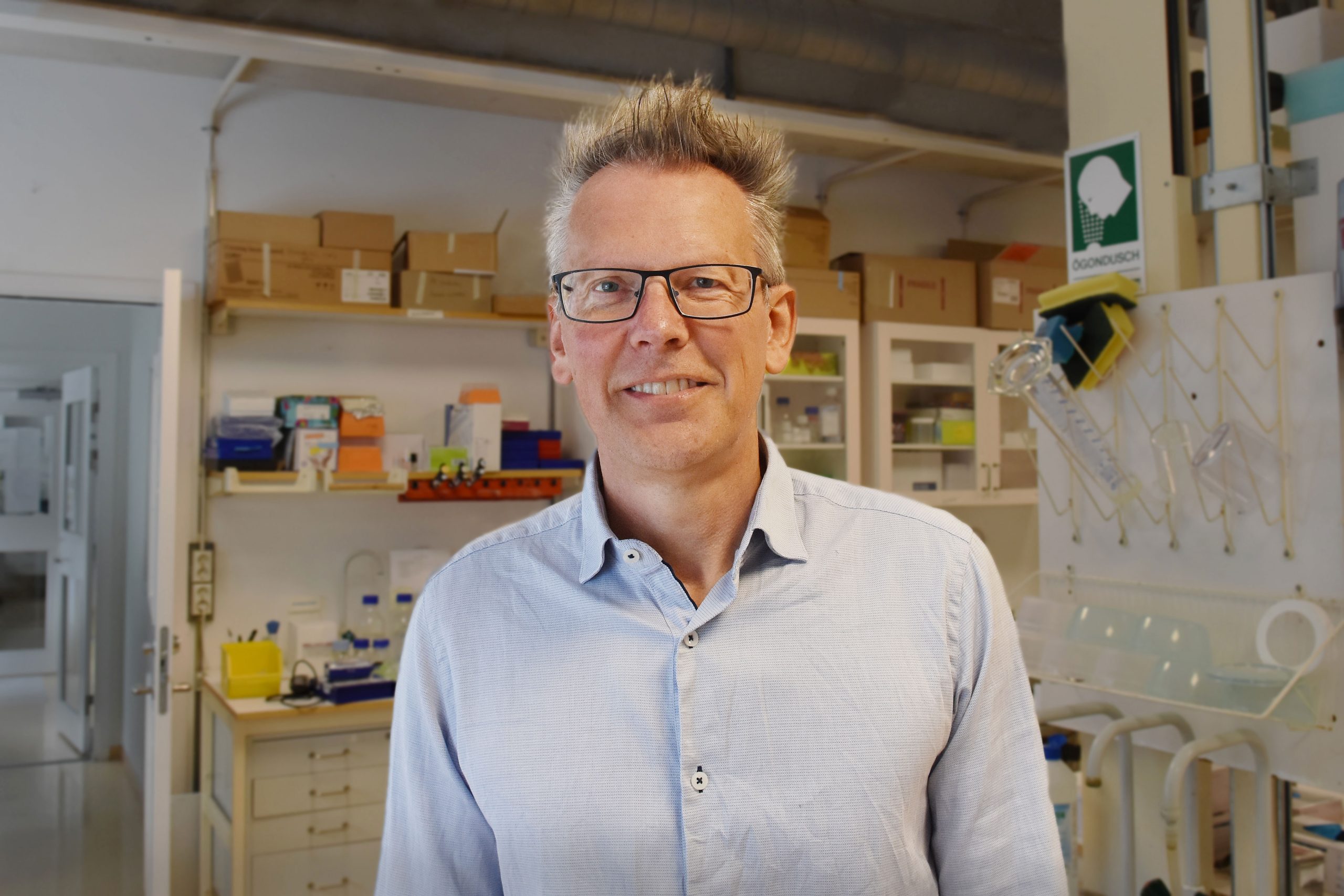
“This drug represents a completely new type of treatment and has the potential to be of great importance for patients with type 2 diabetes and obesity. Our substance appears to promote healthy weight loss and, in addition, patients do not have to take injections,” says Shane C. Wright, assistant professor at the Department of Physiology and Pharmacology at Karolinska Institutet, who is one of the researchers behind the study.
Potential for Combined Therapy and Next Steps
This new type of drug not only works on its own, but can also work in combination with GLP-1, thanks to their different mechanisms of action.
“This makes them valuable both as a stand-alone treatment and in combination with GLP-1 drugs,” says Shane C. Wright.
The next step is a larger, clinical phase II study planned by Atrogi AB, the company developing the treatment. The aim of the study is to see whether the same positive effects seen in preclinical models also occur in people with type 2 diabetes or obesity.
Reference: “GRK-biased adrenergic agonists for the treatment of type 2 diabetes and obesity” by Aikaterini Motso, Benjamin Pelcman, Anastasia Kalinovich, Nour Aldin Kahlous, Muhammad Hamza Bokhari, Nodi Dehvari, Carina Halleskog, Erik Waara, Jasper de Jong, Elizabeth Cheesman, Christine Kallenberg, Gopala Krishna Yakala, Praerona Murad, Erika Wetterdal, Pia Andersson, Sten van Beek, Anna Sandström, Diane Natacha Alleluia, Emanuela Talamonti, Sonia Youhanna, Pierre Sabatier, Claire Koenig, Sabine Willems, Aurino M. Kemas, Dana S. Hutchinson, Seungmin Ham, Lukas Grätz, Jan Voss, Jose G. Marchan-Alvarez, Martins Priede, Krista Jaunsleine, Jana Spura, Vadims Kovada, Linda Supe, Leigh A. Stoddart, Nicholas D. Holliday, Phillip T. Newton, Nicolas J. Pillon, Gunnar Schulte, Roger J. Summers, Ilga Mutule, Edgars Suna, Jesper V. Olsen, Peter Molenaar, Jens Carlsson, Volker M. Lauschke, Shane C. Wright and Tore Bengtsson, 23 June 2025, Cell.
DOI: 10.1016/j.cell.2025.05.042
The study is the result of close collaboration with Professor Volker M. Lauschke and other researchers at Karolinska Institutet, Stockholm University, and Uppsala University in Sweden, the University of Copenhagen in Denmark, and Monash University and the University of Queensland in Australia. The research was funded by the Swedish Research Council, the Swedish Society for Medical Research, and the Novo Nordisk Foundation, among others.
Several of the article’s authors are employed by and/or own shares in Atrogi AB, which funded the clinical trial. Tore Bengtsson is the founder and chief scientific officer at Atrogi AB, which is further developing the drug candidate, and has, together with a co-author, applied for patents for the substances investigated in the study. Several other company connections are reported; see the study for more detailed information.
Never miss a breakthrough: Join the SciTechDaily newsletter.
Follow us on Google and Google News.
1 Comment
Here’s a thought, eat a healthy diet. Plant based, exercise!