
A research group led by Dr. Ryushiro Kasahara has discovered a new plant tissue essential for seed formation, which will be named in his honor.
A research team at Nagoya University in Japan has identified a previously unknown plant tissue that plays a crucial role in forming seeds. This marks the first time in 160 years that scientists have documented a newly recognized plant tissue. The finding opens the door to an entirely new research area and has already shown real-world potential, as the group has used the discovery to boost yields in major crops such as rice. The study appears in the journal Current Biology.
Scientists have known since 2005 that fertilization must occur for the developing seed body, called the hypocotyl, to draw nutrients from the ‘mother’ tissues of the plant. Gaining insight into how plants recognize when fertilization has succeeded is considered important for improving crop productivity during breeding efforts.
A Chance Observation Leads to a Breakthrough
The team, directed by Ryushiro Kasahara and Michitaka Nodaguchi, encountered the new tissue unexpectedly. Kasahara had been staining seeds to observe the buildup of callose, a waxy substance often examined for its role in fertilization, as part of an effort to confirm earlier research.
During this work, he came across something surprising.
“Plants fertilize by the insertion of a pollen tube, so most scientists are only interested in the place where this occurs. However, we found signals on the opposite side too,” he said. “Nobody was looking where I was looking. I remember being surprised, especially when we realized that this signal was particularly strong when fertilization failed.”
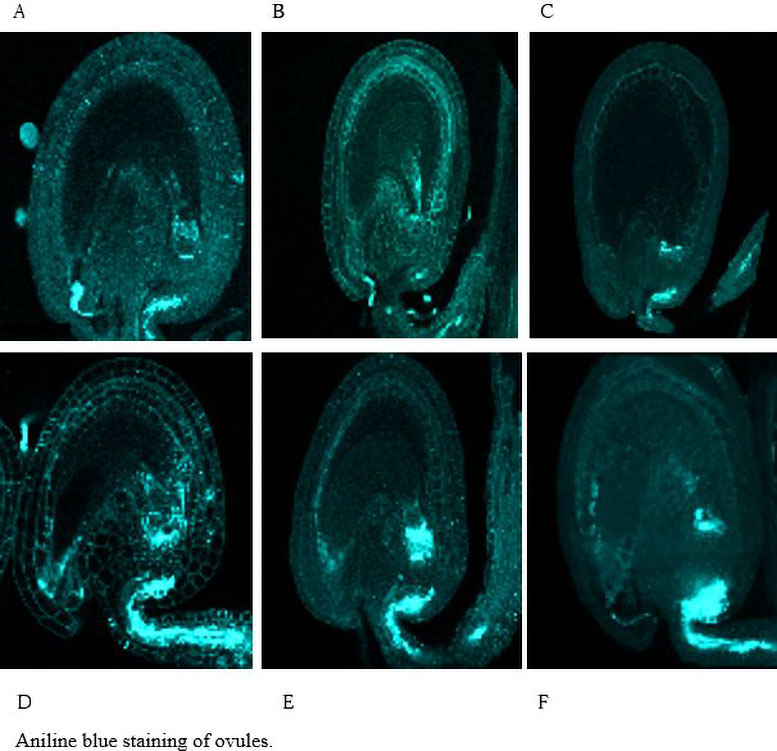
Further analysis revealed a distinctive rabbit-shaped tissue structure that functions as a gateway. This structure, named the ‘Kasahara Gateway’ in honor of its discoverer, represents the first new plant tissue identified since the mid-19th century.
The signal Kasahara observed resulted from callose deposition, which blocks the flow of nutrients and hormones into unfertilized seeds. Closure of the gateways led to the seeds not receiving nutrients and dying. The researchers termed this the ‘closed state.’ On the other hand, when fertilization occurs, the hypocotyl detects this success and dissolves the callose, allowing nutrients to flow into the seed and enabling growth. The researchers called this the ‘open state’.
Nutrient Flow: Success Versus Failure
“When the flow of nutrients was compared between successfully fertilized and unsuccessful embryos, it was found that the inflow of nutrients was observed only in the successful embryos, whereas it was completely blocked in the unsuccessful ones,” Kasahara explained. “This limits the amount of resources wasted on unviable seeds.”
The gateway’s ability to switch between open-and-closed states suggested genetic regulation. The researchers examined fertilized plant hypocotyls to identify potential genetic controls.
They identified a gene called AtBG_ppap that was upregulated exclusively in fertilized hypocotyls and identified its role in dissolving callose. When they modified hypocotyls to overexpress AtBG_ppap, the gateway remained permanently in the open gate state, increasing nutrient uptake.
“This led us to the realization that keeping the gateway permanently open could enlarge seeds,” Kasahara said. “When we tested this theory with rice seeds, we made seeds that were 9% bigger. With seeds from other species, we succeeded in increases of as much as 16.5%.”
Their findings represent a significant advancement in seed enhancement in plant breeding. Maintaining a permanently open state could substantially increase yields of important crops.
Kasahara also believes these findings will enhance understanding of plant evolution, particularly why flowering plants (angiosperms) dominate today’s flora. “Since an unfertilized hypocotyl cannot become a seed in the first place, feeding it would be ‘wasteful’ for the plant,” he said. “Therefore, angiosperms may have been able to survive until modern times by feeding the embryo body using this mechanism to ensure that they only give resources to fertilized seeds.”
Reference: “Fertilization-dependent phloem end gate regulates seed size” by Xiaoyan Liu, Kohdai P. Nakajima, Prakash Babu Adhikari, Xiaoyan Wu, Shaowei Zhu, Kentaro Okada, Tomoko Kagenishi, Ken-ichi Kurotani, Takashi Ishida, Masayoshi Nakamura, Yoshikatsu Sato, Yaichi Kawakatsu, Liyang Xie, Chen Huang, Jiale He, Ken Yokawa, Shinichiro Sawa, Tetsuya Higashiyama, Kent J. Bradford, Michitaka Notaguchi and Ryushiro D. Kasahara, 7 April 2025, Current Biology.
DOI: 10.1016/j.cub.2025.03.033
Never miss a breakthrough: Join the SciTechDaily newsletter.
Follow us on Google and Google News.
2 Comments
“Therefore, angiosperms may have been able to survive until modern times by feeding the embryo body using this mechanism to ensure that they only give resources to fertilized seeds.”
For some reason *gymnosperms* have also survived.
At this point I find it hard to believe a single word that comes out of a scientist mouth!
“Global climate disaster“ ~nope.
“This fossil is 430 million years old!”~ nope. No it isn’t.
“Scientists finding completely new species evolving.”~. Nope. No they’re not.
Take this pill and it’ll solve all your problems!😶🙄🙄
Whatever. Let’s get back to good old basic science~ how about that!?