
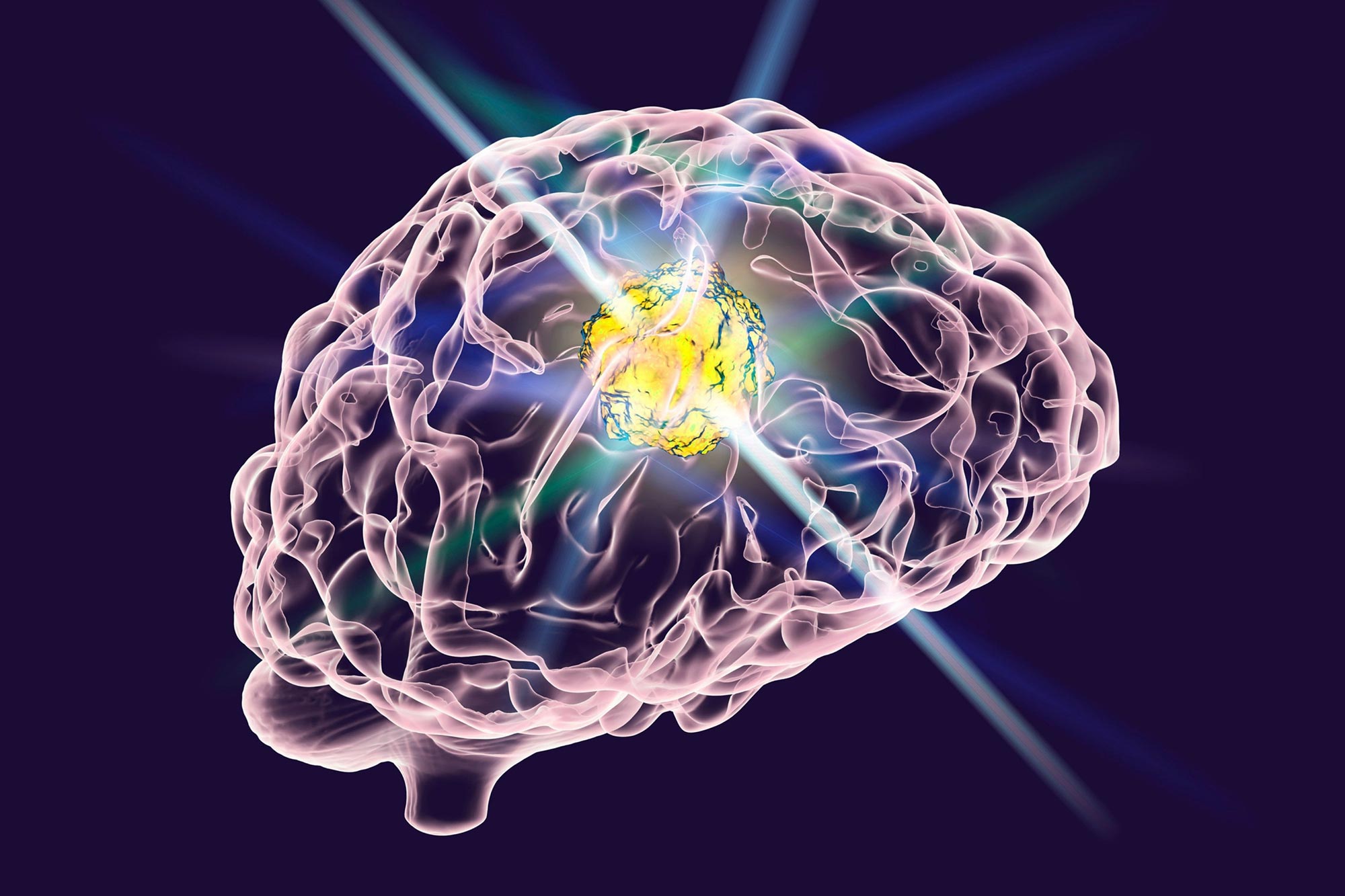
A simple blood test could help diagnose patients with the deadliest form of brain cancer, sparing them from undergoing invasive, highly risky surgery.
In a world-first, the new technique has been proven for glial tumors including glioblastoma (GBM), the most commonly diagnosed type of high-grade brain tumor in adults.
The clinical validation study, published recently in the International Journal of Cancer, involved patients with brain cancer treated at the Brain Tumour Research Centre of Excellence run by Imperial College London and Imperial College Healthcare NHS Trust.
Innovations in Early Detection
Imperial’s Dr. Nelofer Syed (Department of Brain Sciences), who leads the Center, said: “A non-invasive, inexpensive method for the early detection of brain tumors is critical for improvements in patient care.
“Through this technology, a diagnosis of inaccessible tumors can become possible through a risk-free and patient-friendly blood test. We believe this would be a world-first as there are currently no non-invasive or non-radiological tests for these types of tumors.”
Kevin O’Neill, consultant neurosurgeon at Imperial College NHS Healthcare Trust and honorary clinical senior lecturer at Imperial’s Department of Brain Sciences, co-leads the Center.
He added: “This could help speed up diagnosis, enabling surgeons to apply tailored treatments based on that biopsy to increase patients’ chances of survival. I’m very grateful to everyone who has contributed to this study, especially the patients involved.”
Reducing Risky Biopsies
Brain tumors kill more children and adults under the age of 40 than any other cancer and there is a pressing need for earlier diagnosis and better treatment options.
The TriNetra-Glio blood test works by isolating tumor cells that have broken free from the tumor circulating in the blood. The isolated cells are then stained and can be identified under a microscope.
Mr. O’Neill said: “This test is not just an indicator of disease, it is a truly diagnostic liquid biopsy. It detects intact circulating tumor cells from the blood, which can be analyzed to the same cellular detail as an actual tissue sample.”
“This groundbreaking research could lead to earlier diagnosis and improved outcomes for brain tumour patients.” Dan Knowles, CEO of Brain Tumour Research
The test could make a huge difference to patients with suspected high-grade gliomas, including GBM, astrocytomas, and oligodendrogliomas, leading to earlier diagnosis of their tumor type, speedier treatment, and potentially increasing survival rates. It could also eliminate the need for surgical biopsies which carry significant risk, particularly for those with underlying health conditions
The work, funded by Datar Cancer Genetics, has already attracted the attention of the body responsible for advancing public health in the US, the Food and Drug Administration (FDA). Hopes are now of a larger study here in the UK which, if successful, could mean patients with suspected high-grade tumours benefit from this breakthrough in as little as two years.
Overcoming Diagnostic Delays
GBM patient Steve Ackroyd, a TV editor from Palmers Green, North London, was initially misdiagnosed with and treated for epilepsy, with his brain tumor diagnosis coming three months later, in August 2022. The 47-year-old, who has a 12-year-old daughter, had a biopsy followed by radiotherapy and chemotherapy and is currently undergoing immunotherapy treatment in Germany which could cost as much as £300,000, financed through a crowdfunding page set up by his wife Francesca.

She said: “In Steve’s case he went through a surgical biopsy to determine his tumor type, and we also found out that its diffuse nature meant it was inoperable. We waited seven weeks for the results only to find out that the tissue was later deemed to be a ‘poor sample.’ Unfortunately, all the delays cost us precious time when he could have been on treatment.”
Dan Knowles, CEO of Brain Tumour Research, said: “This groundbreaking research could lead to earlier diagnosis and improved outcomes for brain tumor patients. There is an urgent need for novel approaches, particularly in the treatment of GBM, which is fatal in most cases. Brain tumors kill more people in the UK under the age of 40 than any other cancer and we have to find a cure for this devastating disease.”
Reference: “Profiling of circulating glial cells for accurate blood-based diagnosis of glial malignancies” by Kevin O’Neill, Nelofer Syed, Timothy Crook, Sudhir Dubey, Mahadev Potharaju, Sewanti Limaye, Anantbhushan Ranade, Giulio Anichini, Darshana Patil, Vineet Datta and Rajan Datar, 26 December 2023, International Journal of Cancer.
DOI: 10.1002/ijc.34827
Never miss a breakthrough: Join the SciTechDaily newsletter.
Follow us on Google and Google News.