
Close Menu
    Facebook X (Twitter) Instagram
    SciTechDaily
    • Biology
    • Chemistry
    • Earth
    • Health
    • Physics
    • Science
    • Space
    • Technology
    Facebook X (Twitter) Pinterest YouTube RSS
    SciTechDaily
    Home»Health»Brain on Fire: The Mysterious Disease That Mimics Mental Illness
    Health

    Brain on Fire: The Mysterious Disease That Mimics Mental Illness

    By Jen A. Miller, Cold Spring Harbor LaboratoryOctober 24, 2024No Comments4 Mins Read
    Facebook Twitter Pinterest Telegram LinkedIn WhatsApp Email Reddit
    Share
    Facebook Twitter LinkedIn Pinterest Telegram Email Reddit
    Neuroscience Brain Inflammation Concept
    Research on anti-NMDAR encephalitis reveals the critical role of personalized medicine in treating this autoimmune disease that mimics schizophrenia symptoms. Credit: SciTechDaily.com

    Research reveals how antibodies affect brain receptors in patients with anti-NMDAR encephalitis, a condition often misdiagnosed as schizophrenia.

    The disease, vividly described in Susannah Cahalan’s memoir “Brain on Fire,” can lead to severe neurological symptoms similar to those of mental health disorders. The study underscores the importance of personalized medicine and improved diagnostics to accurately treat and diagnose this rare disease.

    The Startling Diagnosis of Susannah Cahalan

    Imagine waking up in a hospital with no memory of the past month. Doctors inform you that you experienced a series of violent outbursts and paranoid delusions. You had even come to believe you were suffering from bipolar disorder. Then, after a specific test, a neurologist delivers a surprising diagnosis: a rare autoimmune disease called anti-NMDAR encephalitis. This was the reality for Susannah Cahalan, a New York Post reporter, who later wrote the best-selling memoir Brain on Fire: My Month of Madness about her experience.

    According to Cold Spring Harbor Laboratory Professor Hiro Furukawa, anti-NMDAR encephalitis can cause hallucinations, memory loss, and psychosis. It primarily affects women between the ages of 25 and 35—the same age range when schizophrenia often appears. However, anti-NMDAR encephalitis involves a different mechanism.
    Antibodies Binding to NMDARs
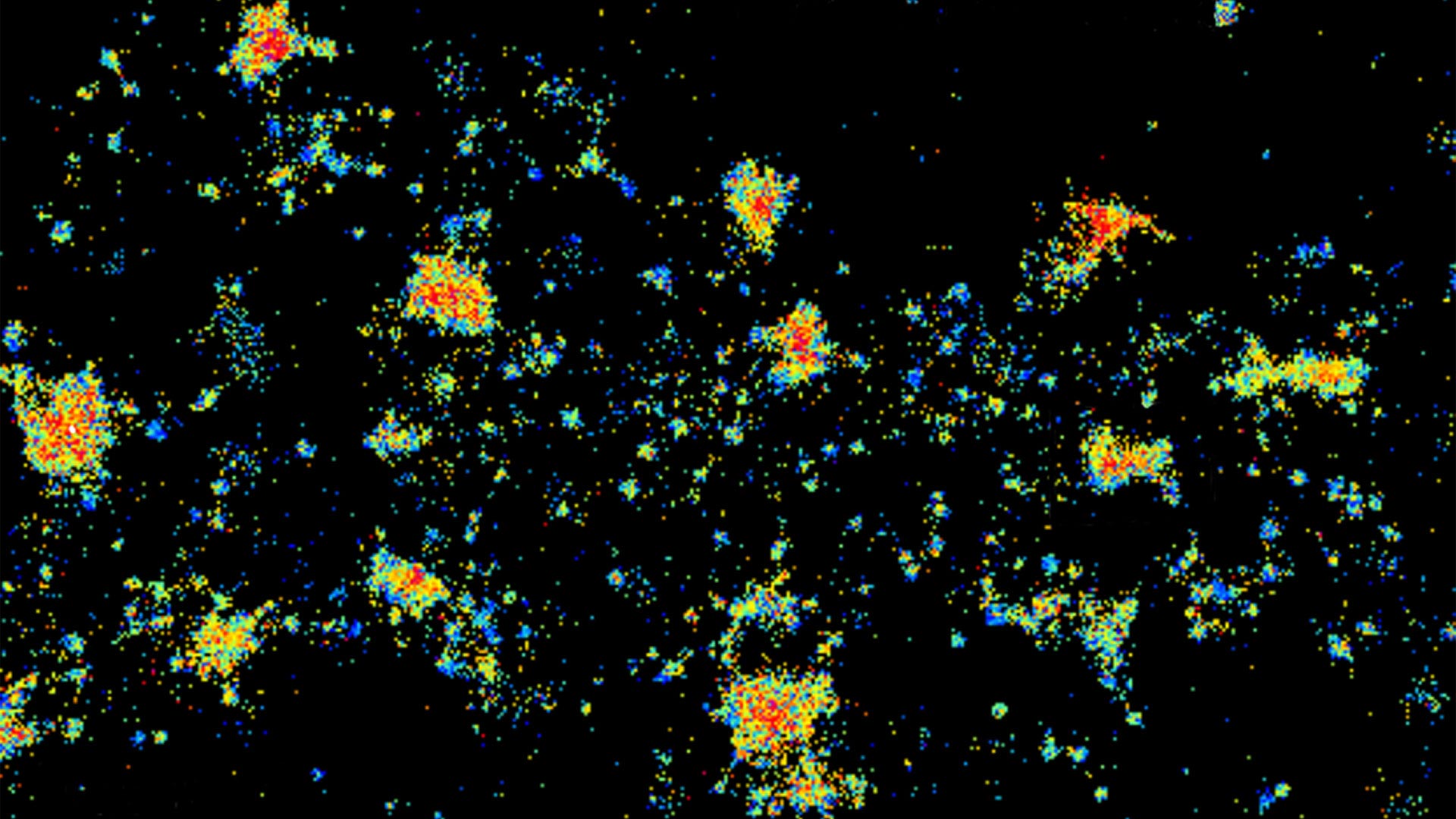
    Cold Spring Harbor Laboratory’s Furukawa lab is studying an autoimmune disease called anti-NMDAR encephalitis in collaboration with Professor Christian Geis’ team at the University of Jena and the SYNABS research unit in Germany. Here, we see antibodies from a human anti-NMDAR encephalitis patient (purple) binding to NMDARs (green) in a mouse brain. Areas marked red indicate high levels of antibody binding. Additionally, the impact of these antibodies on memory could be assessed using a new system established in collaboration between Furukawa and colleagues at the Max Planck Florida Institute for Neuroscience. Credit: Furukawa lab/Cold Spring Harbor Laboratory

    Key Insights on Anti-NMDAR Encephalitis

    Furukawa, an expert in NMDARs, explains that these brain receptors are crucial for cognition and memory. In cases of anti-NMDAR encephalitis, antibodies attack these receptors, preventing them from functioning properly. This triggers an autoimmune response, causing brain inflammation—hence the term “Brain on Fire.”

    While some treatments are available, their effectiveness varies depending on symptom severity. New research from the Furukawa lab may explain why. In a recent study, Furukawa and colleagues map how antibodies from three patients bind to NMDARs. They find that the way in which each of the three antibodies binds to NMDARs differs. The discovery marks an important step in gaining a fuller understanding of anti-NMDAR encephalitis, a condition first diagnosed in 2008. Furthermore, it suggests personalized medicine may be critical for treating this disease.

    Antibody and NMDAR Pattern
    Top row: raw and 2-D cryo-EM images of a patient’s IgG antibody binding to an NMDAR. Bottom: a 3-D graphic representation of the binding pattern. Credit: Furukawa lab/Cold Spring Harbor Laboratory

    Implications for Diagnosis and Treatment Innovation

    “Distinct binding patterns manifest in different functional regulation levels in NMDARs,” Furukawa explains. “This affects neuronal activities. So, different binding sites may correspond to variations in patients’ symptoms.” Uncovering those correlations could lead to more precise therapeutic strategies. Imagine, for example, that scientists identify several binding sites common among encephalitis patients. Pharmacologists could then design new drugs to target these sites. But that’s not all. Personalized medicine could also mean more accurate diagnoses, Furukawa says.

    “It’s still a rare disease, but it could be misdiagnosed or underdiagnosed. Therefore, we need to spread awareness. Could, for example, some schizophrenic patients have this disease? Could it be caused by antibodies?”

    Broader Implications for Psychiatric Medicine

    Currently, it’s said that anti-NMDAR encephalitis affects one in 1.5 million people. Yet, in time, we may find it’s more common than previously assumed. That’s a scary thought. However, it could explain why existing psychiatric medicine does not work for some people diagnosed with bipolar disorder and other mental health conditions—a huge revelation for patients as well as the families and therapists who care for them.

    References:

    “Structural and functional mechanisms of anti-NMDAR autoimmune encephalitis” by Kevin Michalski, Taha Abdulla, Sam Kleeman, Lars Schmidl, Ricardo Gómez, Noriko Simorowski, Francesca Vallese, Harald Prüss, Manfred Heckmann, Christian Geis and Hiro Furukawa, 3 September 2024, Nature Structural & Molecular Biology.
    DOI: 10.1038/s41594-024-01386-4

    “Dendritic, delayed, stochastic CaMKII activation in behavioural time scale plasticity” by Anant Jain, Yoshihisa Nakahata, Tristano Pancani, Tetsuya Watabe, Polina Rusina, Kelly South, Kengo Adachi, Long Yan, Noriko Simorowski, Hiro Furukawa and Ryohei Yasuda, 9 October 2024, Nature.
    DOI: 10.1038/s41586-024-08021-8

    Funding: National Institutes of Health, Austin’s Purpose, Robertson Research Fund, Doug Fox Alzheimer’s Fund, Heartfelt Wings Foundation, Gertrude and Louis Feil Family Trust, German Research Foundation, German Federal Ministry of Education and Research, Schilling Foundation

    Never miss a breakthrough: Join the SciTechDaily newsletter.
    Follow us on Google and Google News.

    Antibodies Bipolar Disorder Cold Spring Harbor Laboratory Neuroscience Schizophrenia
    Share. Facebook Twitter Pinterest LinkedIn Email Reddit

    Related Articles

    Scans Show Weakened Brain Connections in Adolescents at Risk of Bipolar Disorder

    In the Process of Solving a Decades-Long Mystery, Scientists Discover Where Schizophrenia May Originate in the Brain

    “Mini-Brains” Grown in a Lab Provide Clues About Early Life Origins of Schizophrenia

    New Links Discovered Between Brain Cell Development and Psychiatric Disorders – “Major Step Forward”

    Recently Evolved Region of the “Dark Genome” Offers Clues to Treatment of Schizophrenia and Bipolar Disorder

    Research Reveals Drug Targets for Memory Enhancement – Treatments for Alzheimer’s, Schizophrenia and More

    Some Brain Disorders – Such As Autism and Schizophrenia – Exhibit Similar Circuit Malfunctions

    Schizophrenia: Brain Capillary Structures Show a Correlation With Their Neuron Structures

    Risk for Psychotic Disorders Could Be Detected by Neurological Brain Markers

    Leave A Reply Cancel Reply

    • Facebook
    • Twitter
    • Pinterest
    • YouTube

    Don't Miss a Discovery

    Subscribe for the Latest in Science & Tech!

    Trending News

    Popular Vitamin B3 Supplements May Help Cancer Cells Survive, Scientists Warn

    Scientists Discover Strange Property of Rice and Turn It Into a Smart Material

    NASA Artemis II Skips Burn As Astronaut Captures Stunning View of Earth

    NASA’s Artemis II: Humans Just Left Earth Orbit for the First Time Since 1972

    What Causes Chronic Pain? Scientists Identify Key Culprit in the Brain

    Semaglutide Shows Surprising Mental Health Benefits in Massive 100,000-Person Study

    This Liquid Snapped Instead of Flowing and Scientists Were Shocked

    Breakthrough Alzheimer’s Drug Rewires the Brain Instead of Just Clearing Plaques

    Follow SciTechDaily
    • Facebook
    • Twitter
    • YouTube
    • Pinterest
    • Newsletter
    • RSS
    SciTech News
    • Biology News
    • Chemistry News
    • Earth News
    • Health News
    • Physics News
    • Science News
    • Space News
    • Technology News
    Recent Posts
    • Stanford Scientists Discover Hidden Brain Circuit That Fuels Chronic Pain
    • Johns Hopkins Scientists Develop Nasal DNA Vaccine for Tuberculosis
    • New Study Reveals Why Ozempic Works Better for Some People Than Others
    • Scientists Uncover the Secret “Glue” That Helps Soil Hold Water
    • Climate Change Is Altering a Key Greenhouse Gas in a Way Scientists Didn’t Expect
    Copyright © 1998 - 2026 SciTechDaily. All Rights Reserved.
    • Science News
    • About
    • Contact
    • Editorial Board
    • Privacy Policy
    • Terms of Use

    Type above and press Enter to search. Press Esc to cancel.