
Existing drugs may offer a first-line treatment for coronavirus outbreak.
The number of people infected with the new coronavirus continues to skyrocket, with more than 80000 cases worldwide as of the end of February. But there’s no vaccine or cure in sight, meaning that doctors can do little more than offer supportive treatment to the very sick and hope their bodies can survive the infection.
Now, however, a coalition of European researchers says that already approved drugs might hold the key to treating the new virus. Their findings have been published as a pre-proof in the International Journal of Infectious Diseases.
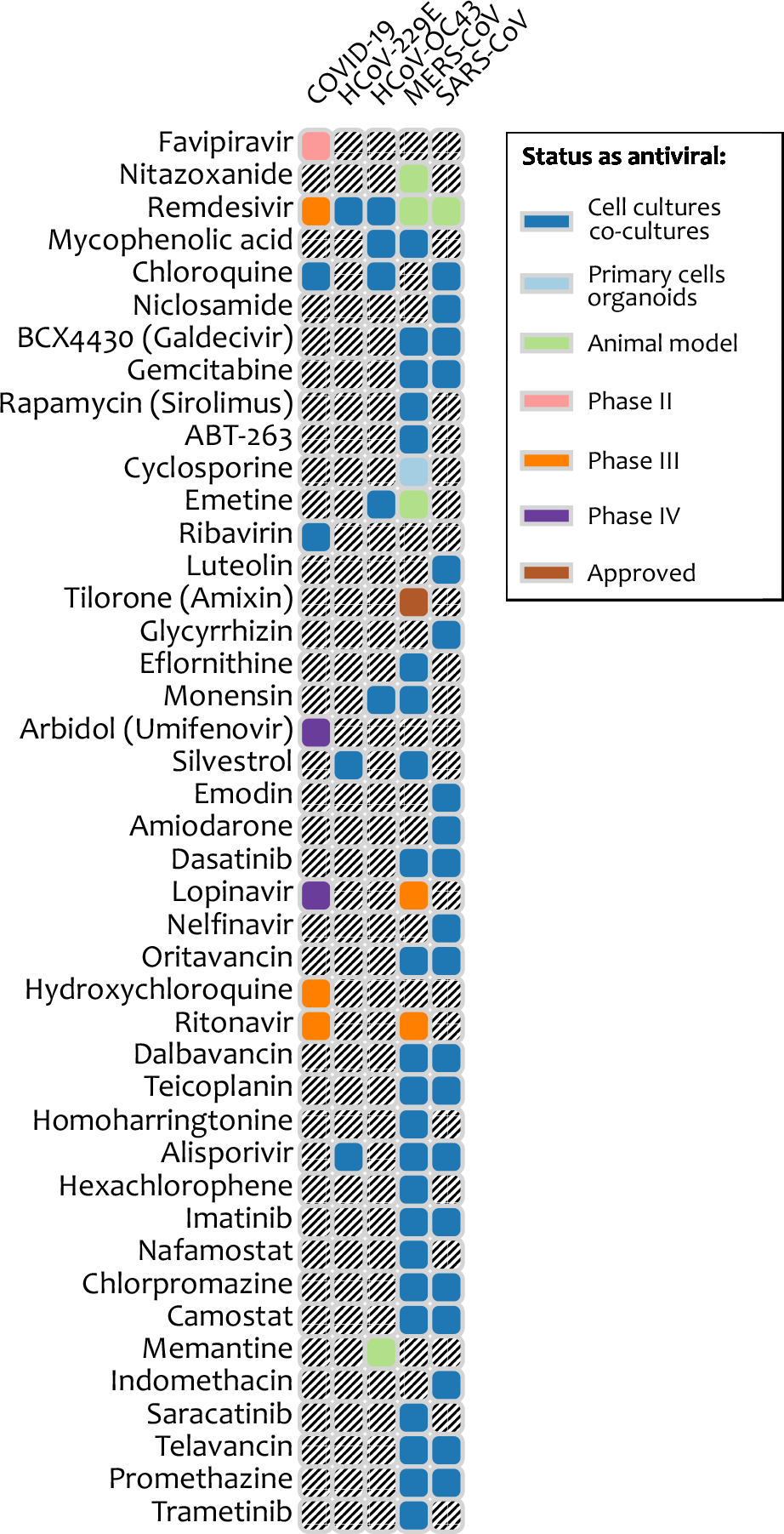
“Drug repurposing is a strategy for generating additional value from an existing drug by targeting diseases other than that for which it was originally intended,” said Denis Kainov, the senior author on the paper and an associate professor at the Norwegian University of Science and Technology (NTNU). “For example, teicoplanin, oritavancin, dalbavancin, and monensin are approved antibiotics that have been shown to inhibit corona- and other viruses in the laboratory.”
Kainov and his co-authors say that these and other already tested “safe-in-man” broad-spectrum antiviral drugs are good candidates for treating the disease to start with, given that there are currently no treatments for the new coronavirus, which is called COVID-19 by the World Health Organization (WHO).
The WHO says the virus “can cause mild symptoms including a runny nose, sore throat, cough, and fever. It can be more severe for some persons and can lead to pneumonia or breathing difficulties. More rarely, the disease can be fatal. Older people, and people with pre-existing medical conditions (such as, diabetes and heart disease) appear to be more vulnerable to becoming severely ill with the virus.”
The advantage of repurposing a drug is that all of the details surrounding the drug development are already known, from the chemical synthesis steps and manufacturing processes to information regarding the different phases of clinical testing.
“Therefore, repositioning of launched or even failed drugs to viral diseases provides unique translational opportunities, including a substantially higher probability of success to market as compared with developing new virus-specific drugs and vaccines, and a significantly reduced cost and timeline to clinical availability,” the researchers wrote.
The researchers reviewed information on the discovery and development of broad-spectrum antiviral agents (BSAAs), which are drugs that target viruses from two or more different viral families. They summarized what they found for 120 drugs that had already been shown to be safe for human use and created a database, which is freely accessible. Thirty-one of these were found by the researchers to be possible candidates for prophylaxis and treatment of COVID-19 infections. The researchers also found that clinical investigations have recently begun of five possible drug candidates to treat the COVID-19 virus
“In the future, BSAAs will have a global impact by decreasing morbidity and mortality from viral and other diseases, maximizing the number of healthy life years, improving the quality of life of infected patients and decreasing the costs of patient care,” the researchers concluded.
Reference: “Discovery and development of safe-in-man broad-spectrum antiviralagents” by Petter I. Andersen, Aleksandr Ianevski, Hilde Lysvand, AstraVitkauskiene, Valentyn Oksenych, Magnar Bjør ̊as, Kaidi Telling, IrjaLutsar, Uga Dampis, Yasuhiko Irie, Tanel Tenson, Anu Kantele and Denis E. Kainov, 27 February 2020, International Journal of Infectious Diseases.
DOI: 10.1016/j.ijid.2020.02.018
Never miss a breakthrough: Join the SciTechDaily newsletter.
Follow us on Google and Google News.
1 Comment
maybe with these https://scitechdaily.com/tag/norwegian-university-of-science-and-technology/ something will happen…