

Saharan mustard threatens desert plant diversity and hampers recovery from climate fluctuations.
Once believed to be naturally resistant to invasion, deserts in the region are now losing native plants to aggressive species like Saharan mustard. New research reveals that the spread of this weed is disrupting biodiversity and weakening the desert’s ability to recover from extreme climate events.
A study from the University of California, Riverside, published in the journal Ecology, examines 17 years of data collected from the university’s Palm Desert campus and surrounding desert areas. Led by UCR ecologist Loralee Larios, the research shows that Saharan mustard poses a major threat to native flora by overwhelming the desert’s natural seed bank.
The seed bank, comprising dormant seeds stored within the top five centimeters of soil, acts as a critical buffer against harsh weather. It allows native plants to germinate under favorable conditions, helping them survive prolonged dry periods.
“It is like a literal bank account for a rainy day. When conditions are right, these seeds sprout,” said paper first author Clarissa Rodriguez, former graduate student in the Larios laboratory and current Natural Reserve System manager at UC San Diego.
Saharan Mustard’s Impact on Native Plant Survival
Saharan mustard, however, overwhelms the bank, producing up to 15,000 seeds per plant. This excess can crowd out native species, reducing their chances of germination in future years. Some members of the mustard family are also known to release chemicals that inhibit the growth of other plants, though the study did not directly test whether Saharan mustard has this trait.
Normally, different plant species emerge in response to varying rainfall conditions, ensuring a dynamic and healthy ecosystem. However, the researchers found that when Saharan mustard flourishes, fewer native species persist, and those that do tend to follow a uniform growth pattern. This shift weakens the ecosystem’s natural ability to recover from environmental fluctuations.
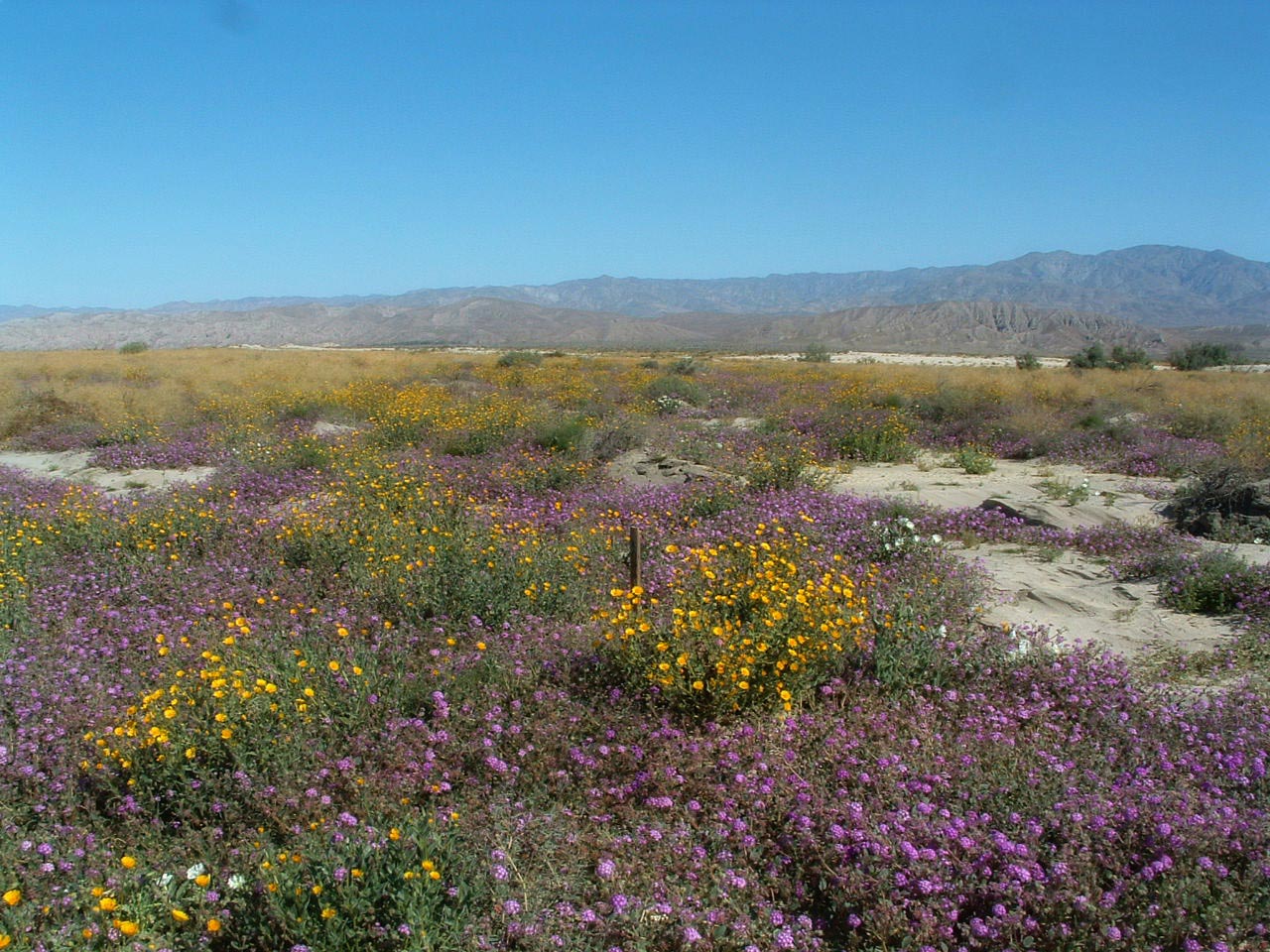
“Invasive species like Saharan mustard don’t just compete with native plants for space—they can fundamentally alter how the ecosystem functions,” Rodriguez said. “Deserts have long been considered protected from plant invaders, but that’s clearly no longer the case. As the climate changes, we’re seeing more invasives take over, and it’s causing lasting damage.”
The effects of Saharan mustard extend beyond plant communities, impacting desert wildlife as well. Many native animals, including ants, lizards, and other reptiles, rely on native plants for food, shade, and shelter. However, they do not eat Saharan mustard seeds or use the plant for refuge, limiting their options in invaded areas, and causing populations to decline.
Strategies for Mitigation and Restoration
To mitigate the damage, the researchers recommend targeted removal of Saharan mustard during high-rainfall years—before the plants drop their seeds. Because the species is easy to identify before flowering, land managers have a window of opportunity to clear it out before it spreads further.
The study also emphasizes the importance of long-term data collection for invasive species management. Many native desert plants remain dormant for years, making short-term surveys ineffective for capturing the full scope of biodiversity. By using multi-year monitoring, scientists can better understand which species are being lost and which should be prioritized for restoration efforts.
“We typically measure invasion impacts by looking at how many native and invasive plants are present at a given time,” Larios said. “But deserts don’t work that way—some years, there are almost no plants, and other years, there’s an explosion of growth. We need a better approach to understanding how invaders affect these ecosystems over time.”
This research is open-access, allowing scientists and conservationists to apply its framework to other desert ecosystems facing similar threats.
“If we can remove invasives at the right time and focus on restoring key native species, we have a much better chance of preserving desert biodiversity,” Larios said.
Reference: “Temporal invasion regime attributes influence community synchrony and stability in an arid land system” by Clarissa S. Rodriguez, Lynn Sweet, Melanie Davis, Scott Heacox, Cameron Barrows and Loralee Larios, 23 April 2025, Ecology.
DOI: 10.1002/ecy.70081
Never miss a breakthrough: Join the SciTechDaily newsletter.
Follow us on Google and Google News.
2 Comments
“As the climate changes, we’re seeing more invasives take over, and it’s causing lasting damage.”
I suspect that the authors are confusing a spurious correlation with with cause-and-effect. No evidence is presented that deserts are experiencing climate change or that the assumed climate change is driving expansion of invasives. For the mustard plant to become established initially, the conditions had to be conducive to its survival. From the initial point of introduction, the plant will have dispersed seeds over time, expanding its range. Thus, there is correlation with time, and any changes that happen over the same interval. Correlation alone does not establish causation. It is common for time-series to demonstrate spurious correlation when two or more variables have a trend over time.
https://www.datasciencecentral.com/spurious-correlations-15-examples/
This kind of discrimination is just disgusting. Freedom of movement should be a plant’s right. Survival of the fittest, I say.