
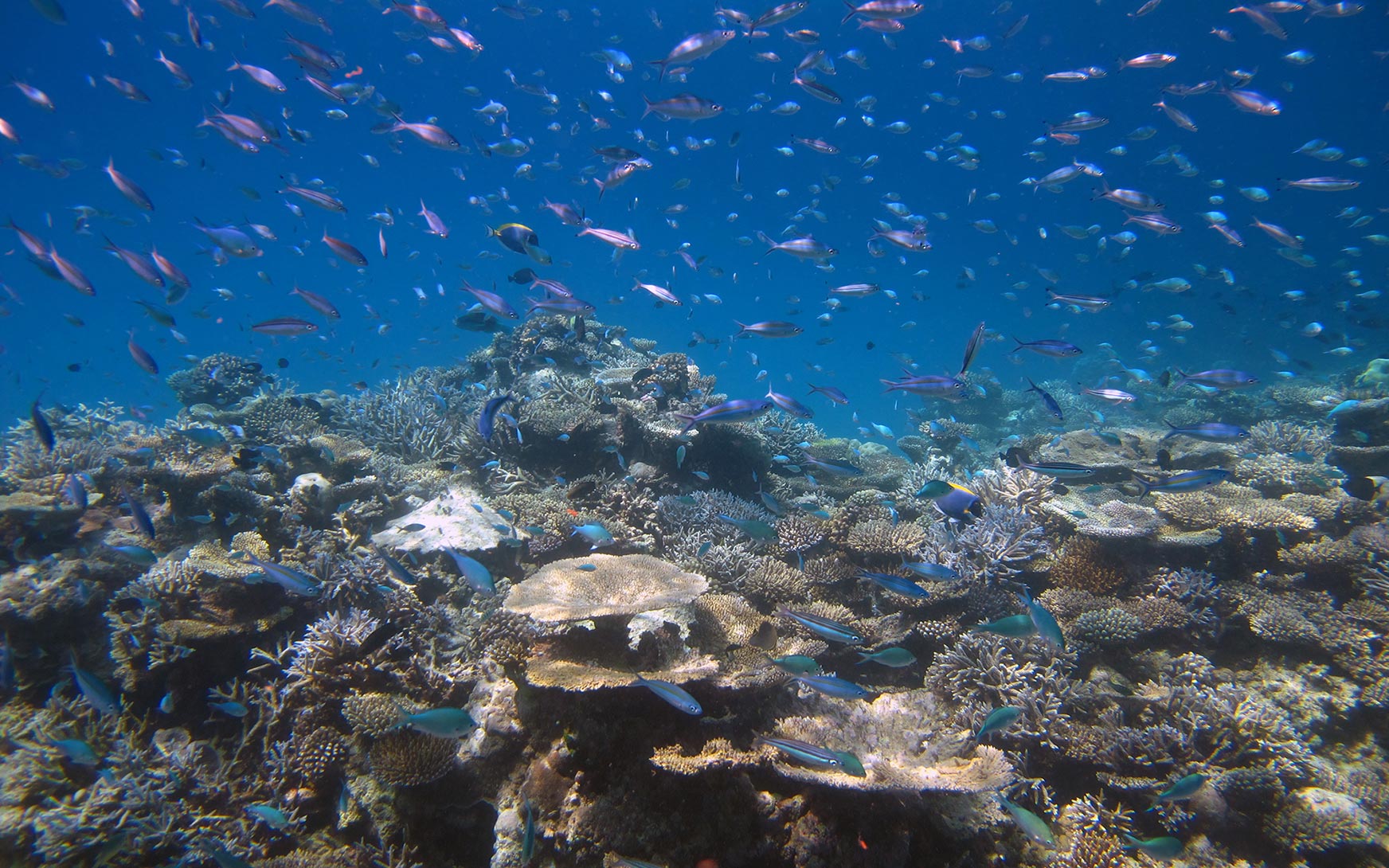
A new risk assessment framework indicated that no location is completely safe from biodiversity threats, urging a rethink of global conservation strategies.
An international research team led by Associate Professor Giovanni Strona from the University of Helsinki has identified a general macroecological mechanism that calls for a reconsideration of global conservation strategies.
“To truly understand how global change is affecting natural communities and to identify effective strategies to mitigate the ongoing dramatic biodiversity loss, it is fundamental to account for the overarching complexity emerging from biotic interactions. As we show in our new research, doing this might reveal important counterintuitive mechanisms,” Giovanni Strona says.
The researchers combined a massive dataset of fish distribution and ecological traits for more than 9,000 fish species. Using artificial intelligence techniques, they generated thousands of networks mapping the interactions between corals and fish and those between fish prey and fish predators in all reef localities worldwide.
They quantified, for each locality, the degree of fish dependency on corals. This analysis confirmed what Strona and colleagues showed in another paper published earlier this year: coral loss might detrimentally affect, on average, around 40 percent of fish species in each coral reef area.
The researchers also found that the dependency between fish and corals becomes stronger the further away they are from humans. This means that fish communities in remote reefs might be the most vulnerable to the cascading effects of coral mortality.
Areas of critical vulnerability
Next, the researchers asked whether the increased risk that stems from the potential cascading effects of coral mortality might counteract the benefits that remote fish communities experience because they are far away from direct impacts of human activities.
“For this, we devised a novel risk assessment framework that is applicable to any ecosystem. It combines local anthropogenic impacts such as overfishing and pollution and global impacts like climate and environmental change with the risk deriving from ecological interactions,” explains Mar Cabeza, head of the Global Change and Conservation Lab at the University of Helsinki.
The framework revealed that taking into account ecological dependencies flattens the expected negative relationship between extinction risk for fish communities and remoteness.
“For example, the hotspots of risks for fish communities from local human-derived impacts and global change are almost perfectly the same as the hotspots of risk from fish coral dependencies. This produces a global map of risk for fish communities where no place is safe, regardless of distance from humans,” Giovanni Strona says.
“The validity and relevance of these findings might extend far beyond reef fish, depicting a world where remote localities, rather than safe havens for biodiversity, might be, instead, areas of critical vulnerability,” Mar Cabeza concludes.
Reference: “Ecological dependencies make remote reef fish communities most vulnerable to coral loss” by Giovanni Strona, Pieter S. A. Beck, Mar Cabeza, Simone Fattorini, François Guilhaumon, Fiorenza Micheli, Simone Montano, Otso Ovaskainen, Serge Planes, Joseph A. Veech and Valeriano Parravicini, 14 December 2021, Nature Communications.
DOI: 10.1038/s41467-021-27440-z
Never miss a breakthrough: Join the SciTechDaily newsletter.
Follow us on Google and Google News.