
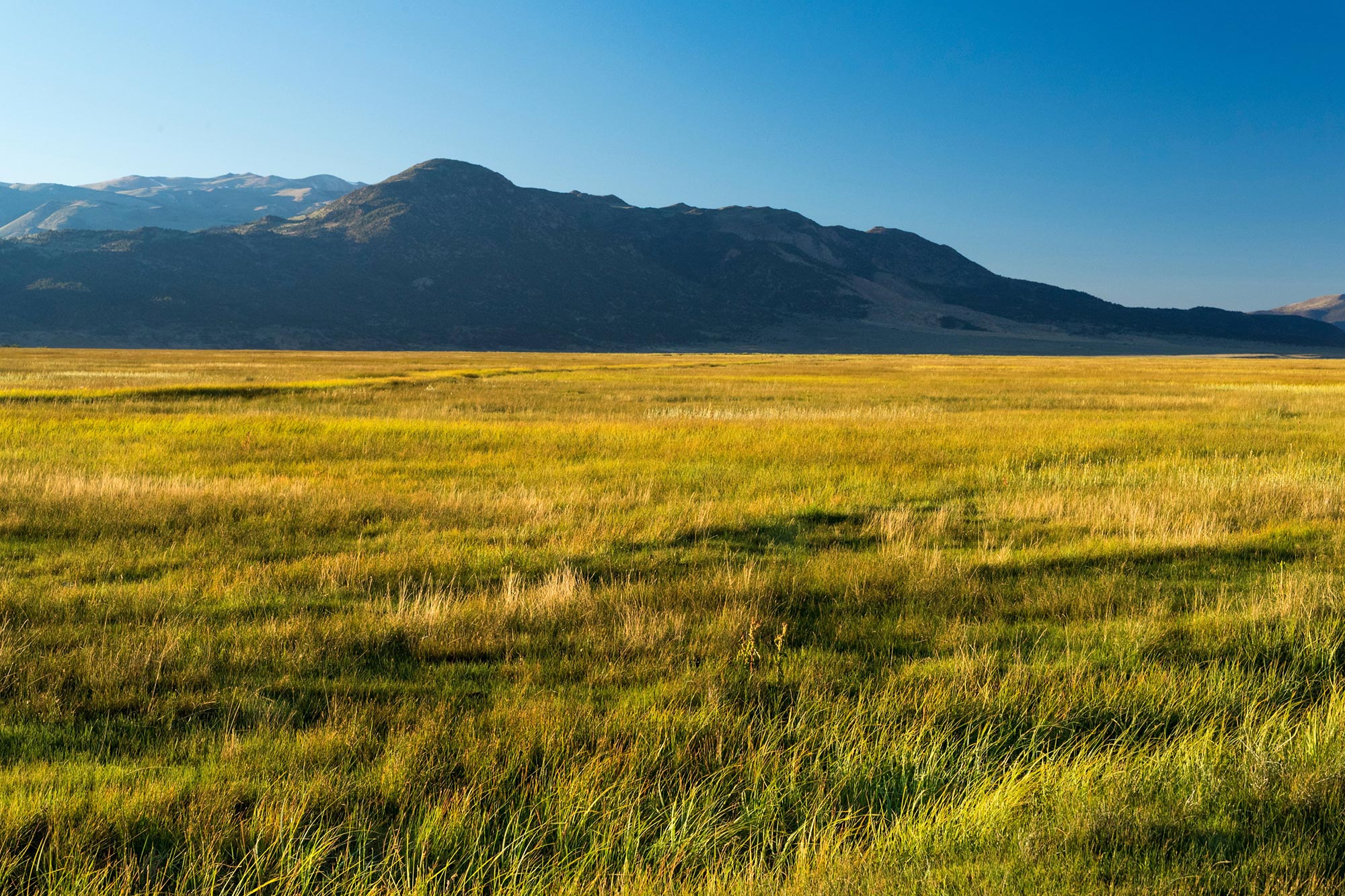
Research reveals rapid changes in California’s grasslands due to climate change, with an increased presence of species adapted to warmer conditions. This study highlights the value of long-term ecological data in understanding these shifts.
The University of Western Australia is a key contributor to a new international study that reveals how climate change is significantly altering the plant composition and ecological functions of California’s grasslands.
Published in Nature Ecology and Evolution, the review focused on the grasslands of the California Floristic Province. Researchers used extensive long-term data to track changes in species composition linked to climate change.
Long-Term Data Sheds Light on Grassland Shifts
Lead authors, Associate Professor Kai Zhu and postdoctoral fellow Yiluan Song from the University of Michigan, explained that the grasslands are responding to climate change at a nearly real-time pace.
Emeritus Professor Richard Hobbs from UWA’s School of Biological Sciences contributed crucial long-term data, collected over several decades, to the study, which showed grassland communities were shifting toward species associated with warmer and drier conditions.

Impact of Global Warming on Grassland Ecology
“These changes are occurring at a rate comparable to the pace of climate warming and drying, highlighting the rapid response of these ecosystems to changing environmental conditions,” Professor Hobbs said.
The study analyzed 15 long-term community composition datasets from 12 observational studies and three global change experiments and estimated the climate niches of 349 species from more than 829,000 event logs.
Comparison Across Ecosystems
The shifts towards species adapted to warmer and drier climates were consistent across both observations and experiments, contrasting with lagged responses observed in forest communities dominated by long-lived plants.
Professor Hobbs, who undertook a postdoctoral fellowship at Stanford University from 1982 to 1984, established experimental plots at the Jasper Ridge Biological Preserve near the university during that time.
He continued to sample these annually, flying between Australia and California, contributing to a valuable dataset that spanned nearly four decades.
In 2019, he handed the study to a former student Dr Lauren Hallett, who completed her Masters at UWA under Professor Hobbs’ supervision and is now a faculty member at the University of Oregon, and she continued the field observations.
“This research underscores the importance of long-term ecological studies and the critical role they play in understanding and mitigating the impacts of climate change,” Professor Hobbs said.
“The rapid response of these ecosystems to global warming serves as a fingerprint of the broader environmental shifts we are witnessing and UWA is proud to be involved in this global research, addressing some of the most pressing environmental challenges of our time.”
For more on this research, see Grasslands in the Fast Lane: Immediate Responses to Rapid Climate Shifts.
Reference: “Rapid shifts in grassland communities driven by climate change” by Kai Zhu, Yiluan Song, Josephine C. Lesage, Justin C. Luong, James W. Bartolome, Nona R. Chiariello, Joan Dudney, Christopher B. Field, Lauren M. Hallett, Michele Hammond, Susan P. Harrison, Grey F. Hayes, Richard J. Hobbs, Karen D. Holl, Peter Hopkinson, Loralee Larios, Michael E. Loik and Laura R. Prugh, 16 October 2024, Nature Ecology & Evolution.
DOI: 10.1038/s41559-024-02552-z
Never miss a breakthrough: Join the SciTechDaily newsletter.
Follow us on Google and Google News.
2 Comments
Why no mention of the introduction of exotic plants like cheat grass and yellow star-thistle? When they are introduced to a climate similar to their origin, but without natural predators, it is quite predictable that they will thrive and spread.
Man is learning that he directly impacts our ecosphere. The resulting climate change is denied by the wealthy and ignorant because they are threatened by the implications of their exploitation. When millions of bison were eliminated over a period of ten years, the ecological damage began and was ignored.
Dust bowls resulted in governmental largest supporting exploitation. Today, Americans continue you import foreign plants not native to exploit fir money and damage our ecology for money.
They also bring in bugs, viruses,
Fungi,and exotic predators
, willingly transplant spiny ray species over and above anadroumous species. Great white hunters brought the Chinese Pheasant here. We become victims of exploitation by the wealthy.