

PillTrek is a mini capsule that senses gut biomarkers in real time. It enables advanced GI diagnostics without invasive methods.
Researchers are gaining a deeper appreciation for the critical role the gastrointestinal (GI) tract plays in maintaining overall health. Beyond its primary responsibilities in digestion, the GI system contributes to the production of hormones, immune cells, and neurotransmitters that influence brain function and emotional well-being.
Because of this, the GI tract contains a wide array of biomarkers that are valuable for diagnosing, tracking, and managing disease—from short-chain fatty acids associated with metabolic syndrome to cytokines linked to inflammation.
However, current technologies fall short when it comes to capturing this biochemical information directly from the GI tract. Existing methods, such as fecal sampling and tissue biopsies, are often invasive, costly, and unable to deliver continuous or comprehensive real-time data throughout the length of the digestive system.
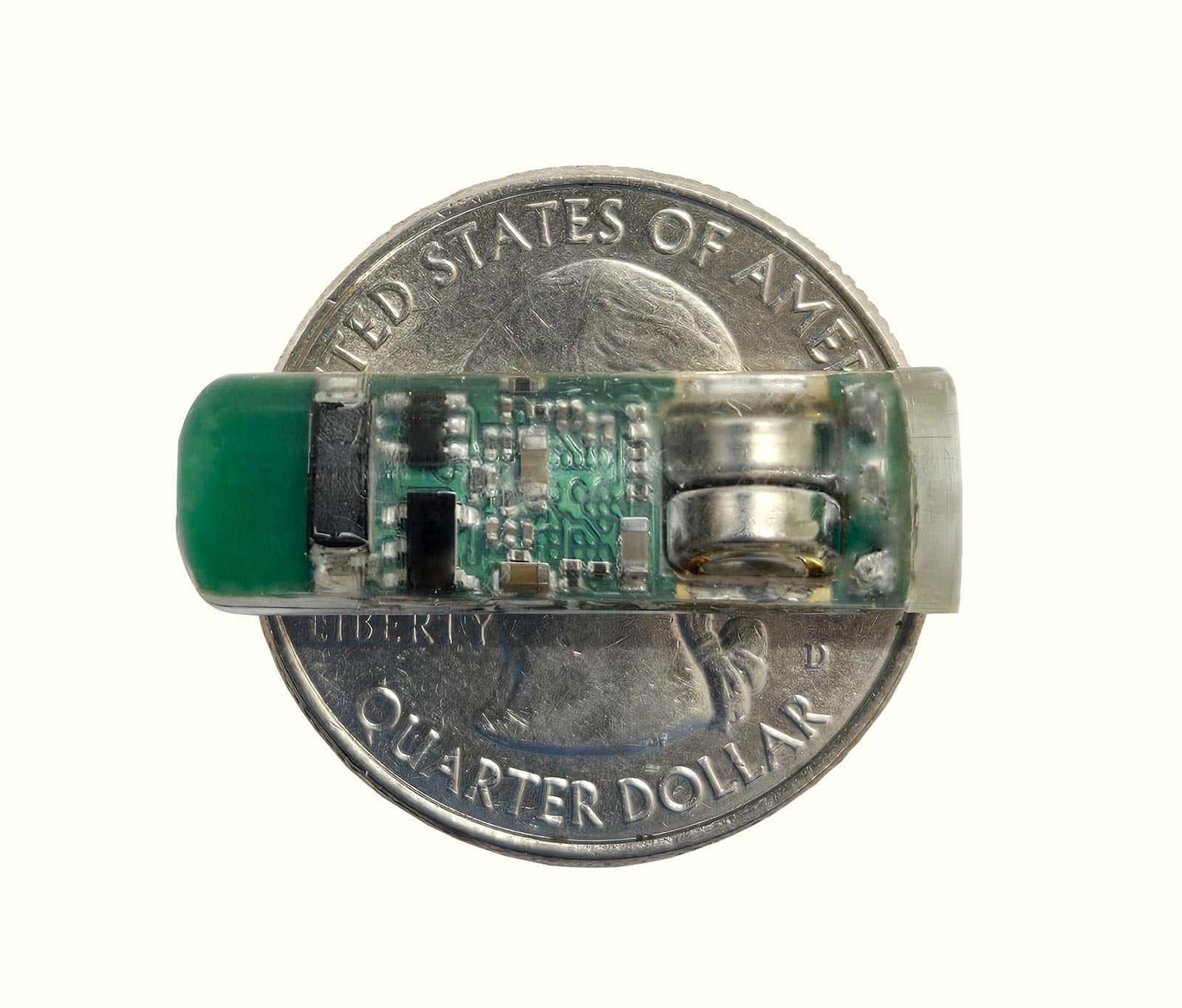
A new solution: PillTrek smart capsule
A group of engineers at Caltech has created a new smart capsule named PillTrek, designed to monitor pH, temperature, and various biomarkers within the gastrointestinal tract. The device contains a compact, wireless electrochemical system built with affordable sensors and powered by low-energy electronics. Measuring just 7 millimeters wide and 25 millimeters long, PillTrek is smaller than typical capsule endoscopy cameras yet equipped to perform a broad array of electrochemical analyses.
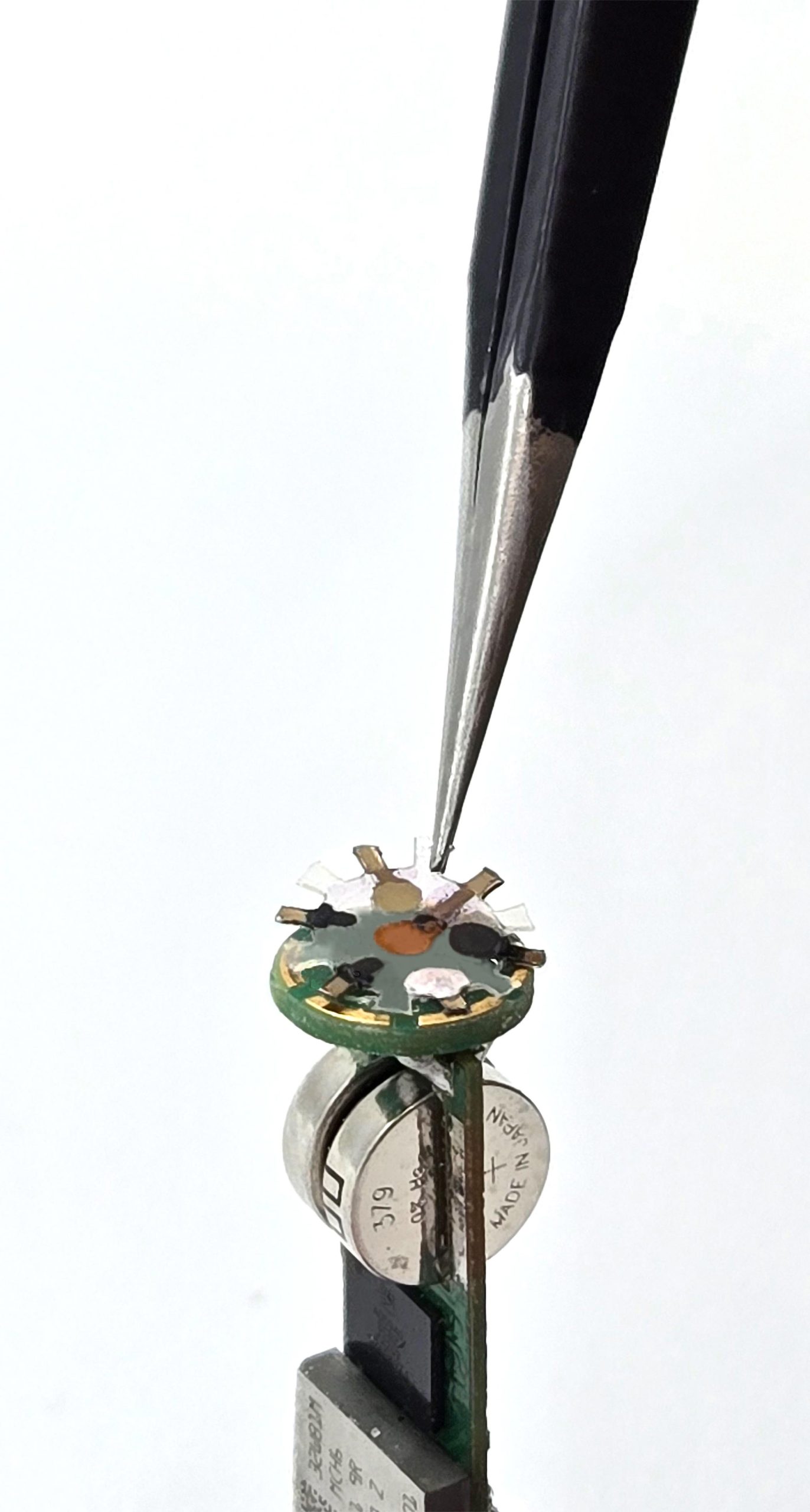
“We designed this pill to be a very versatile platform,” says Wei Gao, professor of medical engineering at Caltech and a Heritage Medical Research Institute Investigator. “From an electrochemical-sensing point of view, it is very powerful. It has the ability to measure metabolites, ions, hormones such as serotonin and dopamine, possibly even proteins as well. And all within the gut, which is a complex environment.”
Testing and development of PillTrek
The research team details the development of the capsule in a newly published paper in Nature Electronics. The paper’s lead authors are Jihong Min, a postdoctoral scholar in medical engineering at Caltech, and Hyunah Ahn, a visiting researcher at Caltech and graduate student at the Korea Advanced Institute of Science and Technology (KAIST).
To demonstrate its capabilities, PillTrek was tested in animal models, where it successfully measured pH and temperature, along with fluctuations in glucose levels and the neurotransmitter serotonin.
Gao points out that the electrochemical workstation within the capsule is reconfigurable. A variety of different sensors could easily be swapped into place to enable measurements of different parameters in the gut. His team previously developed a technique for 3D printing inexpensive sensors on sheets of plastic substrate. That technique can be used to mass-produce the sensors for PillTrek.
Future directions for miniaturization and impact
In terms of next steps, Gao says that he is working with co-author Azita Emami, the Andrew and Peggy Cherng Professor of Electrical Engineering and Medical Engineering at Caltech, to look into wireless power transfer and smaller electronics that would make PillTrek even smaller and lower power.
“Ingestible capsules have significant potential in diagnosis, monitoring, and management of chronic conditions, but previous devices were very limited in terms of their sensing capabilities, lifetime, and size,” says Emami, who is also director of the Center for Sensing to Intelligence. “This work is an important translational step toward devices that can provide meaningful medical information for patients and physicians.”
Reference: “Continuous biochemical profiling of the gastrointestinal tract using an integrated smart capsule” by Jihong Min, Hyunah Ahn, Heather Lukas, Xiaotian Ma, Rinni Bhansali, Sung-Hyuk Sunwoo, Canran Wang, Yadong Xu, Dickson R. Yao, Gwangmook Kim, Zhaoping Li, Tzung K. Hsiai, Azita Emami, Hee-Tae Jung and Wei Gao, 27 June 2025, Nature Electronics.
DOI: 10.1038/s41928-025-01407-0
The work was supported by funding from the National Science Foundation, the National Institutes of Health, the American Cancer Society, the Army Research Office, the US Army Medical Research Acquisition Activity, the National Research Foundation of Korea, the Heritage Medical Research Institute, and the KAIST-UC Berkeley-VNU Global Climate Change Research Center. The team also received critical support and infrastructure from the Kavli Nanoscience Institute at Caltech.
Never miss a breakthrough: Join the SciTechDaily newsletter.
Follow us on Google and Google News.
6 Comments
Because of numerous digestive problems I was given a camera pill almost 20 years ago!!
Did it help you? I could sure use something like that. 😌
So what happens to this pill anyway? Does it get digested, stay in the body or does it come out like a swallowed coin?
This is interesting. Doesn’t sound like it is ready for humans??? I would like this to help with my health
This is what positive technology is all about. Technoloy and medicine need both need to be upgraded and people that need it should have the choice to use it.
How long do you think it’ll be before this and other accomplishments are available to those who need it now.
It is the likes of PETA and other organizations being promoted by BIG PHARMA that’s keeping these revolutionary finds away from the people who need them.
They’re promoting drugs as well out dated testing and technology that’s already on the market, knowing that they’re counter effective at the least and counter productive at the best.
This is why it so important, especially to the elderly, that people change their voting habits to elect those who will be progressive in embracing life’s advancements.
Currently, the only promotion is of rehashing the old with new advertising embellishments. Because western doctors are ONLY trained to be conduits for BIG PHARMA and chase to the almighty dollar.
It might be a negative way to look at it but hospitals don’t make money if your not sick it a big money making business with less doctors that actually care about the patient nor do they have time for you. It’s like on to the next one unfortunately. It gets worse as the years go by.