
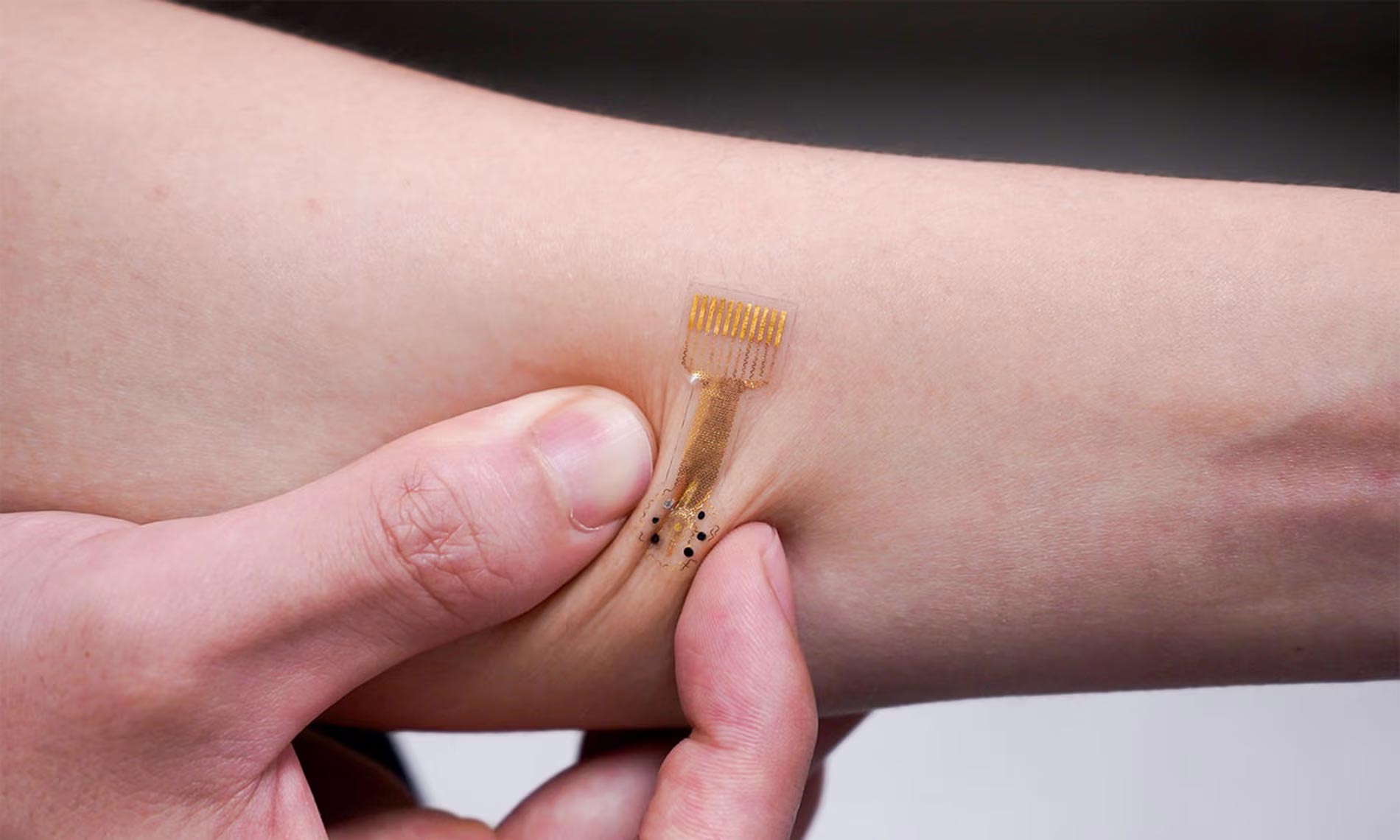
Caltech’s iCares bandage samples fluid and tracks wound biomarkers to detect infection early and predict healing outcomes.
Caltech professor of medical engineering Wei Gao and his team are developing a next-generation smart bandage—a “lab on skin”—that could help patients and caregivers monitor chronic wounds, deliver treatment, and accelerate healing. Designed for cuts, incisions, scrapes, and burns that heal slowly, the bandage aims to both track wound health and actively support recovery.
In 2023, Gao’s team achieved a key milestone by demonstrating that their smart bandage could collect real-time data from chronic wounds in animal models. It also helped speed up healing by delivering targeted treatments, such as medication or electrical stimulation, to encourage tissue regeneration.
Testing iCares on human patients with chronic wounds
Now, Gao and his collaborators at Caltech and the Keck School of Medicine of USC have advanced their research further. They tested an improved version of the bandage, called iCares, in 20 human patients with chronic wounds caused by conditions such as diabetes or poor circulation. The updated device successfully and continuously sampled fluid produced during the body’s inflammatory response. The team also evaluated additional patients before and after surgery to study the bandage’s broader clinical applications.
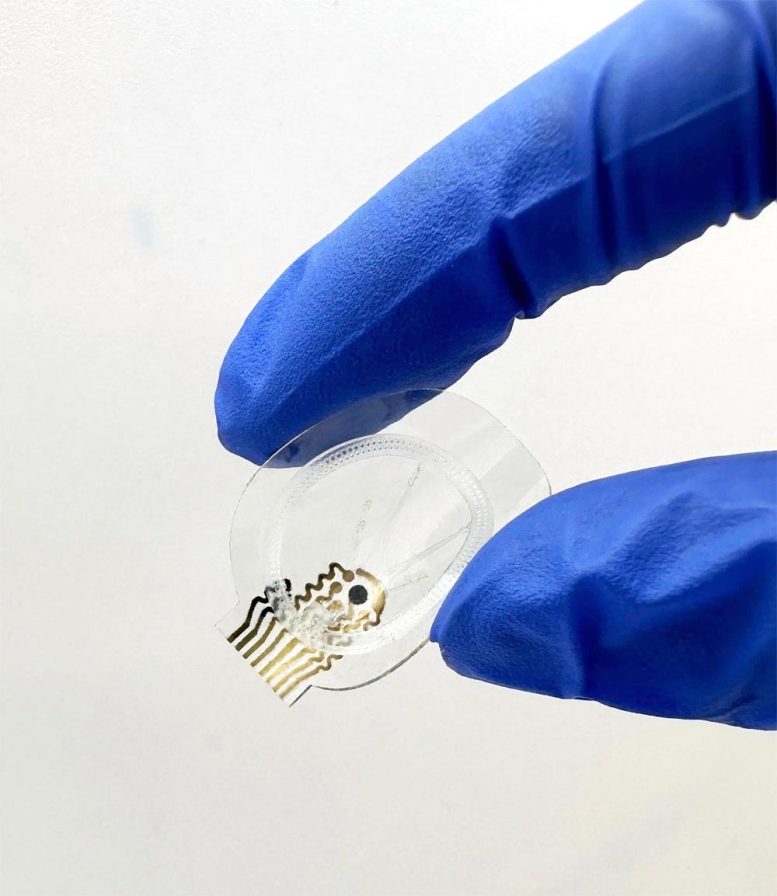
The smart bandage, outfitted with three different microfluidic components—miniature modules that channel and otherwise control the flow of liquids—clears excess moisture from wounds while providing real-time data about biomarkers present.
Freshness of fluid samples ensures accurate detection
“Our innovative microfluidics remove moisture from the wound, which helps with healing. They also make sure that samples analyzed by the bandage are fresh, not a mixture of old and new fluid. To get accurate measurements, we need to sample only the newest fluid at a wound site,” says Gao, who is also a Heritage Medical Research Institute Investigator. “In this way, iCares can watch in real time for important biomarkers of inflammation and infection.”
Indeed, in a new paper in the journal Science Translational Medicine, Gao and his colleagues show that the smart bandage can detect molecules such as nitric oxide, an indicator of inflammation, and hydrogen peroxide, a biomarker of infection, potentially one to three days before patients experience symptoms.
AI-driven wound classification and healing prediction
In a further advance, the team has developed a machine-learning algorithm that can successfully classify the patients’ wounds and predict healing time with a level of accuracy comparable to that of an expert clinician.
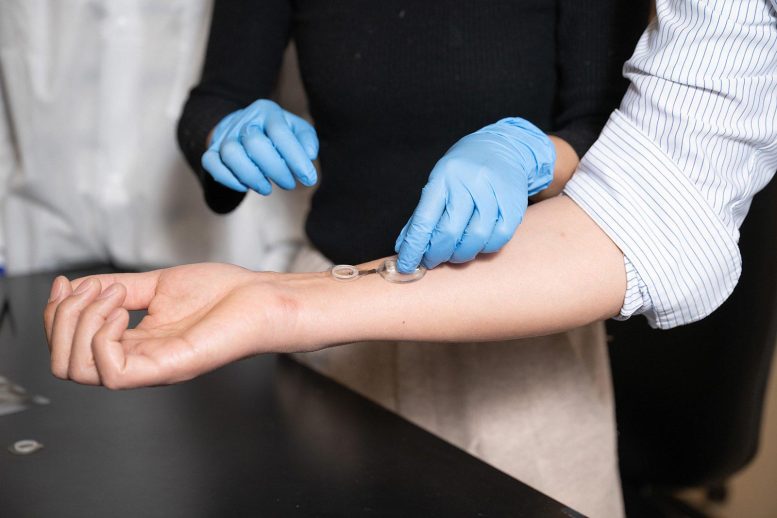
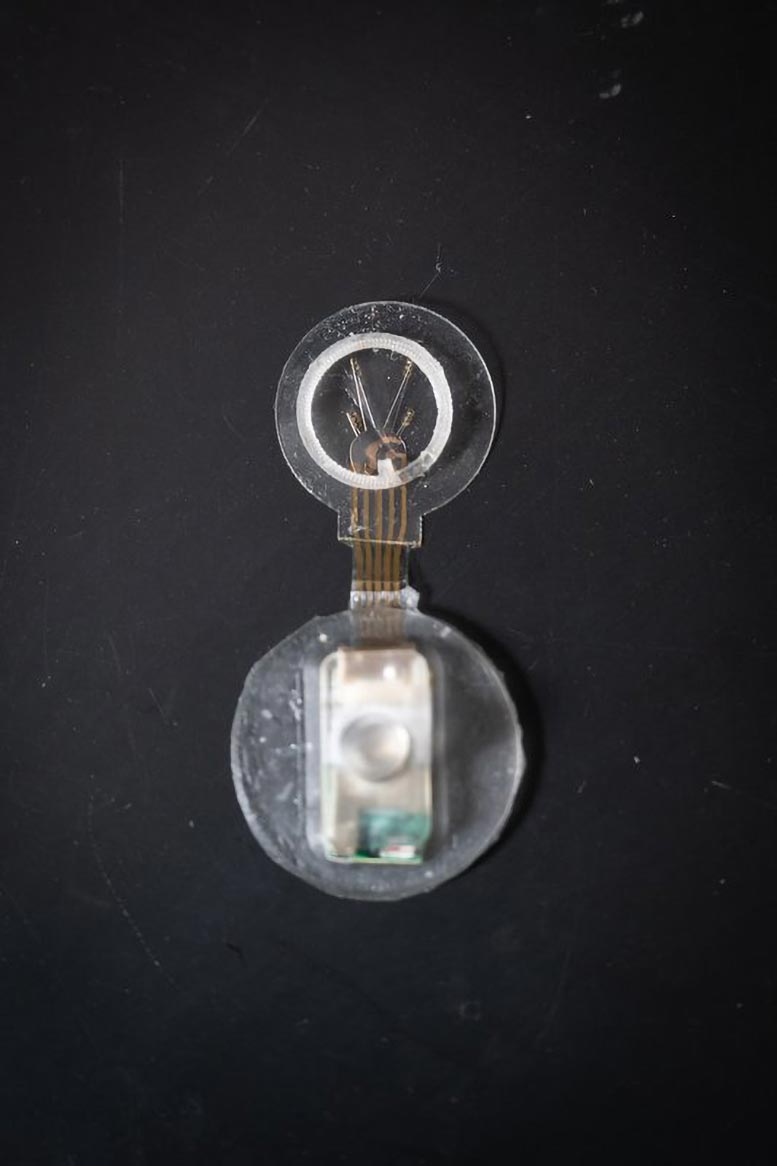
The bandage is composed of a flexible, biocompatible polymer strip that can be 3D printed at low cost. It integrates nanoengineered biomarker sensor array, which is disposable for hygiene and single-use applications. The system also includes a reusable printed circuit board that handles signal processing and wireless data transmission to a user interface, such as a smartphone.
The triad of microfluidic modules within iCares includes a membrane that sucks wound fluid from the surface of the wound, a bioinspired component that shuttles the fluid across the device onto a sensor array where it is analyzed, and a micropillar module that carries the sampled fluid away to the outside of the bandage.
Reference: “A microfluidic wearable device for wound exudate management and analysis in human chronic wounds” by Canran Wang, Kexin Fan, Ehsan Shirzaei Sani, José A. Lasalde-Ramírez, Wenzheng Heng, Jihong Min, Samuel A. Solomon, Minqiang Wang, Jiahong Li, Hong Han, Gwangmook Kim, Soyoung Shin, Alex Seder, Chia-Ding Shih, David G. Armstrong and Wei Gao, 23 April 2025, Science Translational Medicine.
DOI: 10.1126/scitranslmed.adt0882
The work was supported by grants from the National Institutes of Health, the National Science Foundation, the American Cancer Society, the Army Research Office, US Army Medical Research Acquisition Activity, and by the Heritage Medical Research Institute. Caltech’s Kavli Nanoscience Institute provided critical support and infrastructure for this work.
Never miss a breakthrough: Join the SciTechDaily newsletter.
Follow us on Google and Google News.